

Kazakhstan annually produces about 5 million tons of solid household waste. How much of it is recycled and what problems remain unresolved, the correspondent of the Kazinform agency found out.
Waste volumes and infrastructure
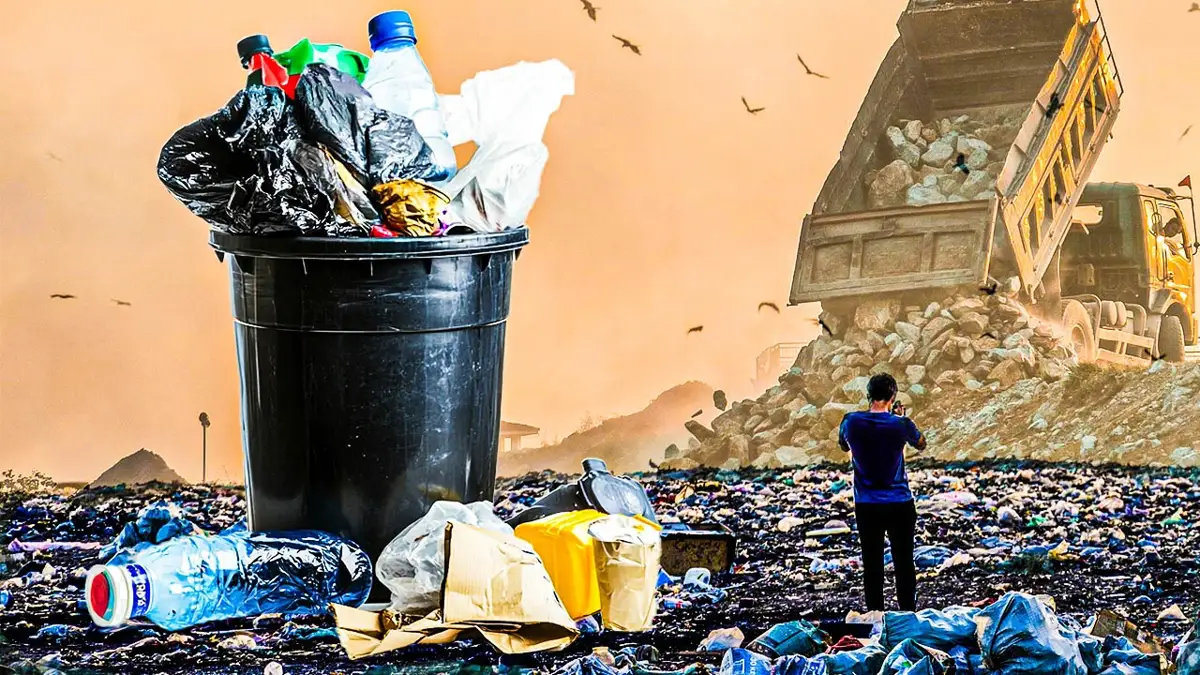
Environmentalists note that each Kazakhstani produces an average of one kilogram of garbage daily. Last year alone, according to the Ministry of Ecology and Natural Resources, 4.8 million tons of municipal waste were removed from the country. And the figure is growing every year. The Bureau of National Statistics calculated that in 2023 it was 4.1 million tons, in 2022 – 3.8 million. And in general, more than 125 million tons of garbage have accumulated in the country. For some countries, this is a real “Klondike”. Sweden, for example, recycles 98% of all its waste, and even buys it abroad. But in Kazakhstan, garbage is still only a source of problems. And they begin from the moment it is collected.
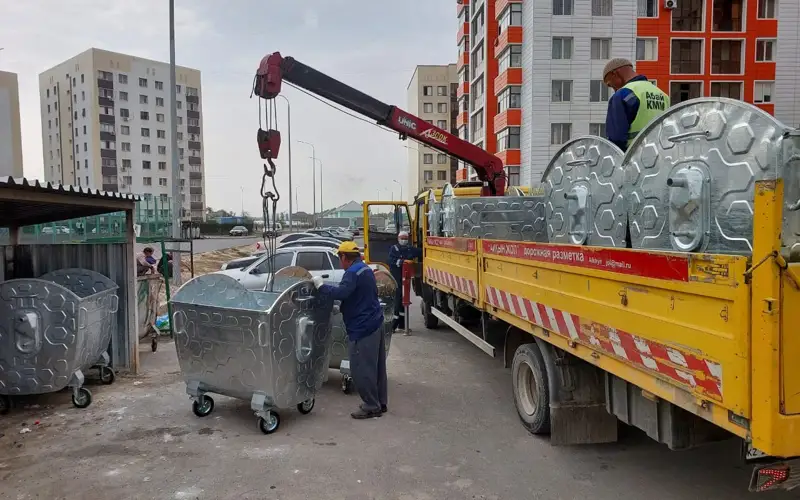
— Against the background of the total volume of waste, the country is experiencing a shortage of containers and garbage trucks. Currently, there are 133 thousand containers, but the additional need is about 60 thousand units. Large cities are served by 1,681 garbage trucks, while another 900 vehicles are needed, — the Ministry of Ecology reported.
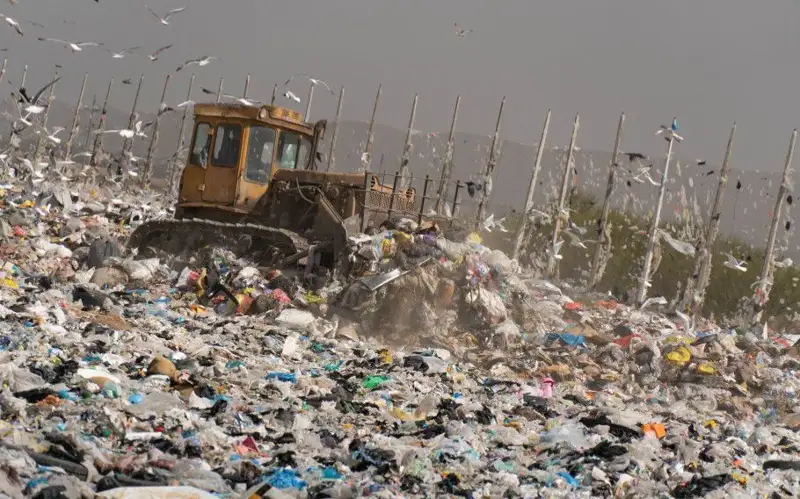
The situation is even more complicated with the landfills themselves, where the bulk of the country’s waste is sent, since there is nowhere else for it to go.
State of solid waste landfills
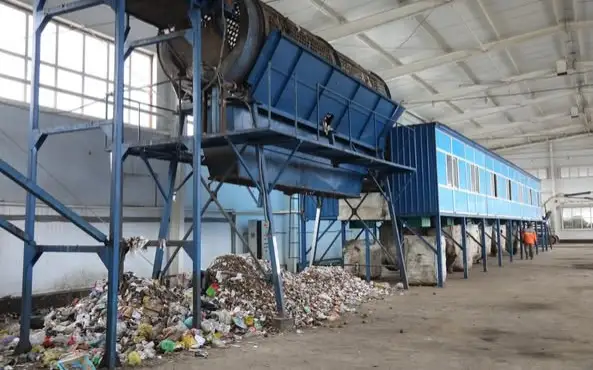
According to the Ministry of Ecology, there are currently 2,973 solid waste landfills in Kazakhstan, of which only 608 (20.4%) comply with environmental and sanitary standards. The situation is particularly critical in a number of regions: in the Pavlodar region, only 1.56% of landfills comply with the requirements, in the North Kazakhstan region – 2.4%, in the Abay region – 2.9%. Only Astana and Shymkent are prosperous on this list. In Ust-Kamenogorsk, for example, the landfill has completely exhausted its resource. Moreover, already 5 years ago.
And they can’t find a suitable site for a new one. In other regions, to put existing landfills in order, billions of investments are needed, which are not in the budget, especially in villages.
— The Ministry of Ecology proposes a number of measures, including simplifying the requirements for rural landfills, which will allow the legalization of existing facilities and reduce the costs of bringing them into compliance with regulations. For example, about 175 billion tenge is required to legalize 351 landfills in the North Kazakhstan region. As part of simplifying the requirements, we plan to leave only a fence, a water protection and sanitary protection zone, dosimetric control, and a disinfectant bath, — the department noted.
Spontaneous dumps and administrative measures
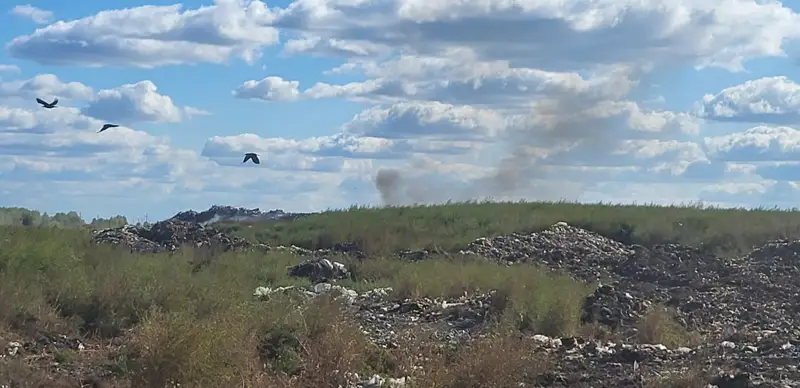
At the same time, there are landfills in the republic that are not subject to legalization. We are talking about unauthorized areas of garbage accumulation. In addition to the waste that is removed by utility workers, some of the volumes are simply thrown out by residents spontaneously. According to space monitoring, in 2024, 4886 unauthorized landfills were identified in Kazakhstan , 93% of which were eliminated. However, in some regions, the indicators for combating them remain low: in the Atyrau region, 74% of landfills were eliminated, in the East Kazakhstan region – 75%, and in the Ulytau region – 0%. For violating environmental legislation, 164 officials were brought to administrative responsibility over the year, including akims and their deputies. They were fined 9.3 million tenge.
On January 10 this year, amendments were made to the Code of the Republic of Kazakhstan on Administrative Offenses. They provide for tougher penalties for the creation of spontaneous dumps, including the confiscation of transport used for the illegal removal of garbage.
Problems with sorting and processing
But some of the country’s waste still ends up being recycled, and the sector itself is experiencing a huge number of problems. So what of the trash thrown into the trash bin can be reused? And why is it almost never used?
In Kazakhstan today, according to official data, 25.8% of waste is sorted and recycled . For effective management, there are more than 50 plastic recycling plants, about 40 plants accept waste paper for recycling, 7 – glass and about 20 – rubber products.
Last August, a new First Recycling plant opened in Almaty, which recycles used batteries from various electrical appliances, including electric cars. The production is modern, and, according to its owners, has no analogues in Central Asia. Recycled batteries become sources of new export products. The company produces powder from them, which contains lithium, manganese, zinc, copper and aluminum. The powder can be used to produce other types of batteries, or valuable metals can be extracted from it.
— We started our business in the field of office equipment recycling back in 2009. And batteries and accumulators have always been a stumbling block. They are classified as fire hazardous waste and cannot be buried in landfills. We have learned to recycle these very lithium-ion batteries. The plant’s capacity is about 2 tons per 8-hour shift. We can recycle about 500 tons per year. But the problem is that there is not always enough raw material. While we were preparing for the opening, the pandemic, difficulties with equipment suppliers interfered, and we spent 2 years collecting these batteries. But as soon as the line was delivered, we exhausted our reserves in a very short time, and there was almost no raw material left even for the opening itself in August, — said the company’s director Rustamzhan Yunusbayev.

Therefore, the company works with a partner network that collects batteries in all major cities of Kazakhstan. Plans include cooperation with Uzbekistan and Kyrgyzstan, where there is no such recycling. But the entrepreneur is confident that the problem with the shortage of raw materials will be solved only if the culture of separate waste collection is developed in Kazakhstan. Both among the population and legal entities.
Other manufacturers also face the same difficulties in terms of raw material availability. The main problem is that waste recycling plants are mainly concentrated in Almaty. For example, the country can recycle up to 400 thousand tons of plastic per year. But there are no such enterprises in the east of the republic, nor in Ulytau or Zhetysu. Glass sorting is also only established in Almaty, Zhambyl region and Shymkent, while projects in Aktobe and Kyzylorda are still awaiting implementation. And it is simply not profitable to transport raw materials from other regions.
— When the functions of the ROP operator were transferred to Zhasyl Damu, the EcoQolday program was paused for 2 years. From 2022 to 2024, there was not even a partial subsidy for the transportation of already sorted waste to recycling plants. Plastic and cardboard waste is almost worthless anyway, and if you transport it a thousand kilometers, it will only cause losses. Those who opened sorting points in other regions found themselves in a difficult situation. Even take the only waste sorting plant in Ust-Kamenogorsk. According to existing rules, it is obliged to separate 30% of waste suitable for recycling from the garbage. They sorted it, but where to put it all if transporting it to Almaty a thousand kilometers away is unprofitable? And there is no space or opportunity to store it. What did they do? They took it back to the landfill. As a result, they were fined 6 billion tenge. The trials are still ongoing, said Daulet Asanov, director of the East Kazakhstan region environmental safety center.

Due to a shortage of raw materials at recycling plants, a six-month moratorium on the removal of plastic waste was declared in the country in June 2022. That is, those sorting points in the east and north of the country that could previously make a profit by handing over raw materials to neighboring regions of Russia, which are much closer, lost this opportunity. As a result, over these 2 years of the absence of subsidies under “EcoQolday”, more than 100 companies collecting and recycling solid waste went bankrupt and closed, experts note. The program was re- launched only in February 2024.
— Since February 5, 2024, the EcoQolday program was relaunched, within the framework of which agreements were signed with 60 companies. In 2024, 20.1 thousand tons of waste were collected through the program, of which 10.9 thousand tons were recycled. A mobile application has also been developed for the convenience of citizens in the delivery of waste, where waste collection points from individuals are already operating in the capital, — said Deputy Chairman of the Board of JSC Zhasyl Damu Nurzhan Kabdoldanov.

Recycling is driven by enthusiasts
But so far only a few people in the country have decided to engage in waste recycling. This sphere is considered risky, although billions of dollars are earned on it in the world. Eco-activist Lyudmila Evzhenkova from Ust-Kamenogorsk opened her own workshop for recycling glass bottles two years ago. She turns them into glass chips, from which she produces souvenirs. She recently added a new direction to the assortment – glassware from cut bottles. However, the demand is too chaotic – sometimes thick, sometimes empty, the girl shares.
— We employ 4 people in our workshop. We can produce a thousand items a month, or we can sit idle. Unfortunately, the authorities support us more in words. In fact, I have not received a single large order from East Kazakhstan itself, but from other regions, even from the CIS, they take hundreds of pieces of souvenir eco-friendly products made from recycled glass for some forums. Nevertheless, I do not despair. It is my choice to be useful to society, to reduce the amount of garbage and broken glass, in particular. Once my child cut himself on broken glass while swimming in the Bukhtarma Reservoir. I want there to be fewer such cases. And my task is to show others that you can achieve success on your own. And that recycling can still be profitable, — Lyudmila Evzhenkova is sure.

Now everyone who knows about her workshop brings her raw materials. But the capacity of the small workshop is not yet enough for such volumes. The eco-activist dreams of large companies taking up such projects. Ecologist Daulet Asanov believes that changes are needed at the legislative level to interest businesses in waste recycling.
— Recycling is expensive. It is at the government level that the regulation on increasing waste tariffs should be approved. And include the costs of recycling in them, so that it would be profitable for businessmen to build a sorting line and waste recycling plants with their own money. So that it would be profitable to open collection points. As it was done with non-ferrous and ferrous scrap metal. “Non-ferrous metal”, “Chermet” — how they came, you won’t find a single wire on the street now. They hand in everything! And it should also be profitable to collect plastic and waste paper. Otherwise, nothing will change. The landfills are already overflowing, — says Asanov.
The Kazakhstan Waste Management Association also proposed increasing waste removal tariffs .
Prospects for solving the problem
Currently, the Majilis is considering a draft law on environmental issues aimed at improving the waste management system. JSC Zhasyl Damu also reported that the funds from disposal payments are directed to the development of infrastructure for the collection, transportation, sorting and processing of waste. For 2024-2026, 185 billion tenge are allocated for these purposes, which will be provided at 3% per annum for end borrowers.
65 projects worth 308.7 billion tenge have already been approved, of which 9 projects worth 47.3 billion tenge are at the implementation stage.
However, experts are confident that it is impossible to solve the problem without systemic changes.
First, it is necessary to expand processing capacities throughout the country, not just in Almaty. If enterprises appear in different regions, logistics will become cheaper, and sorting will be more profitable.
Secondly, government support is important. This could be subsidies for businesses, tax breaks or even obligations for manufacturers to recycle packaging.
And finally, we won’t get far without changing the culture of waste management. Separate collection should become the norm – this requires information campaigns, convenient infrastructure and economic incentives.
Examples from other countries show that garbage can not only pollute the environment, but also generate income. Kazakhstan faces a choice: either continue to drown in waste – because there is essentially nowhere for it to go, or make recycling a full-fledged sector of the economy.
https://www.inform.kz/ru/125-mln-tonn-musora-skopilos-na-kazahstanskih-svalkah-kto-vinovat-i-chto-delat-d815d7