

How the CIAT scholarship program helps Tajik specialists.

Several employees of the National Bank of Tajikistan have become the latest graduates of the Korea International Cooperation Agency (KOICA) Capacity Improvement & Advancement for Tomorrow (CIAT) scholarship program in Tajikistan. They shared their achievements and knowledge gained at a seminar held on October 17 at the Rumi Hotel in the capital.
Once again, the CIAT scholarship program helped Tajik government officials improve their knowledge in their fields and also introduced them to South Korean culture.
CIAT allows developing countries to share Korean experience, and the program includes short-term (country-specific program and multi-country program) and long-term (master’s and doctoral programs).
This year, from September 7 to 20, participants traveled to the Republic of Korea to undergo specialized training under the program “Strengthening the Capacity of National Banking Supervision in the Field of Environmental Risks and Green Finance in Tajikistan (2025–2027).”
Green and Sustainable Finance: What’s the Difference?
Yusuf Saifiddinzoda was one of the program’s participants. In his presentation, he discussed the training’s results and outlined the conclusions he had reached during this time.
He explained that the Republic of Korea’s trade turnover accounts for 75-80% of GDP, with its exports amounting to $684 billion and its imports to $632 billion. Its main trading partners are China, the United States, Vietnam, Japan, and a number of other countries.

Saifiddinzoda discussed Korea’s main exports and imports (oil, machinery, chemicals, electronics), provided a comparative energy analysis of the two countries, and outlined their strengths, weaknesses, opportunities, and risks. Most importantly, he explained the difference between green and sustainable finance.
“Green finance is a financial activity aimed at protecting the environment and combating climate change. Sustainable finance encompasses investments in all areas. Green finance, in turn, is a subset of sustainable finance,” noted Saifiddinzoda.
Why is green finance important today? He also answered this question in his presentation: climate risks are growing, international standards are strengthening (for example, the Paris Agreement), demands from international investors are growing, and sustainable development strategies for financial institutions are being actively developed.
Tajikistan needs to continue to develop
Parvina Kodirzoda, a leading specialist at the NBT’s Financial Stability Department, gave a presentation on national banking supervision in the Republic of Korea. Participants learned about the country’s financial structure, its financial institutions, and its banking system, including the Central Bank.
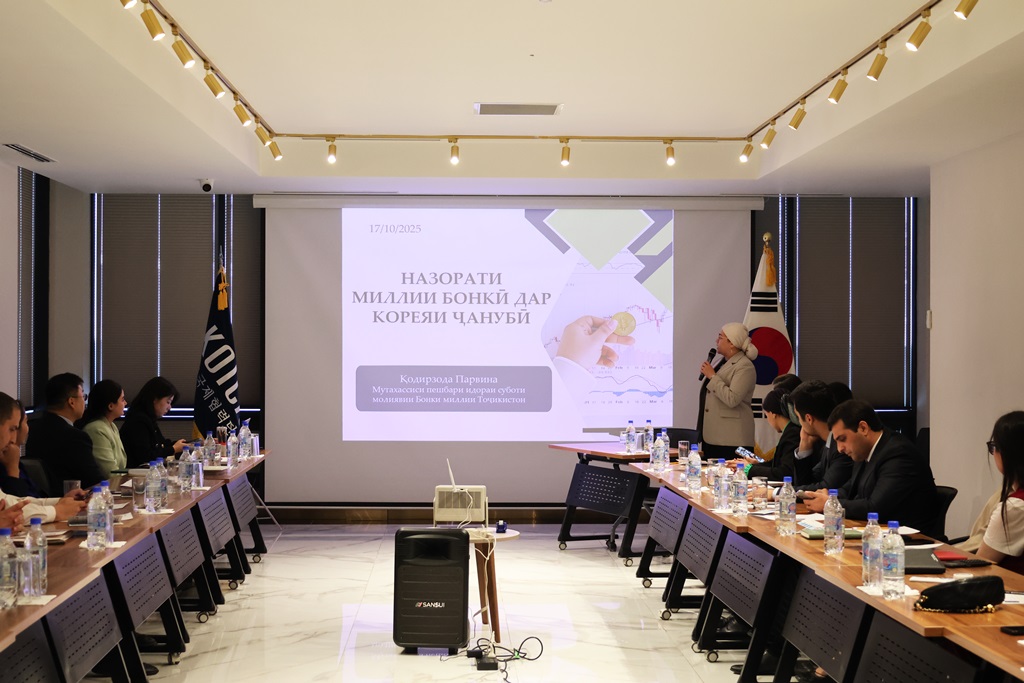
“Its functions include issuing money and coins, implementing monetary policy, developing and managing the payment system, developing statistical data and conducting economic research, maintaining and managing international reserves, and more,” Kodirzoda said.
But the highlight of her presentation was the results she achieved during the program. While Korea’s financial system is already developed and meets international standards, its banking system is competitive, regulation and supervision are a multi-layered system, and the country is a leader in digitalization in the use of digital services, Tajikistan, for example, needs to continue developing in many ways.
Regulation and oversight in our country today are primarily carried out by the NBT; digitalization is limited; furthermore, financial literacy and financial inclusion remain low.
Action plan!
At the end, NBT employee Masrur Kurbonalizoda presented a detailed action plan to the participants, outlining all the processes and stages of the plan in addition to existing problems, improvement strategies, and risks.

Today, our country’s banking sector must strengthen its skills in risk-based supervision (RBS), financial modeling, and the application of banking supervision technologies, leverage the experience of Korean technical experts, create automated processes for effective banking supervision, improve existing banking management systems, and more.
But there are also risks, notes Kurbonalizoda. For example, some employees may be reluctant to implement innovations because they are accustomed to traditional processes, technical difficulties, budget constraints, and, among other things, a “brain drain.”
This means that highly qualified specialists will be hired by private banks or international organizations after training, which may lead to the loss of important experience.
Here’s what Masrur Qurbonalizoda suggests to solve these problems:
– Phased implementation and pilot testing: New models and systems should be implemented in stages, starting with a pilot group of banks. This allows for the identification and resolution of technical issues early on, before full implementation.
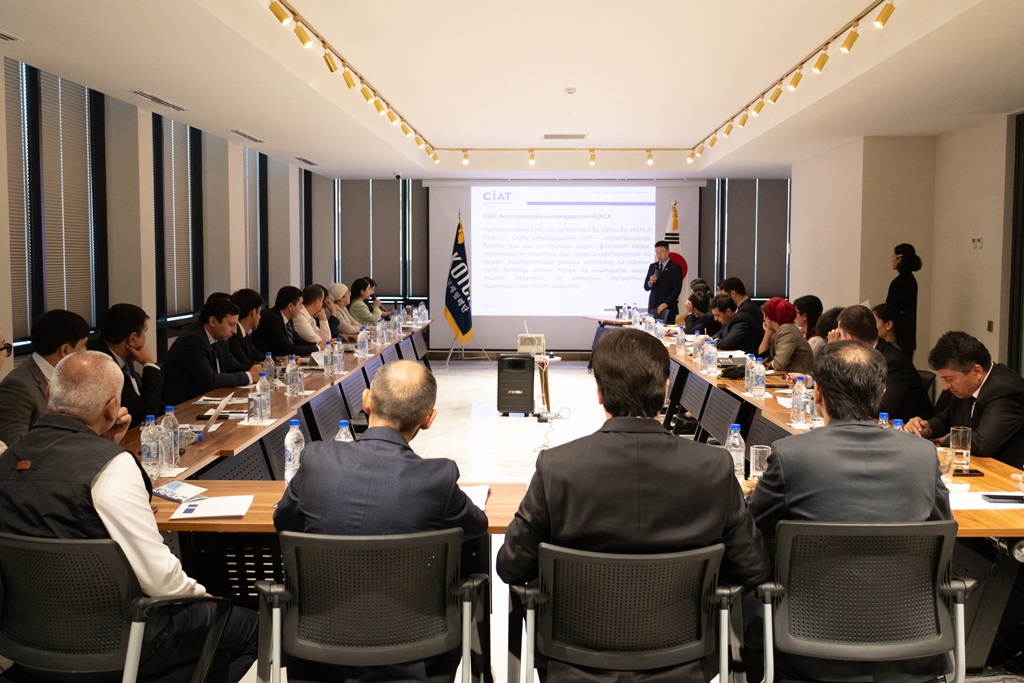
– Budgeting and cooperation with KOICA: KOICA’s initial proposal must include a detailed plan for technology implementation and support to ensure long-term funding and sustainability.
– career development and incentive systems: to retain qualified specialists at the National Bank, career development programs should be developed and special management positions with competitive salaries should be created for certified employees.
At the conclusion of the event, KOICA Program Manager Kim Heeun noted that the CIAT scholarship program will continue to contribute to the professional development of Tajik specialists and strengthen the country’s potential.
Graduates, in turn, intend to apply the knowledge and experience they have acquired to improve their industries in Tajikistan.
Google machine translated
https://www.asiaplustj.info/ru/news/0/20251020/354005