

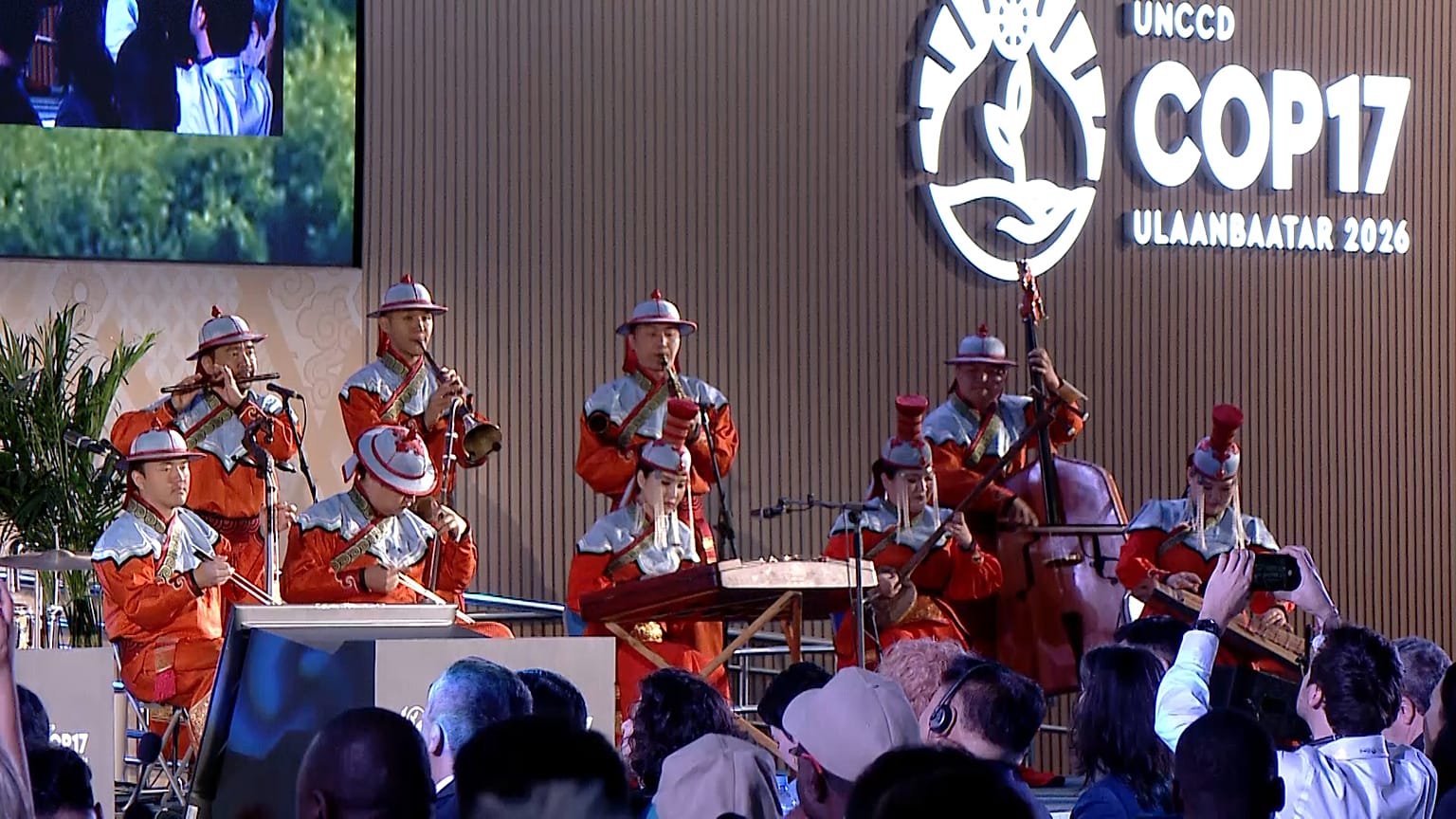
Representatives from 179 countries participating in the UN Convention to Combat Desertification are working with local residents and businesses to find solutions to the problem of land degradation, which affects half the world’s population and leads to poverty and mass migration.
Geographically, 70% of the Earth’s land is habitable. The rest is an extreme environment where it is nearly impossible for humans to survive. But this ratio is rapidly changing. Forty percent of the lands from which humanity relies for food have already been degraded and continue to be depleted. Under the influence of climate change, droughts, unsustainable agricultural use, and other forms of human activity, a significant portion of inhabited land is turning into desert, while natural, known deserts are expanding daily.
Scientists warned of this looming crisis and detailed its consequences back in the 20th century. The UN appealed to member states, reminding them that every community needs land to sustain life. Without land, there is no food, leading to poverty, migration, and conflict. Therefore, in 1994, the UN Convention to Combat Desertification (UNCCD) was adopted, entering into force in 1996. It currently has 197 parties. Their representatives meet regularly to develop mechanisms to combat desertification and land degradation.
This year, the UN entrusted Mongolia with hosting COP17. The forum opened in the capital, Ulaanbaatar, on August 17, with the participation of the majority of UNCCD member states, as well as more than 400 diverse organizations and community representatives.
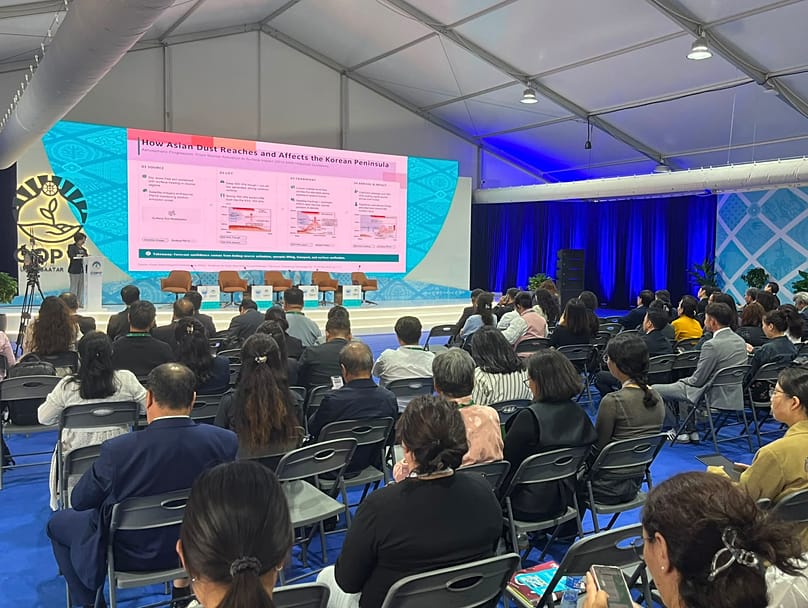
State representatives are discussing plans and funding for the UNCCD, the only legally binding international mechanism aimed at combating land degradation. Hundreds of experts from academia, NGOs, and government agencies have gathered to share experiences in combating the loss of fertile soil and discuss how to halt desertification and land degradation.
Since 2000, the number of droughts has increased by two-thirds.
Water is becoming a scarce resource, and by 2030, demand for it will exceed available reserves by 40%.
85% of those affected live in middle- and low-income countries, and much of the mass migration is driven by land degradation that is disrupting access to food and livelihoods.
The story of host country Mongolia, where the cost of a loaf of bread has tripled in just the last decade, is being repeated in other regions represented at the conference. From the opening minutes, leaders emphasized that COP17 is not about abstract environmental threats of the future, but about a problem that has already arrived and is becoming more acute with each passing month.
“This summer, we saw drought disrupt river transport and threaten energy production across the world, including in Europe. It reduced crop yields and sparked wildfires that claimed lives. Stories like these are coming from regions we never thought could be affected. The message is clear: drought is no longer just an environmental issue, not just a lack of rain or a localized natural phenomenon. It is a systemic risk to food and water security, international trade, energy, livelihoods, and ultimately, stability and prosperity,” said UNCCD Executive Secretary Dr. Yasmin Foud at the opening ceremony.
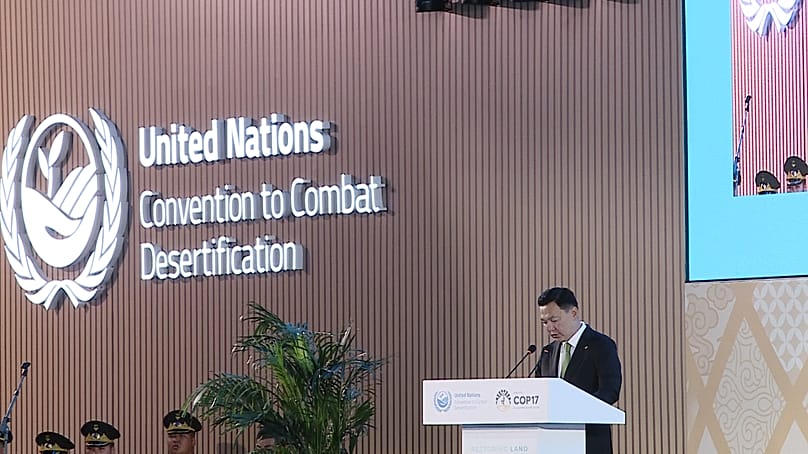
Mongolia was chosen to host COP17 for three reasons. First, the country itself expressed a desire to host the conference and submitted its bid four years ago. Second, Mongolia is among the countries particularly sensitive to the effects of land degradation. Over the past eight decades, the average annual temperature in Mongolia has increased by 2 degrees Celsius, while precipitation has significantly decreased. Winds have begun blowing sand from the Gobi Desert across the Mongolian plains, carrying it as far away as South Korea and even Japan. Finally, the country is at the forefront of global efforts to halt desertification.
“Mongolia, our vast country, is among those most affected by the challenges facing the world today. In this vast territory, where there are only two people per square kilometer, 77% of the country’s land area—eight steps out of ten—is already affected by desertification and is increasingly being covered by advancing sands,” said the Mongolian Prime Minister, recalling that since joining the UN Convention to Combat Desertification, the country has incorporated a wide range of measures into its development plans.
Leading the COP17 presidency, Mongolian Foreign Minister Battsetseg Batmunkh assured that her country is fully committed to combating the degradation of the lands on which the nomadic people’s way of life is based. These words are backed by the steps already taken.
“Today, Mongolia is contributing to global efforts through national initiatives aimed at protecting ecosystems, combating desertification, restoring degraded lands, strengthening food security, and enhancing the resilience of our people and communities. The Billion Tree National Movement, the Food Revolution, White Gold, and Unlock initiatives launched by the President and Prime Minister of Mongolia, as well as the recently adopted climate change law, are clear expressions of this national commitment. At the multilateral level, Mongolia initiated a UN General Assembly resolution proclaiming 2026 the International Year of Rangelands and Pastoralists,” noted Foreign Minister Batmunkh.
What solutions are being proposed and what can COP17 achieve?
There is no single, universal solution to the desertification problem: each region has its own unique characteristics of drought, land degradation, and their consequences. Estimates of the necessary costs, reaching nearly $6.5 trillion per year, seem prohibitive and may create the impression that this battle is a lost cause. But this is not the case.
However, experts have calculated, and businesses have already confirmed in practice, that in many projects aimed at preserving soils from turning into a Martian landscape, every dollar invested yields a return of between $7 and $30. After all, these investments in sustainable food production and “green” projects are proving profitable.
Google machine translated