
Kazakhstan
Water quality in Central Asia
To contribute to the development of efficient and coordinated national policies with regard to water quality aspects of integrated water resources management in Central Asia.
To contribute to the development of efficient and coordinated national policies with regard to water quality aspects of integrated water resources management in Central Asia.
The objective of the project is to support the establishment of long-term cooperation between the two countries on hydrology and environment. The aim is also to improve the understanding of and access to information about the water resources and environmental conditions in the upper Amu Darya Basin for relevant stakeholders in the whole basin.
The goal was to combat land degradation and improve rural livelihoods in the CACs. The objective was to establish the Central Asian Initiative for Land Management (CACILM), a multi-country and donor partnership to support the development and implementation of national level programmatic frameworks for more comprehensive and integrated approaches to sustainable land management in the region. The CACILM is a 10-year, multicountry, multidonor program promoting SLM to restore, maintain, and enhance productivity of Drylands. The goal of CACILM was to combat land degradation while also improving rural livelihoods across the region. It was anticipated that in the second and third phase significantly more resources could be invested in SLM-related activities in the Kyrgyz Republic, Kazakhstan, Tajikistan, Turkmenistan, and Uzbekistan, by the partnership of national governments, the GEF, implementing agencies, and other donors.
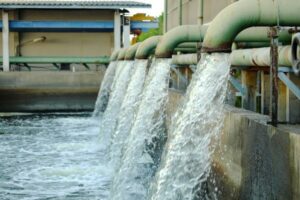
The EBRD provided a loan to finance a programme of priority capital investments, to improve the municipal water services in the Central Tajik cities of Gissar, Shachrinav, Somoniyon, and Turzonzoda. The overall objectives of this Project are to: (i) rehabilitate the water supply system and, where applicable, allow selected wastewater improvements; (b) improve both billing and collection; and (c) improve financial and operational management.
The overall project objective is to prevent conflicts and support strengthened bilateral cooperation in transboundary water management in the Isfara River basin as the means to improve local livelihoods and prevent environmental degradation in the basin. The intended outputs are: (i) strengthened transboundary mechanisms (policies, institutions, practices etc.) for effective water management; and (ii) improved local cooperation and confidence-building in border areas.
Based on the outcomes of phase I, the project supported the regional dialogue on the strengthening of institutional and legal frameworks of water resources management in Central Asia, including under the umbrella of IFAS, as well as facilitated the understanding and application of international water law in the region.

Assistance to the beneficiary countries in ensuring improved control of their energy consumption in the building sector by promoting and developing EE, as well as the use of RE where applicable, in this particular sector
To strengthen national and local capacities for participatory and informed planning, decision-making, implementation and monitoring processes in relation to environment and security
challenges and for environmental conflict prevention and resolution
The overall objective of the programme is to ensure sustainable water management in Eastern Europe, the South Caucasus and Central Asia. FinWater WEI’s purpose is to reduce water disputes inside and between countries and to improve water supply and sanitation through improved education, increased investment and better alignment of water management with the UNECE Water Convention and its Water and Health Protocol.
The project goals were:
(i) to synthesise the information presently available on glacial melting in Central Asia;
(ii) to model the impacts of a range of climate change scenarios on glacial melting on water supply in the major river basins in Central Asia for the period 2009-2100 using the best available information;
(iii) to identify the gaps in knowledge, data, observation capacity and finances, facilitate the actions required for filling these gaps, and determine the budgetary needs;
(iv) to provide a range of cost-effective recommendations to improve data availability and glacier observation capacity in the region;
(v) to raise awareness of the project results with the general public, especially decision-makers in the key water user sectors which coild be affected by hydrological changes associated with the glacier retreat.