
International and Kazakhstani experts have studied the problem of the Caspian Sea shallowing. In their study, they voiced possible catastrophic scenarios for the development of the situation and put forward a number of proposals for solving the problems, Lada.kz reports .
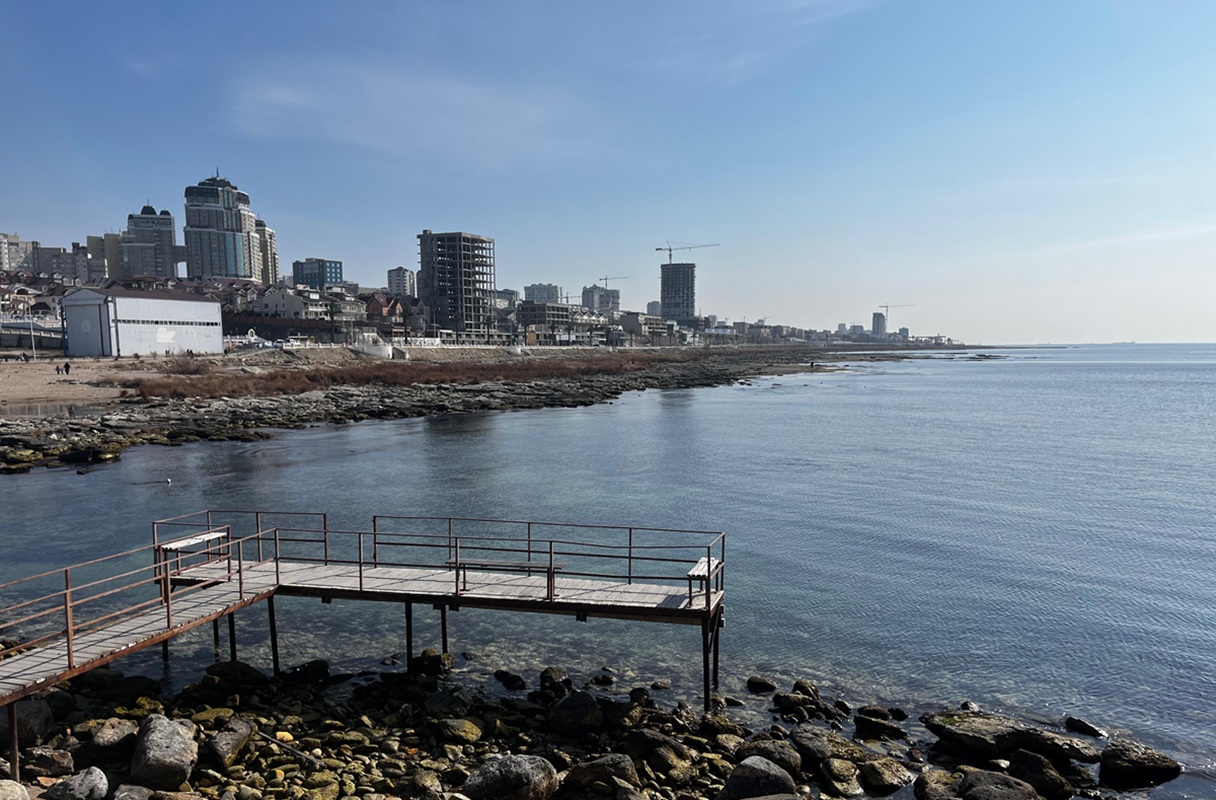
The Caspian Sea is shrinking at an alarming rate due to climate change, causing serious environmental and economic problems. New research led by the University of Leeds in collaboration with Dr Mirgaliy Baimukanov (Institute of Hydrobiology and Ecology), Dr Altynai Kaidarova and ecologist Asel Tasmagambetova (Central Asian Institute of Environmental Research) shows that even a moderate decline in water levels could dramatically impact Kazakhstan’s northern Caspian coast, leading to habitat loss for endangered species, disruption to fisheries and shipping, and threats to public health.
The Kazakh section of the Caspian Sea is extremely shallow, making it extremely vulnerable to falling water levels. The northeastern coastline has already retreated more than 50 km since 2001, turning thousands of square kilometers of former water into dry land.

Under a conservative scenario of a 5-metre drop in the Caspian Sea level, up to 60% of ecologically and biologically significant areas (EBSA) in the Kazakh part of the Caspian could be lost. If the water level drops by 10 metres, the loss could be more than 80%, threatening critical habitats and undermining conservation efforts.
Coastal cities such as Aktau, one of Kazakhstan’s key Caspian ports, and related industries (such as oil and gas facilities in the northern basin) risk being stranded tens or even hundreds of kilometers from the new coastline. This would require major infrastructure restructuring and impose significant economic costs on the country.
The Caspian seal, an endangered species and the region’s only native marine mammal, relies on ice cover in the northern Caspian during winter. A 5-metre drop in water levels could reduce these vital breeding grounds by more than half, further threatening an already stressed population.
Many Kazakh communities in the north of the country rely on artisanal fishing. As shallow waters dry up, fisheries could collapse or shift, threatening local livelihoods and food supplies.
How Kazakhstan may suffer
With major hubs like Aktau potentially relocating far inland, Kazakhstan’s export, import and oil transshipment capacity could be seriously disrupted.
As the exposed seabed dries, salty and industrial dust could be released, echoing past environmental disasters seen in other drying seas. This dust could harm human health and agricultural productivity.
The existing state nature protection zone (for example, in the northern part of the Caspian Sea) will significantly reduce its marine area. The loss of wetlands, reed beds and spawning grounds will affect bird migration and fish reproduction, accelerating the loss of biodiversity.
Dr Simon Goodman, from the University of Leeds’ School of Biology, who led the study, said: “Some decline in the Caspian Sea level seems inevitable, even if action is taken to reduce global greenhouse gas emissions. However, if the expected impacts are to be seen over a period of several decades, then it may be possible to find ways of protecting biodiversity while safeguarding human interests and well-being. This may seem like a long time, but given the enormous political, legislative and logistical challenges, it is advisable to act soon to give the best chance of success.”
Recommendations and Next Steps
Going forward, a delicate balance must be found between biodiversity and human prosperity and well-being. The researchers’ recommendations include:
- investing in strengthening regional capacity for biodiversity monitoring, conservation planning and sustainable development
- sustaining coastal communities through economic diversification (e.g. ecotourism, renewable energy) and infrastructure upgrades (e.g. desalination plants) to withstand and adapt to declining water levels.
Increasing amounts of high-resolution bathymetric data and continuous environmental monitoring will help to accurately determine how habitats are changing and take timely action.
Reducing greenhouse gas emissions and mitigating the effects of further warming are critical to limiting the extent of the Caspian Sea’s shrinkage.
This is important and timely data that helps us assess the current state of the Caspian Sea and model how the ecosystem may evolve in the coming decades. It highlights the urgent need for a comprehensive, coordinated approach, which means active cooperation between all five Caspian countries, says Asel Tasmagambetova, an ecologist and founder of the Central Asian Institute of Environmental Research.
Researchers say Kazakhstan and other Caspian countries need to coordinate policies and planning to manage shared resources, especially rivers such as the Volga and Ural that feed the Caspian Sea.
Earlier, the deputy of the Mazhilis of the Parliament, Sergei Ponomarev, made an appeal about the possible consequences of the shallowing of the Caspian Sea.
https://www.lada.kz/in_details/137371-ekologicheskaia-katastrofa-beregovaia-liniia-kaspiia-uzhe-otstupila-na-50-km.html
Google translate