

And he proposed creating a “Dushanbe Framework Programme on Water Issues.”
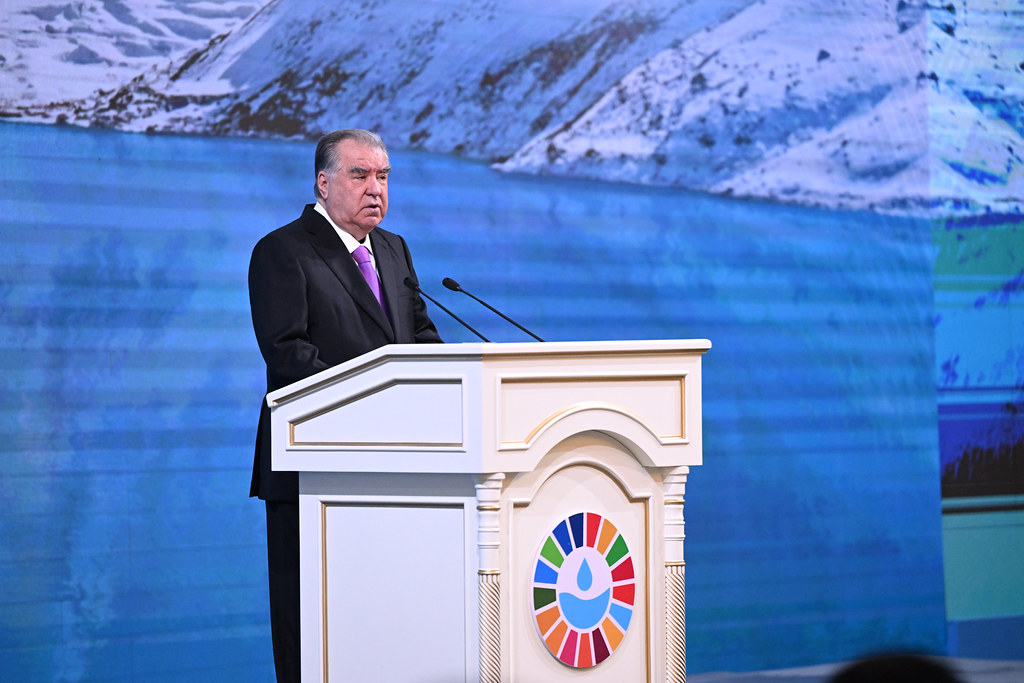
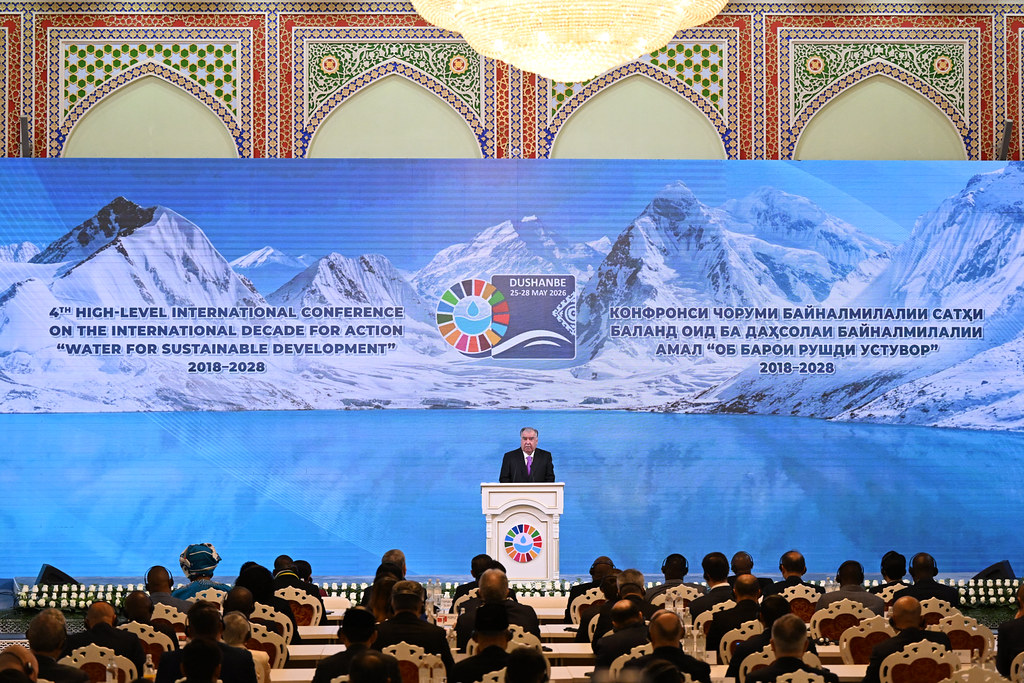
Tajik President Emomali Rahmon announced the establishment of the International Prize of the President of the Republic of Tajikistan for Water Resources. He made the announcement on May 26 at the opening of the Fourth High-Level International Conference on the International Decade for Action, “Water for Sustainable Development, 2018–2028.”
According to the head of state, the new prize was established to promote and strengthen water diplomacy, as well as to unite the efforts of the international community for a sustainable and secure future.
Emomali Rahmon noted that the prize will be awarded for outstanding contributions to the development of international cooperation, scientific research, sustainable water policy, and the promotion of effective solutions to global water problems.
The President emphasized that in recent years, Tajikistan has taken a number of practical steps to advance water issues on the international sustainable development agenda. He recalled that the country’s initiatives in this area have repeatedly received support from the UN General Assembly.
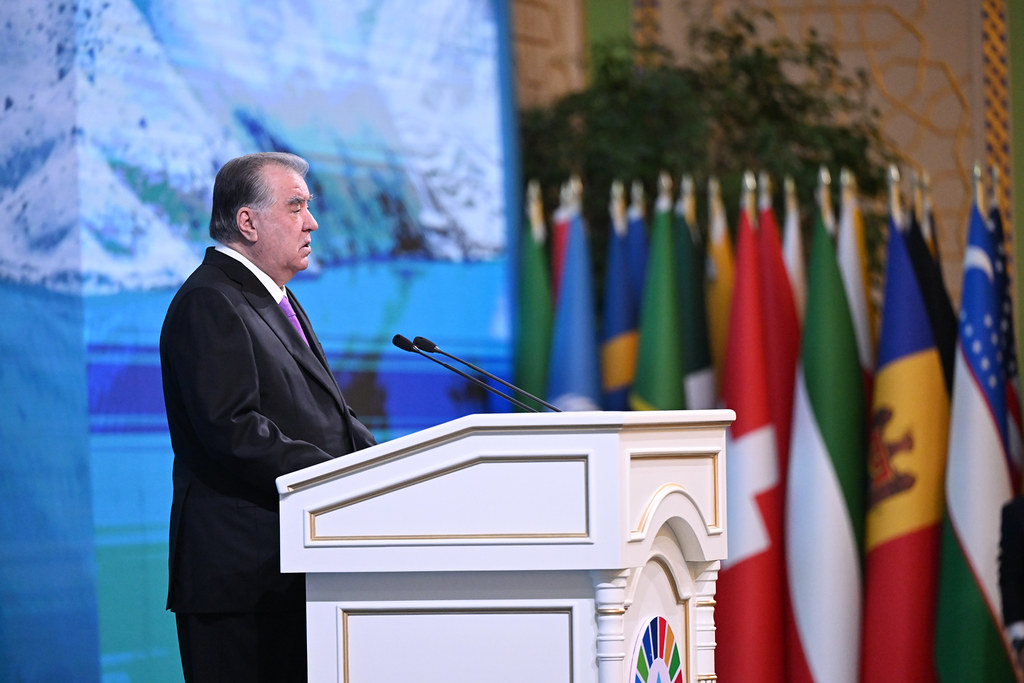
The head of state stated that Tajikistan consistently advocates for a balanced, inclusive, and results-oriented approach to resolving water issues.
In his speech, Emomali Rahmon also drew attention to the ongoing global water challenges. He noted that billions of people worldwide still lack access to safe drinking water and sanitation, and approximately 4 billion people face at least a month of acute water shortages every year.
The President noted that by 2050, global demand for drinking water could increase by at least 25%, and the need for food production could increase by 50%. Furthermore, almost half of the world’s urban population could face water shortages.
“New and rapidly developing sectors, including green manufacturing, urban development, food production, and digital infrastructure, will further increase demand for water resources. This trend makes the transition to water-saving technologies, efficient resource management, and better policy coordination across water, energy, and food even more urgent,” he said.
The head of state reported that Tajikistan is taking measures at the national and regional levels. Specifically, the country is implementing a water sector reform program and has adopted the National Water Strategy until 2040 and the State Program for Drinking Water and Sanitation for 2025–2029.
Emomali Rahmon also emphasized the importance of transboundary cooperation in the water sector. He stated that Tajikistan views the International Fund for Saving the Aral Sea as an important regional platform for discussing and addressing water issues for sustainable development. In this regard, the president proposed improving the fund’s structure and establishing an Interstate Energy Commission of Central Asia within its framework.
Taking into account the countries’ shared interests in global water cooperation, the head of Tajikistan proposed the creation of the “Dushanbe Framework Program on Water Issues.” According to Rahmon, this could become the basis for coordinating international efforts and advancing the global water agenda beyond 2030.
Google machine translated