

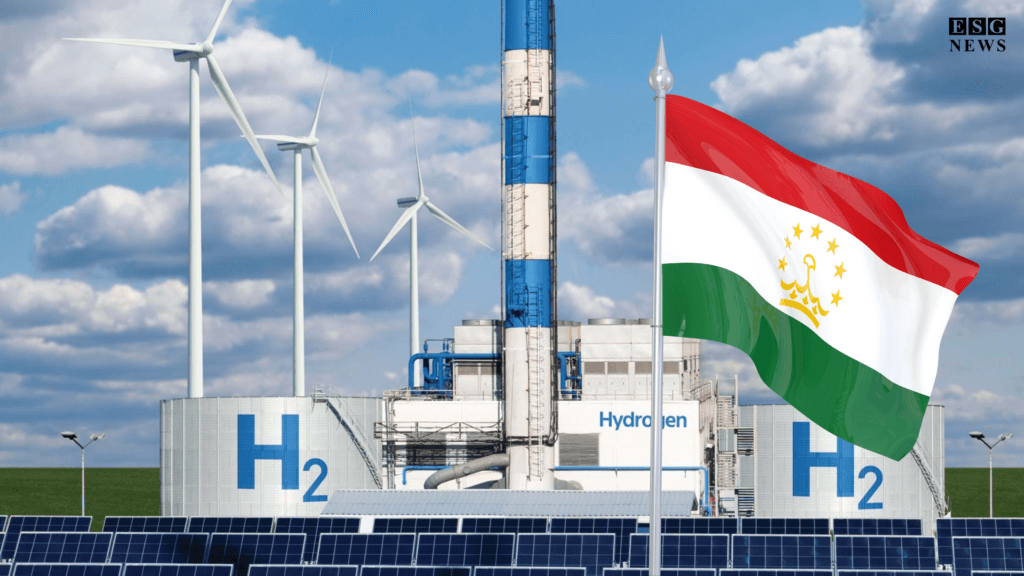
By 2040, Tajikistan plans to produce 1 million tons of green hydrogen annually for domestic use and export to neighboring Central Asian states.
Tajikistan, with its unique natural resources, has the potential to become a major player in the global hydrogen energy market.
Green hydrogen is a clean energy source that can form the basis for a country’s transition to sustainable development and economic prosperity.
According to Abdumumin Sharifov and Ulmas Mirsaidov, scientists from the Nikitin Institute of Chemistry of the National Academy of Sciences of Tajikistan, hydrogen energy could become a key element of the green economy, including opening up new opportunities for Tajikistan for exports and technological leadership.
Environmental threats and the transition to hydrogen energy
The 20th century was an era of rapid industrialization, leading to the significant use of fossil fuels such as coal, oil, and natural gas. This process contributed to improved living standards, but also led to environmental disasters, including global warming, melting glaciers, and the decline of river and sea levels. One of the most striking examples is the depletion of the Aral Sea, which has led to the expansion of desert areas in Central Asia.
These changes are driven by carbon dioxide emissions from the burning of fossil fuels. Burning 1 kg of carbon produces 3.67 kg of carbon dioxide (CO2), along with other harmful substances, which contribute to the greenhouse effect and the deterioration of living conditions on Earth.

To combat these problems, the Kyoto Protocol was adopted in 1992, and the Paris Agreement in 2015, designed to limit CO2 emissions.
These international initiatives have laid the foundation for the transition to hydrogen energy, which uses hydrogen as a clean energy source. This offers Tajikistan a unique opportunity to develop hydrogen energy while simultaneously strengthening the country’s economy and reducing environmental damage.
Tajikistan’s resources for hydrogen energy
Tajikistan has several natural resources that could serve as the basis for hydrogen production.
Firstly, these are coal deposits, the reserves of which are estimated at over 4.5 billion tons. Secondly, the country has rich hydroelectric potential – Tajikistan’s rivers can produce 527 billion kWh of electricity per year.
These resources provide a solid foundation for hydrogen energy and could play a key role in the country’s environmental transition.
According to Abdumumin Sharifov, Doctor of Technical Sciences, Professor, and Head of the Hydrogen Energy Department at the Nikitin Institute of Chemistry, Tajikistan enjoys over 300 sunny days per year, making it possible to effectively use solar panels for hydrogen production, even at home.
Thus, the scientist concludes, Tajikistan has not only hydropower and coal resources, but also solar energy, which creates unique opportunities for sustainable and environmentally friendly hydrogen production, which can be used in energy, transport, and other industries.
How can hydrogen replace coal and other energy sources?
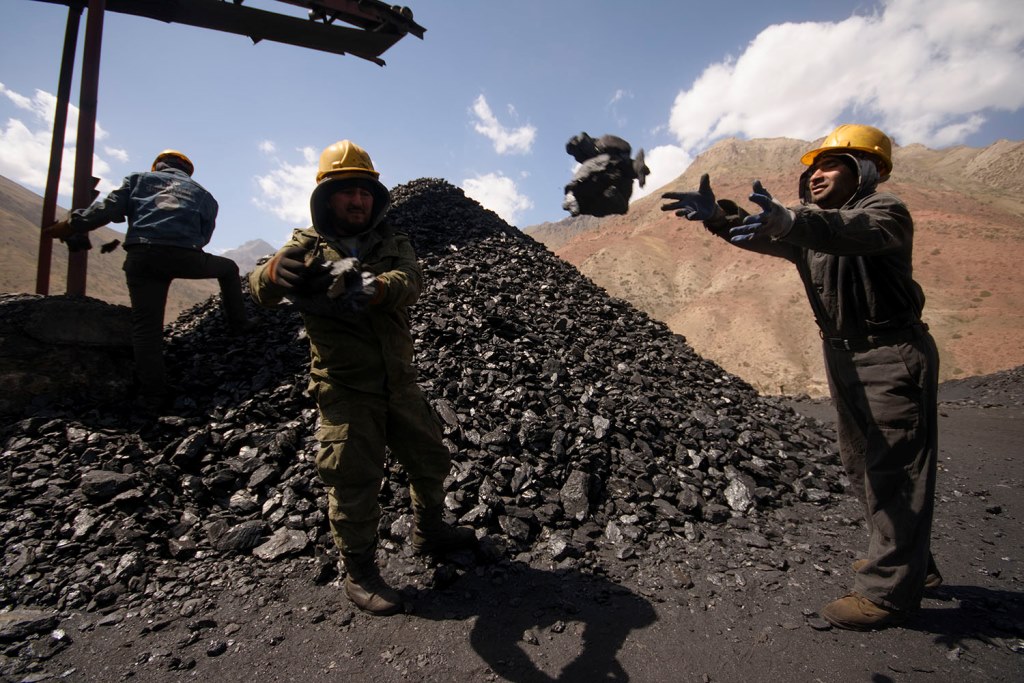
In Tajikistan, hydrogen could become an alternative to coal and other fossil fuels. Ulmas Mirsaidov, Doctor of Chemical Sciences, Professor, Academician of the National Academy of Sciences of Tajikistan, and Chief Researcher at the Agency for Chemical, Biological, Radiation, and Nuclear Safety, emphasizes that one way to obtain hydrogen is by producing it from coal.
This will allow Tajikistan to efficiently use its existing coal resources, reducing carbon dioxide emissions into the atmosphere while simultaneously creating new jobs and increasing economic potential.
The transition from coal to hydrogen in manufacturing sectors such as coal mining, construction materials production, and mineral processing will open up new prospects for Tajikistan.
This will not only reduce carbon emissions, but also make the country less dependent on fossil fuels.
Establishing hydrogen production at energy and industrial facilities is also an important step toward implementing hydrogen energy. Properly assessing and selecting hydrogen production methods at enterprises will enable the efficient and cost-effective introduction of hydrogen into the country’s economy.
How to prepare for the introduction of hydrogen energy?
To successfully implement hydrogen energy, Tajikistan needs to train personnel and create a scientific and technical base. The country already has several universities capable of training specialists in this field.
However, to ensure that education meets real market needs, it is important to establish cooperation between educational institutions and industrial enterprises.
Sharifov and Mirsaidov believe that the creation of research centers and laboratories dedicated to researching technologies for the storage, transportation, and efficient use of hydrogen will also be an important part of the work.
Hydrogen energy is a knowledge-intensive industry that requires specialists in chemistry, physics, energy, materials science, ecology, and process safety.
The creation of a scientific and technical base in Tajikistan will enable the necessary research and development of new materials and hydrogen storage systems. This will pave the way for innovation and the implementation of hydrogen technologies, which can significantly reduce the carbon footprint and stimulate economic growth.

Benefits of hydrogen energy for Tajikistan
The introduction of hydrogen energy in Tajikistan will not only reduce carbon dioxide emissions but also create new jobs, increase economic efficiency, and reduce dependence on fossil fuels.
The transition to hydrogen will help the country maintain its status as a “green country” and prevent potential environmental disasters such as melting glaciers and deteriorating water balances.
Furthermore, hydrogen energy will open up new opportunities for Tajikistan to export hydrogen. Thanks to its abundant hydropower resources and abundant sunshine, the country could become a global leader in the production of green hydrogen, the most environmentally friendly option.
Prospects for the development of hydrogen energy in Tajikistan
Hydrogen energy in Tajikistan has enormous potential for development. Excess water from reservoirs in summer can be used to produce hydrogen, which can be transported over long distances and, in the future, even traded like oil and gas.
Tajikistan, with its large hydropower resources, has a unique opportunity to become a leader in the production and export of hydrogen fuel.
According to scientists at the Institute of Water Problems, Hydropower, and Ecology of the National Academy of Sciences of Tajikistan, led by the institution’s director, Doctor of Technical Sciences Aminjon Gulahmadzoda, this sector could become the foundation for sustainable economic development in the country.

Attracting investment and developing infrastructure
To successfully develop hydrogen energy, Tajikistan needs to attract foreign investment, for example, from China, Germany, the United States, and other countries. This will not only open up new opportunities for hydrogen energy development but also reduce dependence on oil and gas imports.
However, to achieve this, it is necessary to create the necessary legislative and technical safety standards, as well as train highly qualified specialists.
Green hydrogen and international cooperation
To reduce costs and increase hydrogen production volumes, it is necessary to implement international standards and certification.
An important aspect is also international cooperation, which will provide Tajikistan with access to financial and technological resources for the implementation of hydrogen projects.
Challenges to the development of hydrogen energy
Despite its vast potential, Tajikistan faces a number of challenges. One of the most important is attracting investors to hydrogen energy, as most of the resources have yet to be developed.
Significant efforts are also needed to train personnel and create a legislative framework for the safe storage and use of hydrogen.
The future of hydrogen energy in Tajikistan
Hydrogen energy represents a potentially profitable and environmentally friendly industry for Tajikistan. The development of hydropower resources, innovative developments in hydrogen technologies, and international cooperation will open new horizons for the country.
However, for Tajikistan to become a significant player in the hydrogen energy market, it is necessary to improve the technological base, enhance infrastructure, and create conditions for the development of this sector.
Thus, Tajikistan has enormous potential for enrichment through green hydrogen.
With the right approach, attracting investment, and actively collaborating with international partners, the country can significantly increase its economic attractiveness and become a leader in this promising industry.
Hydrogen production cost in 2020:
Green hydrogen: $5 to $6.80 per kilogram.
Blue hydrogen: from $1.40 to $2.40 per kilogram.
Hydrogen grey: from $1 to $1.80 per kilogram.
Process efficiency:
H2PRO technology: 95% efficiency.
Traditional electrolysis: 70% efficiency.
Plan to reduce the cost of green hydrogen:
By 2030, the price of green hydrogen should be no more than $2 per kilogram.
Google machine translated
https://asiaplustj.info/ru/news/tajikistan/economic/20251119/kak-tadzhikistan-mozhet-obogatitsya-za-schet-zelenogo-vodoroda