

Spot spoke with Ziedullo Parpiev, Senior Manager of the ESG Practice at PwC Uzbekistan, about how this market works, why banks need it, and when getting a green loan will become as easy as getting a regular one.
Uzbekistan faces an annual shortfall of approximately $9.4 billion to transition to clean energy. The state alone can’t handle this; private capital is needed. One way to attract this is through “green” finance: loans and bonds whose proceeds go exclusively to environmental projects.
In 2023, the country placed its first sovereign green bonds on the London Stock Exchange. SQB and Agrobank followed suit. Now, other banks are starting to offer green loans, although the market is still in its infancy and there are still more questions than answers.
At the same time, Central Asia is warming almost twice as fast as the rest of the planet. In Uzbekistan, the average temperature is rising by 0.29 degrees Celsius every 10 years, increasing the risk of drought and water shortages. The World Bank estimates that the water crisis could consume up to 11% of the region’s GDP by 2050.
Spot spoke with Ziedullo Parpiev , Senior Manager of the ESG Consulting Practice at PwC Uzbekistan , about how this market works, why banks need it, and when getting a green loan will become as easy as getting a regular one.

Senior Manager of ESG Consulting Practice, PwC Uzbekistan .
Before discussing “green” finance, it’s important to understand the broader concept of sustainable finance. It’s still money management, but it takes into account additional factors: environmental, social, and governance (ESG), collectively known as ESG. A company should consider these factors on the same level as traditional financial metrics.
It turns out that a bank or investor looks not only at profitability, but also at how many emissions a company produces, how it treats its employees, whether there isinclusivenessand so on.
In practice, this means that a bank or investor not only evaluates profitability, but also looks at how many emissions a company emits, whether its employees are inclusive, and so on.
“Green” finance is precisely the environmental component, or the “E” in the term ESG, which is part of sustainable finance. Here, the focus is specifically on environmental goals, such as climate change.
In “green” financing, companies can raise funds in the same way as in traditional cases, in the form of loans (debt bonds) or equity investments (equity shares). However, the key difference is that all investments must be directed exclusively toward environmental projects.
What is already happening in Uzbekistan
In 2023, the government issued its first green bonds. However, this was more of a test to see if there was demand from ESG investors and an attempt to create a case for future green issues.
The test passed, and business followed suit. UzKRI (Mortgage Refinancing Company) issued 50 billion soums in 2024 for green mortgages and energy-efficient housing renovations. Uzpromstroibank raised a total of $500 million and 2.25 trillion soums in corporate green bonds between 2023 and 2024. Agrobank placed a $455.1 million issue on the London Stock Exchange in September 2024.
At the same time, international financial institutions are opening special credit lines through local banks. The EBRD allocated $40 million to Hamkorbank, and Ipak Yuli Bank received a green line of up to $35 million. Asaka Bank, Agrobank, Ipoteka Bank, and Aloqa Bank already offer “green” consumer loans, mortgages for home insulation, and leasing for energy-efficient equipment.
In Uzbekistan, bonds can be issued in either soums or dollars, but the choice of currency influences the range of investors and the level of demand.
Many people don’t know about the Entrepreneurship Development Company (EDCOM). It provides banks and microfinance institutions with resources to finance SMEs’ green projects, refinances existing loans for green technologies, and offsets part of the interest costs—effectively making loans cheaper for small businesses.
Why did this even start?
The green finance market in Uzbekistan did not emerge spontaneously; it was driven by two factors, one external and one internal.
Externally: In recent years, there has been a huge global demand for sustainable and climate-sensitive assets. By 2022, more than $30 trillion in investments globally took into account ESG factors—more than a quarter of all funds managed by investment funds and other financial institutions. This means that when choosing where to invest, investors are increasingly considering environmental and climate risks. For Uzbekistan, the lack of “green” instruments could mean that much of global capital will pass the country by.
From the inside: the country has made significant commitments. In NDC 2.0 —the official climate plan under the Paris Agreement—Uzbekistan set a target to reduce greenhouse gas emissions by 35% by 2030. The latest NDC 3.0 sets the bar even higher—minus 50% by 2035. This is a truly ambitious goal, but achieving such results requires significant investments in energy, industry, and transport.
The scale of the need is clearly illustrated by a single figure: to achieve climate neutrality by 2055, the country needs $20.4 billion annually, while only about $11 billion is currently available. The gap is $9.4 billion annually. Closing it without private capital is impossible.
The third factor is that we have material climate and water risks: agriculture uses about 90% of fresh water, energy has historically depended on gas and coal, and winter peaks in demand lead to interruptions.
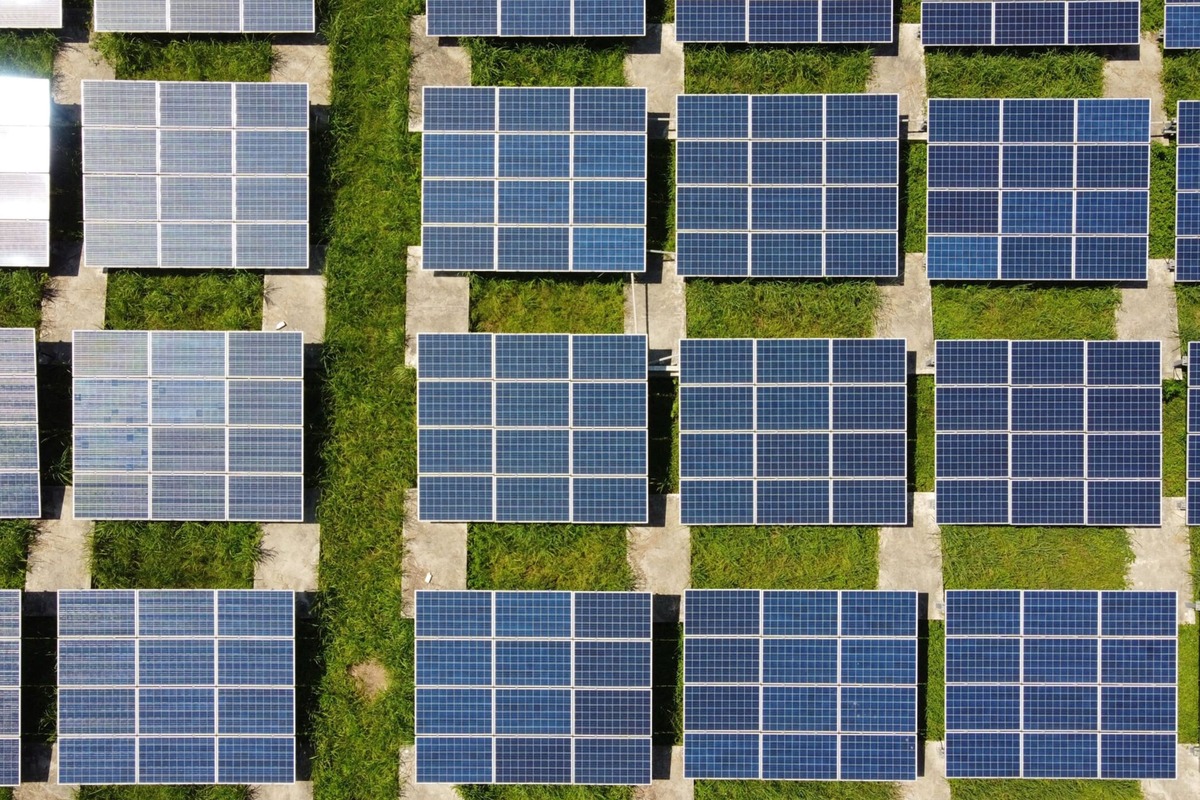
“Green” money is going precisely to where our bottlenecks are: into new solar and wind farms with storage systems to make the grid more stable and utilize renewable energy sources; into insulating homes and modernizing equipment and lighting in factories to use less energy while producing the same volumes. In other words, the availability of “green” money motivates us to switch to all these modern solutions because they become more affordable.
Why do banks need this and does it make economic sense?
Banks play a key role in developing green finance. They are the ones who transform environmental goals into tangible, funded projects. This requires a comprehensive approach: from analyzing the environmental impact of initiatives to closing the deal, monitoring the targeted use of funds, and regularly monitoring borrower reporting.
Simply put, the bank selects projects aimed at sustainable development, evaluates them for compliance with established criteria, provides resources for implementation, and ensures that allocated funds are spent strictly for their intended purpose.
It’s often argued that oil, gas, and fossil fuel projects in general are more profitable than “green” ones. This is no longer true. A 2025 study shows that solar and wind power are currently cheaper than natural gas, and the gap will only widen.
Indeed, over 60% of European banks’ revenue comes from loans to highly carbon-intensive companies, meaning the largest share of financial resources is still directed to the largest emissions-producing sector—energy. Therefore, it’s important to understand that the economic benefits of developing green finance for banks are already clearly evident in the figures.
Yes, while most banks – including European ones – are still making moneycarbon-intensivecompanies: more than 60% of their income comes from such loans. But the economic logic is already changing.
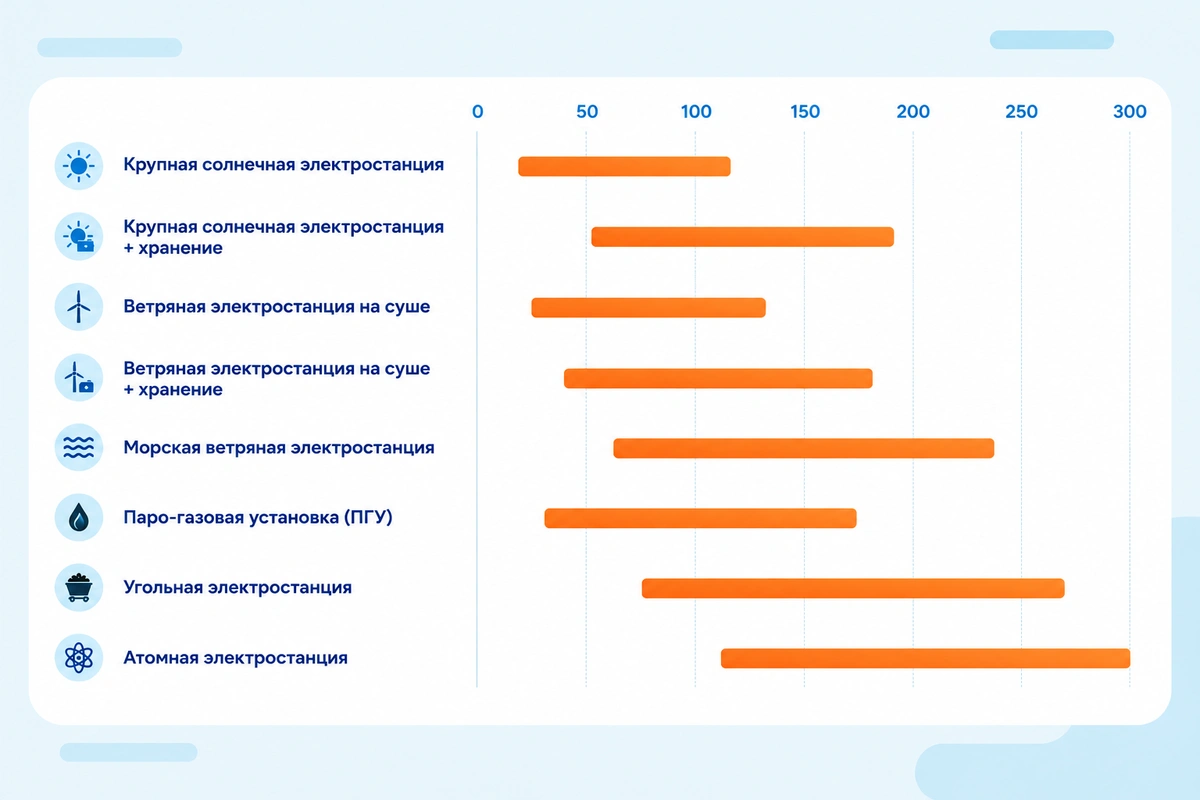
Range of specific capital costs (in US dollars per kilowatt, $/kW) for different types of power plants and energy systems with storage for 2025.
As you can see, electricity from renewable energy sources is already cheaper than many “dirty” alternatives. And this gap will only widen over time.
But it’s not just about energy costs. There are three specific benefits for banks.
The first is access to resources from international financial institutions on better terms. “Green” status opens credit lines from the EBRD, ADB, and IFC on better-than-market terms. These deals are structured at rates and terms that are, on average, more favorable than standard market funding, and the costs are covered by grants and technical assistance.
The second is the actual growth of project demand. Uzbekistan plans to increase its renewable energy capacity to 27 GW by 2030, providing 40-54% of its electricity generation. A package of 3.5 GW projects has already been announced in Karakalpakstan, Bukhara, Kashkadarya, and the Tashkent region, worth approximately $3.3 billion.
For banks, this means stable, multi-year demand for project financing of solar and wind power plants and energy infrastructure.
Finally, by developing green finance, Uzbek banks are improving their valuation and facilitating access to capital in the future. According to the updated “Uzbekistan Strategy 2030,” the number of state-owned banks will gradually decrease from seven in 2027 to four by 2030. Which banks will remain state-owned has not yet been disclosed.
But having a verified “green” portfolio is a compelling argument for institutional investors. And the wider the pool of potential investors, the cheaper it is for the bank to raise capital.
How banks work with green projects and what hinders them
The bank selects projects, assesses their compliance with environmental criteria, provides financing, and ensures that the funds are used for their intended purpose. It sounds similar to regular lending, but it’s more complicated.
The work is divided into two modes. If a bank attracts funding from an international financial institution, the institution itself sets the rules: selection criteria, reporting formats, and risk management procedures. The bank needs at least a core ESG team capable of assessing and monitoring green projects—without it, it simply won’t be able to access such funding.
The absence of such a team limits the bank’s ability to work with international financial institutions. In some cases, IFIs may engage independent experts—engineers, ecologists, and technical consultants—to review projects and ensure compliance with established standards. This additional line of control ensures a more in-depth and objective review.
The situation is more complex when a bank wants to develop green lending at its own expense. Often, it lacks both a team and established procedures for assessing such projects. Verifying a project’s green credentials is more challenging than with a standard loan: it requires specialists in ESG and international standards, as well as an understanding of the technical details of the project being financed. Therefore, employees must learn new skills on the job or seek assistance from external consultants.
A national “green” taxonomy —a classification system that determines which projects are considered “green” and which are not— can help with the assessment . In Uzbekistan, it is already enshrined in legislation, but its implementation is limited: its use is still voluntary, and most banks and companies lack the skills to use it.
Another systemic problem is the lack of data and analytics. To finance a green project, its economics must be calculated taking into account its environmental impact. But in our conditions, precise statistics are often lacking: for example, how much water can actually be saved in a specific area or how much energy costs will be reduced at a specific enterprise as a result of the project.
According to the EBRD, 84% of its partner banks require additional support precisely because of a lack of data. As a result, banks collect information manually through their front office, which increases the workload for both the bank and the borrower.
This problem can be addressed by collecting and digitizing basic sector statistics and developing industry benchmarks (Best Available Techniques) that banks and companies can rely on when evaluating projects.
Finally, one of the problems is mental inertia. For many banks, ESG still feels alien, distant from the reality of the Uzbek economy. It’s important for bank management to recognize that green financing offers real opportunities and isn’t just an additional expense.
What are the risks of green financing?
The main specific risk of “green” financing is “greenwashing”: when stated environmental goals don’t match the actual impact. If a project turns out to be less “green” than promised, the bank risks claims from investors and sanctions from regulators.
This happens even in developed markets. One of Europe’s largest asset managers, DWS (Deutsche Bank Asset Management), overstated the extent of ESG integration in its funds for several years. The result: fines of $19 million in the US and €25 million in Germany, the resignation of the CEO, and searches.
There haven’t been any overt cases of greenwashing reported in Uzbekistan, but the risk remains. One possible scenario is that a company purchases a small number of “green” certificates (tradable documents confirming the production of 1,000 kWh from renewable sources) and presents this as development, even though the actual impact on emissions is virtually nonexistent.
Given that the country has no mandatory standards for disclosing climate information, it is difficult to distinguish between good practice and ostentatious practices.
PR and marketing campaigns may portray projects as “significant progress,” but the actual scale of change (a cosmetic improvement in the energy consumption structure on paper) does not match the image the company creates among regulators, investors, and the public.
The following help mitigate this risk: the use of taxonomy, external and internal audits, and reliance on verifiable indicators rather than declarations.
Another risk, particularly noticeable in Uzbekistan, is the lack of high-quality “green” projects. Banks are facing a shortage of clients willing and able to implement green solutions. Many entrepreneurs fear that such projects will generate less profit or be unstable, as there is no established demand yet.
A separate issue is low awareness among banking teams, businesses, and the general public. Few people know about “green” products and incentives, so demand is slow to grow and the quality of projects often falls short.
Otherwise, the risks of green finance are similar to those of traditional lending—credit, operational, market, and reputational risks. Furthermore, it is now necessary to consider climate risks, which can manifest themselves in physical (for example, damage to assets due to extreme weather events, droughts, or floods) and transition risks (related to changes in legislation, environmental regulations, shifts in demand, and technological change).
How a bank can develop a green direction
The first step is to determine the bank’s overall readiness for green financing and its ambitions. Best practice is to integrate it into the overall strategy rather than isolate it as a separate area: formulate sectoral priorities, assess the current portfolio, and set measurable targets for the share of green assets and decarbonization.
The next stage is organizational integration. This requires a responsible person at the top management level, an ESG assessment within lending processes, a list of what the bank does not finance, employee training, and specialized products.
Each bank’s path will be unique, depending on its portfolio, resources, and ambitions. But those who enter this system first will benefit both their clients and their reputation.
What does this give to the average person?
Green finance is ultimately intended to benefit the wider population, although the initial focus is often on large projects.
Today, a number of banks are offering small and medium-sized businesses “green” loans for the purchase of energy-efficient equipment and renewable energy installations, which ultimately reduces energy bills and, at the same time, emissions.
Individuals also have access to consumer loans for electric vehicles and solar panels, as well as preferential mortgages for insulation, window replacement, and boiler replacement. The “Solar Home” subsidy program allows for the sale of excess electricity to the grid: over the first six months of 2026, 61,100 Uzbek citizens received 330 billion soums in such payments. If the panels are purchased on credit, the savings on electricity help offset the bill, and after 4-6 years, the equipment begins to generate real income.
There are also indirect benefits for every citizen. A home with solar panels is less vulnerable to tariff fluctuations and accidents. Green investments in infrastructure mean people will have better service.
Taking examples from other countries, for example, in Chile, “green” transport financing enabled the rapid replacement of buses with electric ones. In China, massive bank programs and “green bonds” for replacing coal-fired boilers have led to a significant reduction in PM2.5 pollution in cities. As a result, street air has become cleaner in these countries, which is especially important for Uzbekistan.
But getting a green loan isn’t yet convenient. There are three main barriers.
Interest rates are almost the same as for regular loans. Most “green” products are tied to the Central Bank rate plus a surcharge—currently, around 20% per annum. There are virtually no benefits for being “green.”
Secondly, more documentation. The bank needs to prove to the investor or internally that the loan is truly “green.” Therefore, the client is required to provide a contract with the equipment supplier, technical specifications, energy efficiency certificates, and installation certificates.
While a typical consumer loan might require just one or two income statements and a passport, or a couple of clicks in the bank’s app, the list of documents here is longer, and the client may not be able to gather some of the information themselves.
There’s also an information barrier and mistrust. Most households don’t understand what a “green loan” is or how it works. People generally follow a simple logic: if the interest rate is 20-24% and the term is short, then whether it’s a “green loan” or not doesn’t really matter.
At the same time, prices for high-quality solar panels, thermal insulation, or boiler replacement are high, the payback period is extended, and electricity supply and tariffs do not always provide obvious benefits.
Farmers and dehkans (peasants) are a different story. In Uzbekistan, agriculture is a key economic sector, but its productivity is declining due to soil salinization and inefficient irrigation. Ninety percent of freshwater is used for irrigation, and the situation is worsening.
But “green” loans often don’t reach agricultural producers. Farmers and dehkans (peasants) lack formal collateral and transparent reporting, banks consider the agricultural sector risky due to its dependence on weather, and a typical project—drip irrigation or a solar system for a farm—is too small to justify the administrative costs.
To change this, several things are needed: reduce the cost of loans through international financial institutions and government programs, standardize procedures so that loan officers fill out a few fields instead of a folder of documents, and explain the specific economics to people—how energy savings cover the loan payment.
What happens next?
The future of sustainable finance in Uzbekistan looks promising, but requires a systematic approach.
The country is already working with international standards, issuing green bonds, and attracting financial institutions. The next step is clear rules, standardized procedures, and specialists who are skilled in evaluating green projects.
In the coming years, I expect significant development in instruments—from green loans to sustainable investments. I believe that in 3-5 years, the sustainable finance market will become more structured and accessible, with standardized procedures and new instruments emerging.
We also estimate that green financial instruments in Uzbekistan will grow by 15-20% annually. The total volume of green loans in the economy currently stands at less than $0.5 billion; by 2030, it could exceed $1.5-2 billion. The main drivers are the implementation of NDC 3.0, climate adaptation, and decarbonization.
The energy, transport, and agriculture sectors will be the leaders in attracting green loans. Social bonds also have great potential—they can finance projects in education and the social sector, an instrument that has been largely underutilized so far.
In 3-5 years, the market should become more structured: standardized procedures, mandatory requirements for climate information disclosure, and new products will emerge. The banks that join this system first will benefit in terms of client influx, reputation, and access to capital.
Google machine translated