

We could be talking about hundreds of millions of dollars.
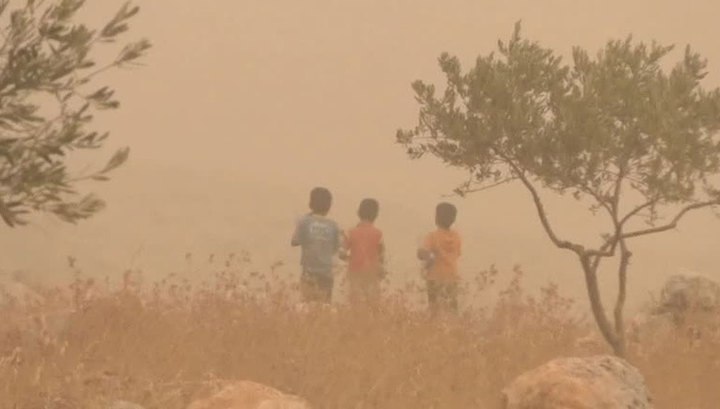
The frequency and intensity of dust and sandstorms in Tajikistan have increased exponentially, but economic assessments of their impact remain limited, and in some cases, non-existent.
Sand and dust storms silently cross borders and have a serious impact on the environment and the lives of hundreds of millions of people in various parts of the world.
According to the United Nations Convention to Combat Desertification (UNCCD), approximately 2 billion tons of sand and dust enter the atmosphere each year, equivalent to the weight of 350 Great Pyramids of Giza.
However, these extreme weather events remain underestimated.
In recent decades, the frequency and intensity of dust storms have increased in some arid regions due to changes in land use and land cover, as well as changing climatic factors.
Experts say that unless appropriate mitigation measures are taken, the adverse effects of dust and sand storms will become even more severe.
“Dust and sand storms are closely linked to climate change and its impacts. Global warming leads to increased droughts, soil degradation, and desertification in some regions. These processes contribute to the formation of new dust storms. Thus, climate change contributes to an increase in their frequency and intensity in many parts of the world,” says Murod Ergashev, PhD in agricultural sciences and senior researcher at the Institute of Soil Science and Agrochemistry of the Tajik Academy of Agricultural Sciences.

It is already becoming clear that these phenomena can undermine the economic development of countries and threaten the achievement of some Sustainable Development Goals.
Economic losses from just one major storm can be estimated at hundreds of millions of dollars.
International concern about sand and dust storms and the recognition of the need for joint efforts to prevent, forecast and mitigate their consequences led the UN General Assembly to proclaim the Decade (2025–2034) to Combat Sand and Dust Storms .
The multiple impacts of dust and sand storms
Sand and dust storms differ from many other natural disasters in that they typically do not cause significant structural damage. They are also often not directly associated with deaths or injuries. Most health effects involve deterioration in health, possible vision problems, and respiratory or cardiovascular diseases caused by increased air pollution.
However, the cumulative damage from such storms can be significant.
In regions where sand and dust storms occur, there is a decrease in agricultural yields, loss of livestock, and depletion of the fertile soil layer.
In areas affected by them, air and water quality deteriorates and transport links are disrupted.
Such weather events may also adversely affect the operation of infrastructure and equipment, suspend or restrict the provision of services and the supply of goods.
Sand and dust storms affect hundreds of millions of people around the world, from sub-Saharan Africa to northern China and Australia.

However, estimates of the economic impact of such storms are very limited. The UNCCD Compendium on Sand and Dust Storms notes that the first attempts to estimate economic damage were made in the mid-1980s, when experts attempted to calculate the external costs of sandstorms for businesses and households in the US state of New Mexico.
There are currently various approaches to measuring the economic impact of these weather events, and this is not surprising. The impacts of sand and dust storms are multifaceted and often transnational.
For example, storms originating in the Sahara can transport dust and sand particles thousands of kilometers across the ocean, impacting daily life in the Caribbean region. For example, the influx of dust from Africa into the European Alps in March 2022 was a factor in the record-breaking glacier loss that year.
At the same time, there are also positive aspects that need to be considered, especially when making long-term assessments. Nutrients contained in transported dust help fertilize marine and continental ecosystems, which has a positive impact on agriculture and fisheries.

Cost of dust and sand storms: Examples of estimates
According to available data, the Middle East and North Africa region alone loses approximately $13 billion annually due to increasingly frequent sand and dust storms. In northern China, these storms caused economic losses of nearly $1 billion between 2010 and 2013.
In 2018, an analysis of the economic impact of dust storms on oil and gas production in Kuwait was conducted. Damages were estimated at $9.36 million . Furthermore, oil export losses due to the closure of marine terminals were estimated at an additional $1.03 million per tanker.
In turn, a number of researchers claim that economic losses from dust storms in the Iranian region of Sistan over the four-year period from 2000 to 2005 amounted to between $100 and $124.85 million , mainly due to physical damage and loss of productive man-hours.
The economic impact of a single severe dust storm in New South Wales, Australia, in 2013 was estimated at AUD 299 million. Households accounted for the majority of the impact (85% of expenditure), followed by transport (primarily air travel) and commercial activities.
The Food and Agriculture Organization of the United Nations (FAO) cites the example of a severe dust storm in northeast Asia in March 2021. It killed 200,000 livestock and destroyed 121 animal shelters in Mongolia, leading to the cancellation of hundreds of flights at airports in China.

FAO also notes that the socio-economic impacts of these phenomena often fall disproportionately on those least able to cope with them, including smallholder farmers and people living in poverty.
Experts who study the economic impacts of sand and dust storms agree that the main challenge is identifying and collecting relevant data for analysis, as damage depends on many factors.
They also remind that any calculation of economic impact will be an estimate and will always have some degree of error.
Is the damage from dust storms not quantifiable?
More than 80% of Central Asia’s approximately 400 million hectares are covered by deserts and steppes. Combined with climate change and prolonged droughts, this creates a natural source of sand and dust storms.
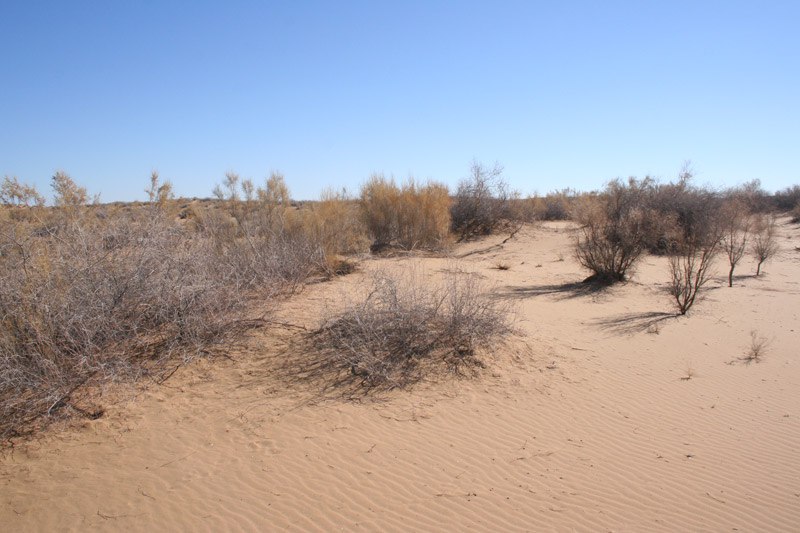
At the same time, unsustainable practices of irrigated agriculture and grazing, mining, logging and other activities create conditions for the formation of anthropogenic storm sources.
According to the Regional Medium-Term Strategy for Sand and Dust Storm Management in Central Asia for 2021-2030, the total area at medium to high risk of dust and sand storms in the region is approximately 85 million hectares. Nearly 6.5 million people, or 9% of the Central Asian population, live in high-risk areas.
In addition to the impact on public health, one of the main consequences of dust and sandstorms in the region is land degradation and reduced agricultural yields. For example, in Kazakhstan alone, annual damage from humus loss is estimated at $2.5 billion . This impacts food security and farmer incomes, which are the backbone of the economy for many Central Asian countries. Dust transport also impacts glaciers, causing increased melting, particularly in the Tien Shan and Pamir mountains.
Currently, no country in the region calculates direct economic losses from sand and dust storms. In many cases, significant direct human losses or financial costs cannot be directly attributed to these events. The five Central Asian “stans” also lack a compensation scheme for the impacts of sand and dust storms.
Despite the increasing frequency of storms in the region and their growing economic impact, Central Asian countries lack fully functioning national systems for forecasting, early warning and monitoring.
Experts note that the region is experiencing certain difficulties in obtaining the initial data necessary for this, and the process of recording these phenomena is unsystematic and sporadic , which makes it impossible to calculate the economic damage.
Concerns are growing in Tajikistan
According to the Academy of Sciences of Tajikistan, the number of dust storms in the country has increased tenfold over the past 30 years. In the National Strategy for Adaptation to Climate Change for the Period up to 2030, dust and sand storms ranked third in descending priority out of 14 climate risks.

Local experts agree that these natural disasters have begun to have an increasing impact on public health and the economy, although the scale and extent of this impact remain largely unknown.
The National Action Plan for the Prevention and Mitigation of Dust and Sandstorms in Tajikistan for 2022–2030 notes that “according to preliminary estimates, the Strategy estimates damage from dust and sandstorms at over $450,000 annually.”
However, Mirzo Saidov, a leading national expert on the development of the aforementioned National Action Plan and a professor at the Department of Hydrogeology and Engineering Geology of the Geological Faculty of TNU, noted in his comments that the new version of the document contained an error and referred to 45,000 US dollars.
However, we were unable to obtain more detailed information on what these estimates are based on.
Dust storms in Tajikistan pose risks to agriculture, from soil degradation to crop damage. However, this sector remains a source of employment and livelihood for a significant portion of the population and is the most vulnerable to climate change.
Frequent dust and sandstorms lead to deteriorating air quality. Wind-blown dust is often a significant source of fine PM2.5 particles in the air. This contributes to an increase in respiratory diseases and allergies and places additional strain on the healthcare system.
Another increasingly alarming impact of storms is glacier degradation. Although glaciers account for only 10-20% of the annual runoff of major rivers, their importance is difficult to overestimate. Eighty percent of Tajikistan’s glacial water flows to neighboring countries via the Zeravshan, Amu Darya, and Syr Darya rivers.
“The ongoing melting and retreat of glaciers due to climate change is particularly concerning, as the republic’s glaciers and snow reserves are the main sources of irrigation water. The transport of huge quantities of salt-laden dust from the Aral Sea region also affects the movement of individual glaciers,” emphasizes Murod Ergashev.
Such studies have not been conducted in the republic.
It’s worth noting that Tajikistan has little experience managing and preventing sand and dust storms. Despite the importance of research related to these phenomena in Tajikistan, very limited work has been conducted in this area.
There is a shortage of qualified specialists and insufficient scientific and technical potential.
“Until now, no specific studies have been conducted in Tajikistan to determine the risks and threats of sand and dust storms, including those associated with climate change. Unfortunately, the country has not yet developed a methodology for recording the occurrence of such storms as a type of natural disaster. Information on the direct risks of these natural phenomena at the national level is lacking,” notes Murod Ergashev.

Mirzo Saidov shares this opinion.
“While developing the National Plan (for the prevention and mitigation of dust and sandstorms, – ed.), we encountered a number of difficulties. Much data is simply missing. For example, there’s no mapping or zoning of the territory based on the intensity and impact of dust storms, the negative consequences of these storms and their impact on healthcare and other economic sectors have not been studied, and there’s no mechanism for assessing damage,” he says.
Economic assessments for finding effective solutions
Estimating the full economic losses from dust and sandstorms is difficult because they affect multiple economic sectors and impact entire communities.
At the same time, economic assessments of their impacts allow for a more accurate assessment of the scale of damage they cause and justify the need for investment in mitigation measures. These studies can identify vulnerable economic sectors and suggest adaptation and prevention strategies.
Mirzo Saidov believes that to improve the situation, it is necessary to focus on training personnel, expanding and modernizing the meteorological observation network, and strengthening regional and international cooperation.
According to him, “these measures can contribute to significant improvements in the prevention, preparation and forecasting of dust and sand storms in Tajikistan.”
By understanding the full economic impact of sand and dust storms, authorities can more effectively allocate resources and develop strategies to reduce risks and protect populations, ultimately contributing to the country’s sustainable development.
We could be talking about hundreds of millions of dollars.
The frequency and intensity of dust and sandstorms in Tajikistan have increased exponentially, but economic assessments of their impact remain limited, and in some cases, non-existent.
Sand and dust storms silently cross borders and have a serious impact on the environment and the lives of hundreds of millions of people in various parts of the world.
According to the United Nations Convention to Combat Desertification (UNCCD), approximately 2 billion tons of sand and dust enter the atmosphere each year, equivalent to the weight of 350 Great Pyramids of Giza.
However, these extreme weather events remain underestimated.
In recent decades, the frequency and intensity of dust storms have increased in some arid regions due to changes in land use and land cover, as well as changing climatic factors.
Experts say that unless appropriate mitigation measures are taken, the adverse effects of dust and sand storms will become even more severe.
“Dust and sand storms are closely linked to climate change and its impacts. Global warming leads to increased droughts, soil degradation, and desertification in some regions. These processes contribute to the formation of new dust storms. Thus, climate change contributes to an increase in their frequency and intensity in many parts of the world,” says Murod Ergashev, PhD in agricultural sciences and senior researcher at the Institute of Soil Science and Agrochemistry of the Tajik Academy of Agricultural Sciences.
It is already becoming clear that these phenomena can undermine the economic development of countries and threaten the achievement of some Sustainable Development Goals.
Economic losses from just one major storm can be estimated at hundreds of millions of dollars.
International concern about sand and dust storms and the recognition of the need for joint efforts to prevent, forecast and mitigate their consequences led the UN General Assembly to proclaim the Decade (2025–2034) to Combat Sand and Dust Storms .
The multiple impacts of dust and sand storms
Sand and dust storms differ from many other natural disasters in that they typically do not cause significant structural damage. They are also often not directly associated with deaths or injuries. Most health effects involve deterioration in health, possible vision problems, and respiratory or cardiovascular diseases caused by increased air pollution.
However, the cumulative damage from such storms can be significant.
In regions where sand and dust storms occur, there is a decrease in agricultural yields, loss of livestock, and depletion of the fertile soil layer.
In areas affected by them, air and water quality deteriorates and transport links are disrupted.
Such weather events may also adversely affect the operation of infrastructure and equipment, suspend or restrict the provision of services and the supply of goods.
Sand and dust storms affect hundreds of millions of people around the world, from sub-Saharan Africa to northern China and Australia.
However, estimates of the economic impact of such storms are very limited. The UNCCD Compendium on Sand and Dust Storms notes that the first attempts to estimate economic damage were made in the mid-1980s, when experts attempted to calculate the external costs of sandstorms for businesses and households in the US state of New Mexico.
There are currently various approaches to measuring the economic impact of these weather events, and this is not surprising. The impacts of sand and dust storms are multifaceted and often transnational.
For example, storms originating in the Sahara can transport dust and sand particles thousands of kilometers across the ocean, impacting daily life in the Caribbean region. For example, the influx of dust from Africa into the European Alps in March 2022 was a factor in the record-breaking glacier loss that year.
At the same time, there are also positive aspects that need to be considered, especially when making long-term assessments. Nutrients contained in transported dust help fertilize marine and continental ecosystems, which has a positive impact on agriculture and fisheries.
Cost of dust and sand storms: Examples of estimates
According to available data, the Middle East and North Africa region alone loses approximately $13 billion annually due to increasingly frequent sand and dust storms. In northern China, these storms caused economic losses of nearly $1 billion between 2010 and 2013.
In 2018, an analysis of the economic impact of dust storms on oil and gas production in Kuwait was conducted. Damages were estimated at $9.36 million . Furthermore, oil export losses due to the closure of marine terminals were estimated at an additional $1.03 million per tanker.
In turn, a number of researchers claim that economic losses from dust storms in the Iranian region of Sistan over the four-year period from 2000 to 2005 amounted to between $100 and $124.85 million , mainly due to physical damage and loss of productive man-hours.
The economic impact of a single severe dust storm in New South Wales, Australia, in 2013 was estimated at AUD 299 million. Households accounted for the majority of the impact (85% of expenditure), followed by transport (primarily air travel) and commercial activities.
The Food and Agriculture Organization of the United Nations (FAO) cites the example of a severe dust storm in northeast Asia in March 2021. It killed 200,000 livestock and destroyed 121 animal shelters in Mongolia, leading to the cancellation of hundreds of flights at airports in China.
FAO also notes that the socio-economic impacts of these phenomena often fall disproportionately on those least able to cope with them, including smallholder farmers and people living in poverty.
Experts who study the economic impacts of sand and dust storms agree that the main challenge is identifying and collecting relevant data for analysis, as damage depends on many factors.
They also remind that any calculation of economic impact will be an estimate and will always have some degree of error.
Is the damage from dust storms not quantifiable?
More than 80% of Central Asia’s approximately 400 million hectares are covered by deserts and steppes. Combined with climate change and prolonged droughts, this creates a natural source of sand and dust storms.
At the same time, unsustainable practices of irrigated agriculture and grazing, mining, logging and other activities create conditions for the formation of anthropogenic storm sources.
According to the Regional Medium-Term Strategy for Sand and Dust Storm Management in Central Asia for 2021-2030, the total area at medium to high risk of dust and sand storms in the region is approximately 85 million hectares. Nearly 6.5 million people, or 9% of the Central Asian population, live in high-risk areas.
In addition to the impact on public health, one of the main consequences of dust and sandstorms in the region is land degradation and reduced agricultural yields. For example, in Kazakhstan alone, annual damage from humus loss is estimated at $2.5 billion . This impacts food security and farmer incomes, which are the backbone of the economy for many Central Asian countries. Dust transport also impacts glaciers, causing increased melting, particularly in the Tien Shan and Pamir mountains.
Currently, no country in the region calculates direct economic losses from sand and dust storms. In many cases, significant direct human losses or financial costs cannot be directly attributed to these events. The five Central Asian “stans” also lack a compensation scheme for the impacts of sand and dust storms.
Despite the increasing frequency of storms in the region and their growing economic impact, Central Asian countries lack fully functioning national systems for forecasting, early warning and monitoring.
Experts note that the region is experiencing certain difficulties in obtaining the initial data necessary for this, and the process of recording these phenomena is unsystematic and sporadic , which makes it impossible to calculate the economic damage.
Concerns are growing in Tajikistan
According to the Academy of Sciences of Tajikistan, the number of dust storms in the country has increased tenfold over the past 30 years. In the National Strategy for Adaptation to Climate Change for the Period up to 2030, dust and sand storms ranked third in descending priority out of 14 climate risks.
Local experts agree that these natural disasters have begun to have an increasing impact on public health and the economy, although the scale and extent of this impact remain largely unknown.
The National Action Plan for the Prevention and Mitigation of Dust and Sandstorms in Tajikistan for 2022–2030 notes that “according to preliminary estimates, the Strategy estimates damage from dust and sandstorms at over $450,000 annually.”
However, Mirzo Saidov, a leading national expert on the development of the aforementioned National Action Plan and a professor at the Department of Hydrogeology and Engineering Geology of the Geological Faculty of TNU, noted in his comments that the new version of the document contained an error and referred to 45,000 US dollars.
However, we were unable to obtain more detailed information on what these estimates are based on.
Dust storms in Tajikistan pose risks to agriculture, from soil degradation to crop damage. However, this sector remains a source of employment and livelihood for a significant portion of the population and is the most vulnerable to climate change.
Frequent dust and sandstorms lead to deteriorating air quality. Wind-blown dust is often a significant source of fine PM2.5 particles in the air. This contributes to an increase in respiratory diseases and allergies and places additional strain on the healthcare system.
Another increasingly alarming impact of storms is glacier degradation. Although glaciers account for only 10-20% of the annual runoff of major rivers, their importance is difficult to overestimate. Eighty percent of Tajikistan’s glacial water flows to neighboring countries via the Zeravshan, Amu Darya, and Syr Darya rivers.
“The ongoing melting and retreat of glaciers due to climate change is particularly concerning, as the republic’s glaciers and snow reserves are the main sources of irrigation water. The transport of huge quantities of salt-laden dust from the Aral Sea region also affects the movement of individual glaciers,” emphasizes Murod Ergashev.
Such studies have not been conducted in the republic.
It’s worth noting that Tajikistan has little experience managing and preventing sand and dust storms. Despite the importance of research related to these phenomena in Tajikistan, very limited work has been conducted in this area.
There is a shortage of qualified specialists and insufficient scientific and technical potential.
“Until now, no specific studies have been conducted in Tajikistan to determine the risks and threats of sand and dust storms, including those associated with climate change. Unfortunately, the country has not yet developed a methodology for recording the occurrence of such storms as a type of natural disaster. Information on the direct risks of these natural phenomena at the national level is lacking,” notes Murod Ergashev.
Mirzo Saidov shares this opinion.
“While developing the National Plan (for the prevention and mitigation of dust and sandstorms, – ed.), we encountered a number of difficulties. Much data is simply missing. For example, there’s no mapping or zoning of the territory based on the intensity and impact of dust storms, the negative consequences of these storms and their impact on healthcare and other economic sectors have not been studied, and there’s no mechanism for assessing damage,” he says.
Economic assessments for finding effective solutions
Estimating the full economic losses from dust and sandstorms is difficult because they affect multiple economic sectors and impact entire communities.
At the same time, economic assessments of their impacts allow for a more accurate assessment of the scale of damage they cause and justify the need for investment in mitigation measures. These studies can identify vulnerable economic sectors and suggest adaptation and prevention strategies.
Mirzo Saidov believes that to improve the situation, it is necessary to focus on training personnel, expanding and modernizing the meteorological observation network, and strengthening regional and international cooperation.
According to him, “these measures can contribute to significant improvements in the prevention, preparation and forecasting of dust and sand storms in Tajikistan.”
By understanding the full economic impact of sand and dust storms, authorities can more effectively allocate resources and develop strategies to reduce risks and protect populations, ultimately contributing to the country’s sustainable development.
Google machine translated