

We learned about Kyrgyzstan’s experience and asked a Tajik expert about the possibility of applying this experience in Tajikistan.

Climate change and the associated melting of natural glaciers, which are an important source of clean water, are prompting experts to protect them and find ways to store water resources. One such solution is artificial glaciers.
In his speech at the debates of the 80th session of the UN General Assembly in late 2025, Tajik President Emomali Rahmon noted that “today, of Tajikistan’s 14,000 glaciers, which are one of the main sources of drinking water in the region, more than 1,300 have completely melted, and the rate of melting of our glaciers continues to increase.”
According to experts, melting glaciers not only create problems with access to clean water, but also threaten the sustainability of ecosystems and increase the risk of mudflows and floods.
Experts see the creation of artificial glaciers as a potential solution to this problem. This approach not only allows for the storage of clean water but also the development of horticulture and the development of new lands.
However, the question arises: can artificial glaciers become a tool for slowing the melting of natural glaciers? And what steps can Tajikistan take in this direction?
What is an artificial glacier?
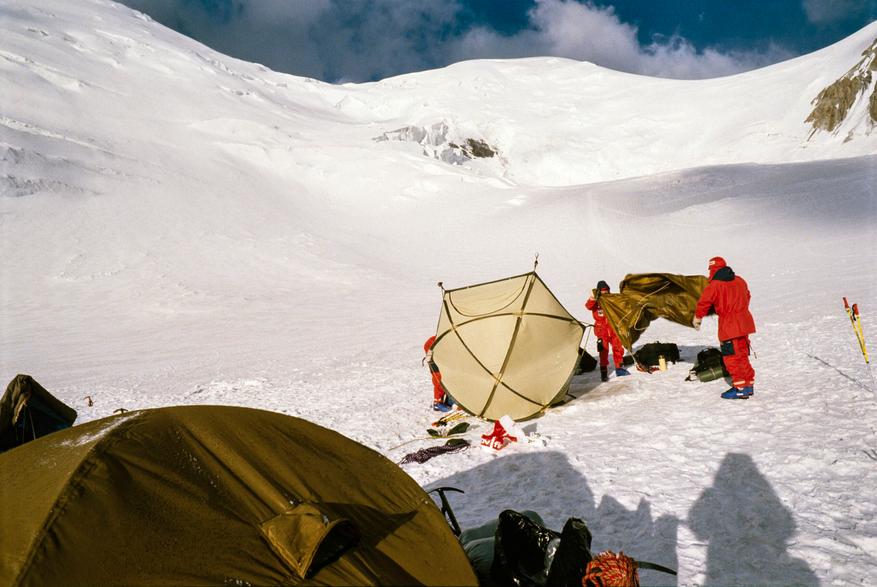
An artificial glacier is a hydraulic structure designed to store water from melted snow and ice. The stored water is released in a controlled manner during dry periods—usually in late spring or early summer.
Simply put: when there is a lot of water, it is stored; when there is little, the accumulated water is used.
An artificial glacier is not designed to create a perennial natural glacier. It provides the ability to store water for use over one to two months and is primarily used in agriculture.
Such a glacier helps prevent early floods and ensure timely irrigation of crops at the beginning of the season.
The advantage of an artificial glacier is the low cost of construction and the absence of operating costs.
According to estimates from the Food and Agriculture Organization of the United Nations (FAO), the creation of one artificial glacier requires approximately 6,000 US dollars, and it can be used for a long time.
An artificial glacier offers several advantages for economic activity:
– increasing crop yields and improving food security;
– reduction of population migration;
– strengthening the role of communities in water resources management.
It’s worth noting that the idea of creating artificial glaciers has a long history. The technology’s modern form began to develop in the second half of the 20th century and is used in mountainous regions, such as India.
Kyrgyzstan’s experience
In Central Asian countries, the experience of creating artificial glaciers is used as one of the methods of adaptation to water shortages and the shrinking of natural glaciers.

Kyrgyzstan can be considered a leader in implementing this practice. During our working trip, we visited the country’s artificial glaciers and spoke with experts from the Food and Agriculture Organization of the United Nations (FAO).
According to this organization, approximately 30 artificial glaciers have been built in Kyrgyzstan. Specifically, seven such glaciers were created in the Batken region between 2024 and 2025.
These facilities not only help improve agricultural performance in the face of climate change, but also serve as platforms for collaboration and environmental initiatives.
“During the process of creating glaciers, we came to the conclusion that it was necessary to develop engineering guidelines for the future. These guidelines should include design principles, hydraulic calculations, and practical technical recommendations to ensure the effective use of the artificial glacier,” the organization’s specialists note.
Based on accumulated experience and to improve the efficiency of artificial glaciers in Kyrgyzstan, experts proposed building small reservoirs at the foot of glaciers and connecting them to pipelines.

These pipes will be able to direct water directly to agricultural fields. The water can then be used for drip irrigation or as a water supply for livestock.
“In spring and summer, water from the artificial glacier is collected in a reservoir and used as needed. And in winter, it contributes to the formation of the glacier itself,” the organization’s specialists noted.
Is it possible to create artificial glaciers in Tajikistan?
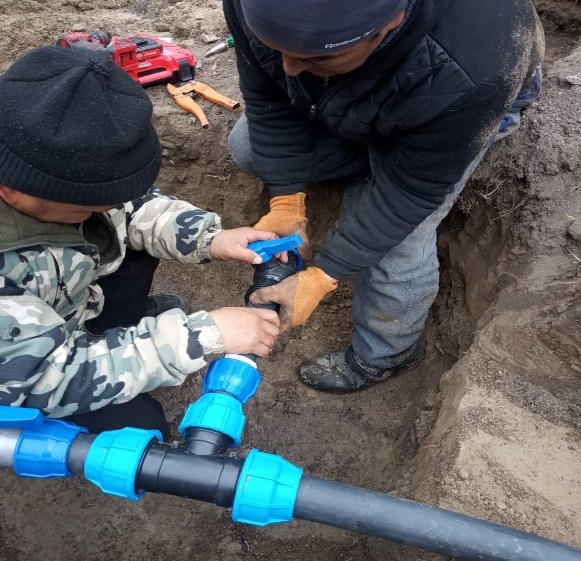
“From a technical standpoint, yes, in some regions of Tajikistan it’s even easier than in Kyrgyzstan. All it takes is desire, precise calculations, patience, and effective use,” says a specialist from the organization.
Abdulhamid Kayumov, a researcher at the Glacier Research Center of the National Academy of Sciences of Tajikistan, also believes that the country has the capacity and favorable conditions for creating artificial glaciers—even more suitable than in some other countries.
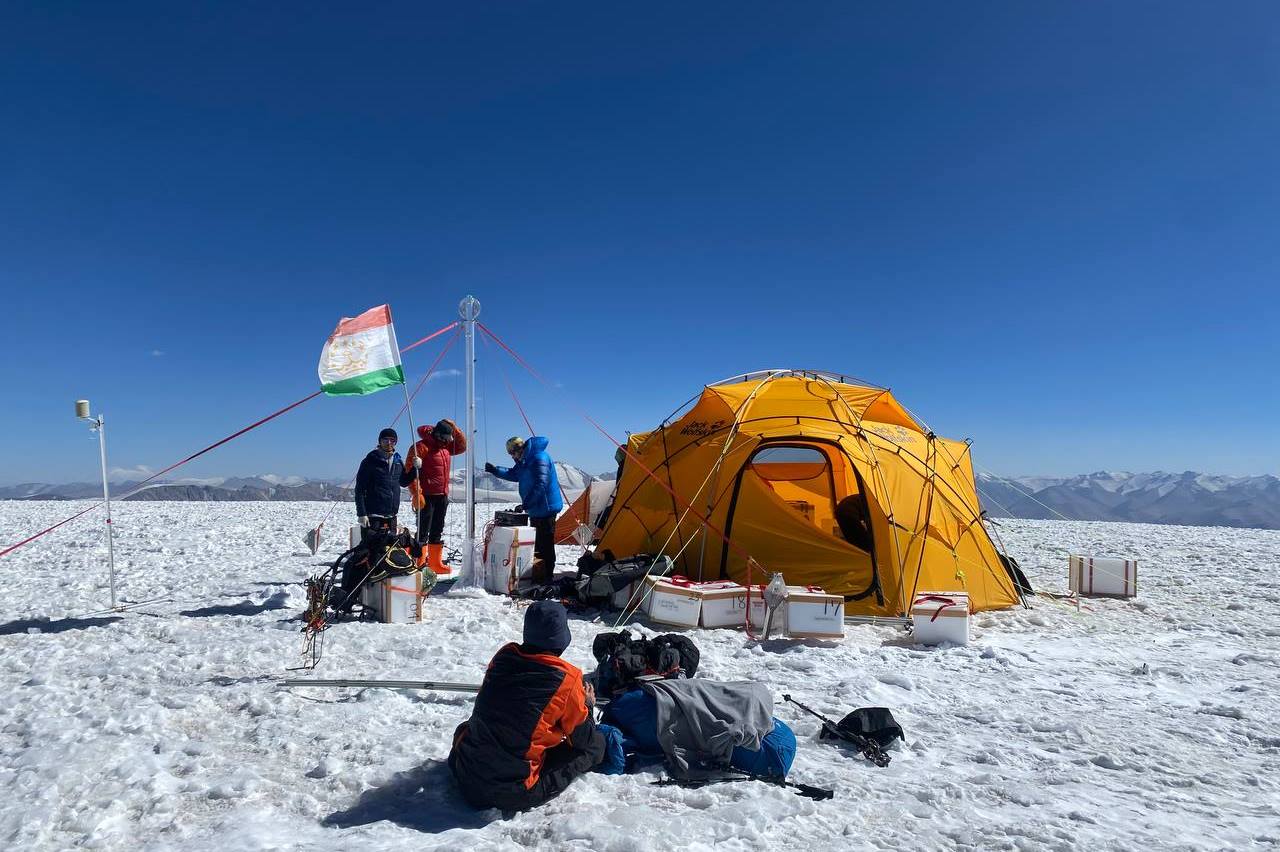
However, according to him, such facilities should be created only after a comprehensive study, taking into account the climatic characteristics of the regions and subject to competent and effective management.
“In the upper reaches of the Surkhob, Khingob, and Zarafshan rivers, located at altitudes over 3,000 meters above sea level, where the air is almost always cold, creating artificial glaciers is quite convenient. However, they should only be built after a thorough study and planning, and with the necessary capacity to manage them. The climate in Tajikistan is changing rapidly. I believe local residents would fully support such an initiative,” notes Abdulhamid Kayumov.
He emphasizes that the idea of creating artificial glaciers in Tajikistan is not new, and Tajik specialists have been considering this issue for a long time.
However, it is still unknown when exactly the first artificial glacier will be created in the country.
Can artificial glaciers stop the melting of natural ones?
Experts believe that artificial glaciers can help slow the melting of natural glaciers to a certain extent, but are not capable of stopping this process on a large scale.

First of all, they are intended for the accumulation of water and its targeted, rational use.
In particular, experts from the Food and Agriculture Organization of the United Nations (FAO) note:
“The main goal of creating artificial glaciers is not to stop the global melting of natural glaciers, but to collect water and use it effectively.
They cannot completely prevent the melting of natural glaciers, but they serve as an auxiliary and partial solution.”
“This is one of the tools for adaptation to climate change,” they emphasize.
Abdulhamid Kayumov also points out that the idea that the creation of artificial glaciers can stop the melting of natural ones is erroneous.
“Preserving natural glaciers requires large-scale measures, such as reforestation or reducing greenhouse gas emissions. For example, in Switzerland, there is a practice of covering glacier surfaces, but this is not applicable in Tajikistan. In our country, tree planting is a more effective approach,” notes Kayumov.
According to him, it is particularly important that, at the initiative of Tajikistan, attention to the study and protection of glaciers at the international level has significantly increased.
The global community has recognized the importance of this problem. Furthermore, the scientific approach to this topic has become more serious, and in the long term, this will certainly yield results.
Google machine translated