

Tajikistan
Access to Green Finance Project
The project is to promote energy efficiency among household users.
The project is to promote energy efficiency among household users.

Overall goal of the project is to improve regional and national level networking and enhance exchange of knowledge in Central Asia, and improve institutional capacity for the uptake of cleaner energy and energy efficient technologies and services. It aims to deliver a) a network of climate change focal points and experts, and mechanisms for exchange of information and experiences to enhance institutional capacity and awareness, b) identify and develop cleaner technology action plans for two sectors, and c) support for the development of markets for energy efficient technologies.
Original project development objective: to improve energy efficiency (EE) in Industrial Enterprises by designing and establishing a financing mechanism for energy saving investments.

Trust fund (DFID, SCO, USAID, EU) – building regional energy and water security through enhanced regional cooperation. CAEWDP is structured on four main components: (i) energy generation, (ii) energy trade, (iii) energy-water linkages, and (iv) water productivity.
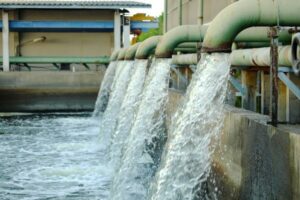
Technical assistance in the form of a project identification study which resulted in investments in the municipal infrastructure sector. The Study aimed to identify ways in which IFIs can engage with the municipal infrastructure sector in Turkmenistan, including water, wastewater, solid waste management and district heating.
Finance a) credit enhancement support provided with the EIB financing and made available to participating financial intermediaries in Kazakhstan, for their on-lending to eligible subborrowers; b) TA assesed the needs of the Partner Banks with respect to institution and capacity building to transfer expertise related to energy efficiency lending and assessing the risk and creditworthiness of clients for energy efficiency/renewable energy loans
Increase investments in energy efficiency and renewable energy technologies. By promoting the concept of rational energy utilization and mitigating high energy intensity in the country, the project lead to reduced greenhouse gas emissions and improved competitiveness of private enterprises, supporting low carbon economic growth.
KyrSEFF II followed the initial pilot project with the objective to • Develop climate finance capacities and project-oriented skills among PFIs; • Exploit bankable opportunities related to climate adaptation and small renewable energy investment projects including water and material efficiency and waste management in the industrial, agriculture. Service and residential sectors of Kyrgyzstan in line with the EU IFCA strategic objectives.
Exploit existing potential for energy efficiency, carbon reductions and sustainable energy investments in the industrial and residential sectors through offering loans and grants for improvement of energy efficiency of residential buildings and industrial enterprises. The loans and grants are offered to owners of homes, apartments and multifamily housing as well as for privately owned commercial and industrial enterprises.

Identification of priority investments for climate resilience and low-carbon growth. The TA had two components: (i) the component ‘adaptation to climate change’ assessed the costs and benefits of implementing adaptation measures to reduce the adverse effects of climate change on energy and water resources in the most vulnerable countries, i.e., Afghanistan, the Kyrgyz Republic, and Tajikistan; and (ii) the component ‘mitigation of climate change’ assessed the costs and benefits of GHG emission reduction measures and formulated low-carbon growth investment proposals for energy and transport in the most carbon-intensive countries in the region, i.e., Azerbaijan, Kazakhstan, and Uzbekistan.