

The Kazakh authorities are concerned about the rapid shallowing of the Caspian Sea, the level of which is at a historical minimum. The country’s main ports, where dredging work is regularly carried out, are having a particularly hard time. Astana sees a way out in cooperation with Moscow, from which they would like guarantees on the minimum flow of the Volga, but “Russia simply has nowhere to get this water from,” Lada.kz reports , citing RTVI .
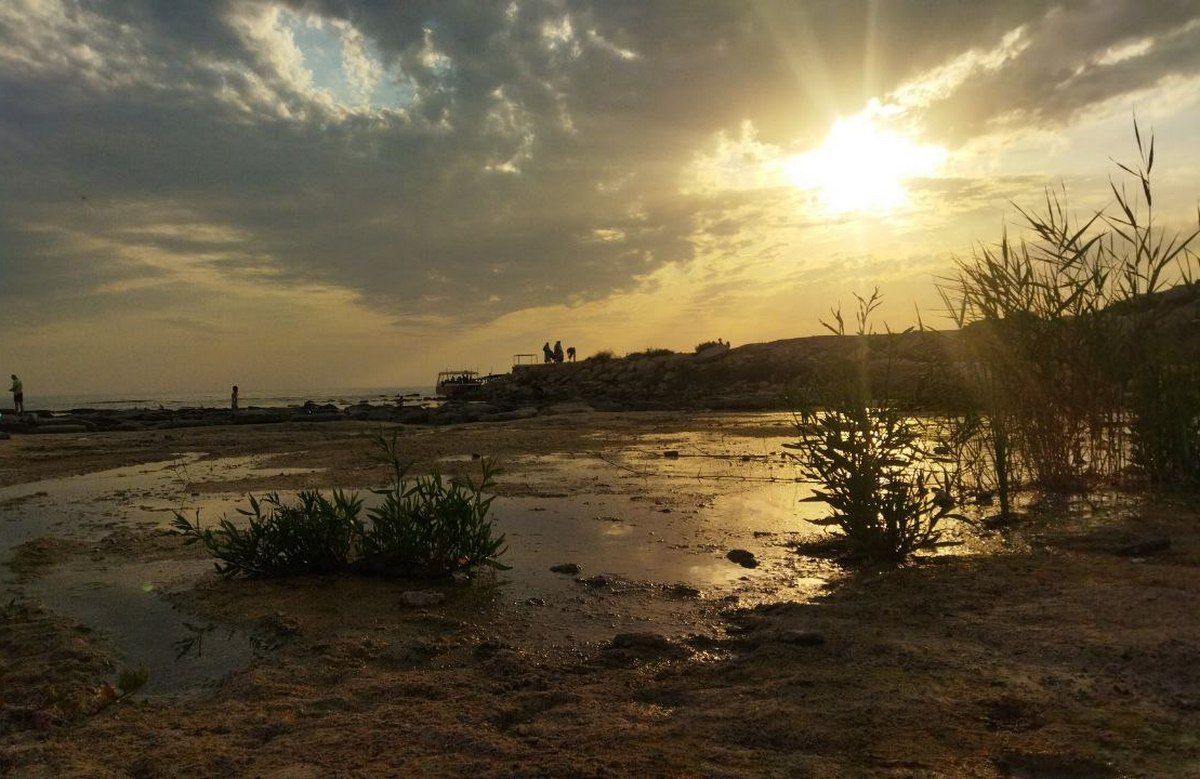
According to the international media outlet RTVI, Deputy Minister of Water Resources and Irrigation Bolat Bekniyaz stated that since 2006 the level of the Caspian Sea has tended to decrease, and currently stands at minus 29.21 m, which is a historical minimum.
As a result of the fall in sea level, the area of its water surface has decreased, mainly due to the shallow north-eastern part washing the shores of Kazakhstan. Therefore, dredging operations have already been carried out in the country’s main ports – Aktau and Kuryk.
It is the Kazakh water area that is rapidly becoming shallow, since it is in the Atyrau region that the sea is the shallowest, and we know very well that within 75 years we can lose this water area, since we have already lost 185 cm. The average level of sea loss is 7 cm per year. And this trend has been going on for about 20 years. And now, literally in 15 years, we will find out what environmental migrants are, warns Kazakh MP Sergei Ponomarev.
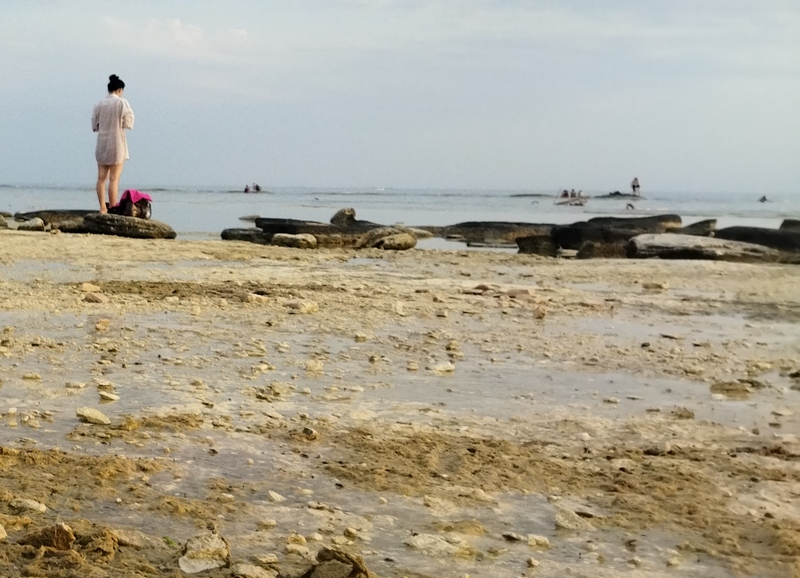
According to the Ministry of Ecology and Natural Resources of the country, since 2006 the area of the sea’s water surface has decreased by more than 31 thousand square kilometers. According to the environmental movement Save the Caspian Sea, if the water level drops by five meters, the Caspian seal’s breeding area will shrink to 81%, and 94% of marine protected areas will become irrelevant. If the water level drops by 10 meters, up to 45% of the summer-autumn spawning grounds of sturgeon fish will be lost, and the port of Aktau will be 89 km from the water. In the event of a critical drop in the water level, 37% of the Caspian Sea’s area may be completely lost (up to 143,000 square kilometers of water surface), and the region’s economic losses may exceed $10 billion per year.
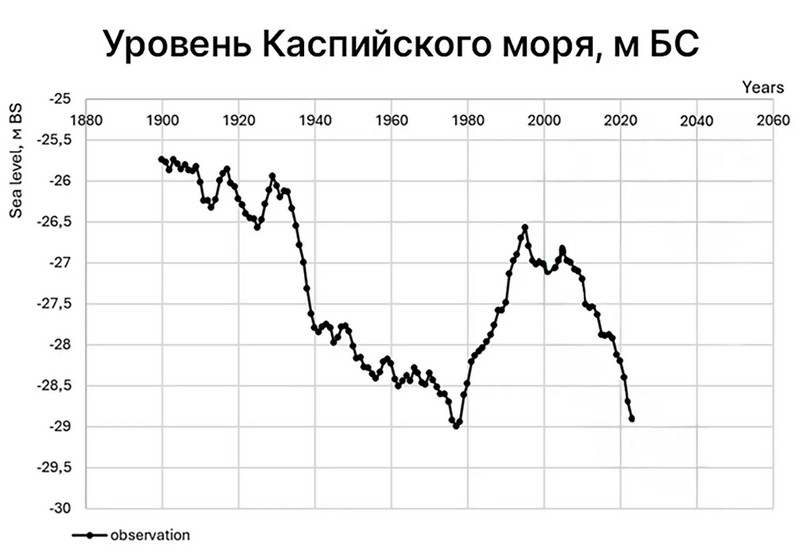
To stabilize the Caspian Sea level, a stable annual flow of 279 km³ of water is needed, the bulk of which can be provided by the Volga River, according to the Kazakh Ministry of Water Resources and Irrigation. According to its information, from 1900 to 2023, the Caspian Sea level changed from minus 25.7 m BS (Baltic Height System, measured by the Kronstadt tide gauge) in 1900 to minus 29.01 m in 1977. That is, the difference between the maximum and minimum levels for the observed period was more than 3 m.
The department notes that, according to scientists’ forecasts, by 2030 the sea level could drop to minus 29.5-30.2 m if all Caspian states do not join forces.
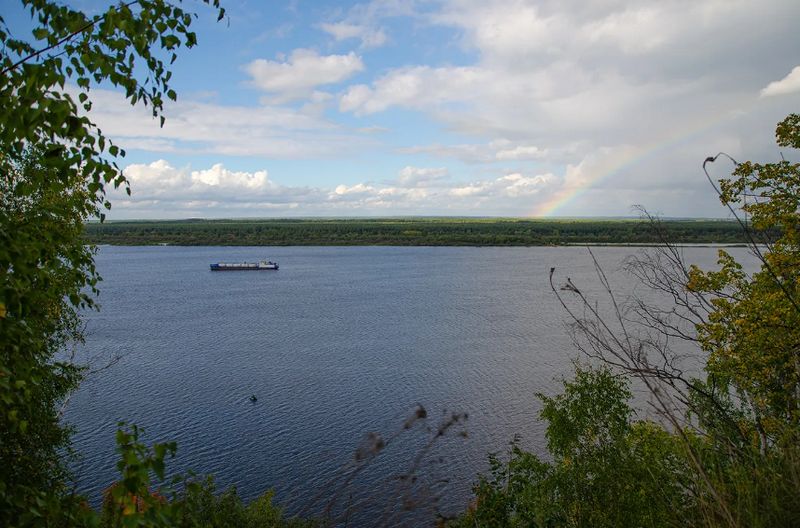
About 130 rivers flow into the Caspian Sea, but the main volume of inflow comes from the Volga, which provides more than 80% or about 270-300 km 3 of water per year. The Urals account for 2.9%, the Terek – 2.4%, the Kura – 5.1%. The Sulak, Samur and rivers of the Iranian coast also flow into the sea.
According to calculations by the Kazakh ministry, with the current level of evaporation (334 km³/year) and precipitation (55 km³/year), the total river flow should be no less than 279 km³/year. At the same time, the Volga’s contribution should be no less than 270-275 km³/year.
In 2023, it was 207 km³, which is 60-65 km³ less than required. This emphasizes the importance of both climatic factors and water management activities on sea level stability, – noted Bolat Bekniyaz.
Of course, for Kazakhstan this is the most serious problem, because in shallow waters the shallowing process, that is, the coastline moving away from the current border into the sea, is felt much more strongly. It is already clear that there is a very serious change in the landscape, the possibility of using sea transport is seriously reduced, – Stanislav Pritchin, head of the Central Asia sector at IMEMO RAS, told RTVI.
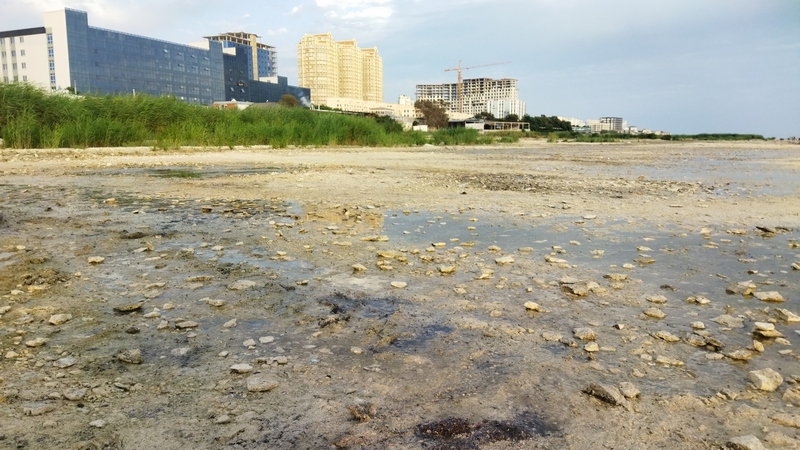
According to him, “the problem is actually very, very acute for Kazakhstan, especially considering the plans for the development of sea transportation, because this issue seriously forces investments in dredging operations or using ships at less than full capacity, with reduced deadweight, in order to eliminate the possibility of running aground.”
From the point of view of Kazakh officials and environmentalists, the Volga is an exclusively Russian river, unlike the Ural, where the flow and water use regime are regulated by an intergovernmental agreement between Russia and Kazakhstan. Therefore, Astana wants to get Moscow to create a joint working group that would address this issue.
If there is such a working group on the problems of shallowing of the Caspian Sea, we can already work with them on a legal basis on the Volga. We know that there is a whole cascade of reservoirs and hydroelectric power stations on the river, – said Bolat Bekniyaz.
In essence, the main issue that the working group will have to resolve is the issue of regulating the Volga’s water flow or obtaining guarantees from Russia for a guaranteed minimum flow, a Kazakh official familiar with the problem told RTVI on condition of anonymity.
In turn, Stanislav Pritchin noted in a conversation with RTVI that, in his opinion, such requests from the Kazakh side are “excessive”:
The Russian position has always been that the Volga is a Russian river and it is not transboundary, it does not fall under any regulations. Based on legal and physical conditions, we cannot expect that Russia is ready to take on additional obligations. The Russian Federation is maximally open in terms of water use in the Caspian, all the statistics are there, they show that there are no physically new hydroelectric power plants, – says the head of the Central Asia sector of the IMEMO RAS.
Stanislav Pritchin added that Russia, for its part, has been trying to resolve the runoff issue for many years. He recalled that there is a federal project to improve the Volga, large-scale work is being carried out “on dredging, on widening, on reducing silt, on improving navigation”, on which “enormous funds are being spent”.
According to Stanislav Pritchin, “from Bolat Bekniyaz’s statement it is clear that Kazakhstan would like to receive some guarantees from Russia regarding water flow, primarily from the Volga, but again, if the river does not have as much water as it needs, and as much as it had, say, 50 years ago, 100 years ago, then Russia simply has nowhere to get this water from.”
https://www.lada.kz/ecology/ecology/138685-obmelenie-kaspiia-kazakhstan-obrashchaetsia-k-rossii-za-stabilizatsiei-stoka-volgi.html