

On April 11, 2026, a celebratory ashar was held as part of the EU-UNEP climate change partnership project “Promoting Regional Approaches to Addressing Climate and Environmental Challenges for Peace and Socioeconomic Stability in Central Asia.” The event was jointly organized and conducted by the Scientific and Information Center of the Interstate Commission on Water Coordination (NICWC) and the project grantee, the NGO “Orchun,” in the Suzak district of the Jalal-Abad region, with the broad involvement of local authorities, relevant organizations, and the public. A total of 53 participants participated.

The event was opened by specialists from the NGO “Orchun,” G. Soronkulov and A. Chatayev, who emphasized that the project’s main goal is to increase the resilience of local communities to the effects of climate change, including nature-based solutions to pressing environmental and water issues at the local level.

In his speech, T.K. Tekebaev, Plenipotentiary Representative of the President of the Kyrgyz Republic in the Jalal-Abad Region, emphasized the need to maintain ecological balance and adapt to climate change. He called for expanded implementation and expressed his willingness to support similar initiatives in the future.
The project coordinator in the Kyrgyz Republic, M. Asatov, highlighted the problem of declining water resources, emphasizing the potential risks of their shortage in the long term, and also touched upon issues of glacier conservation, rational use, and monitoring of groundwater resources.

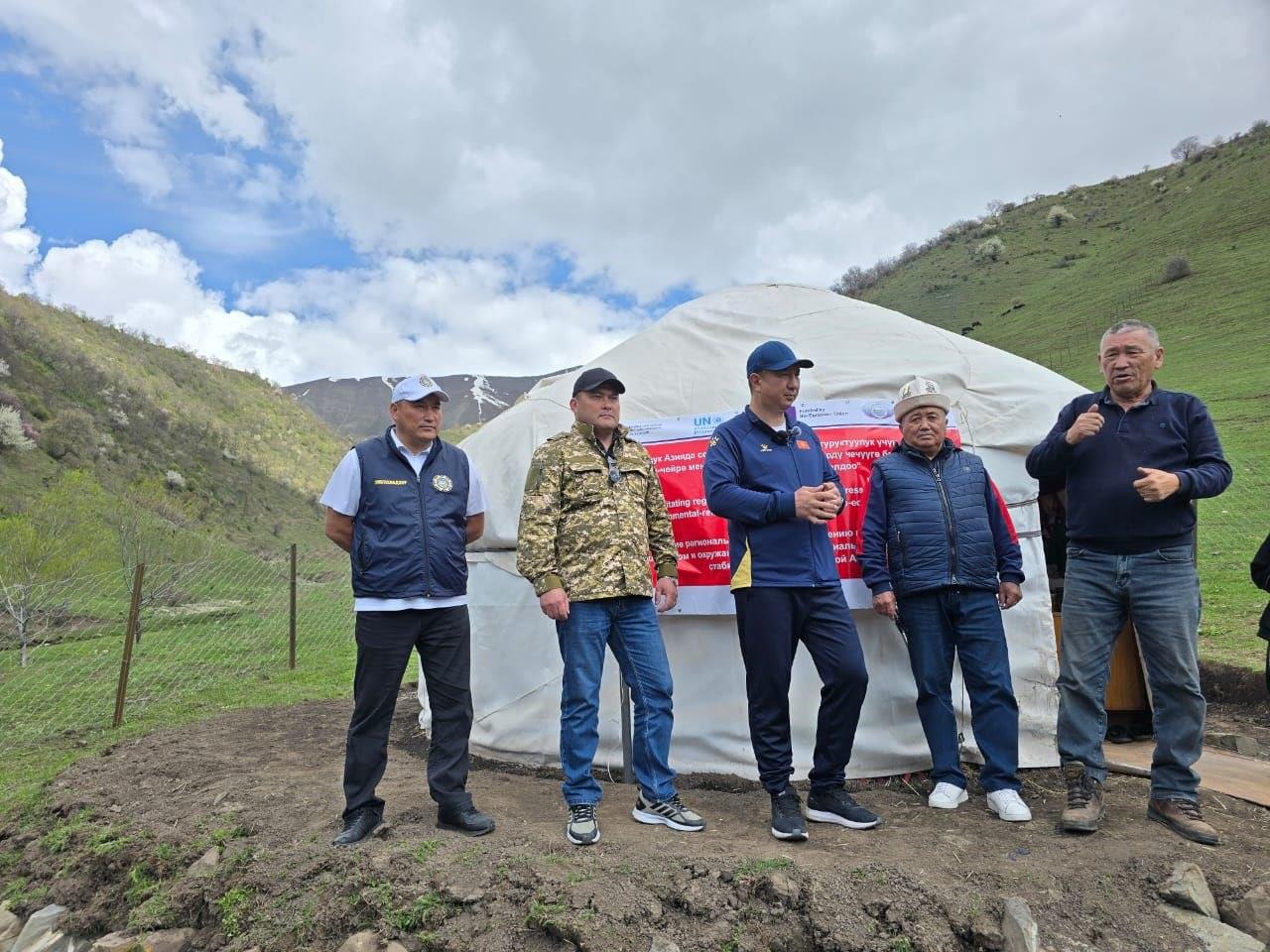
The Akim of the Suzak District, representatives of the environmental inspectorate, local government bodies, and the local population then spoke, expressing their support for the project and noting its high significance for the region and local communities.
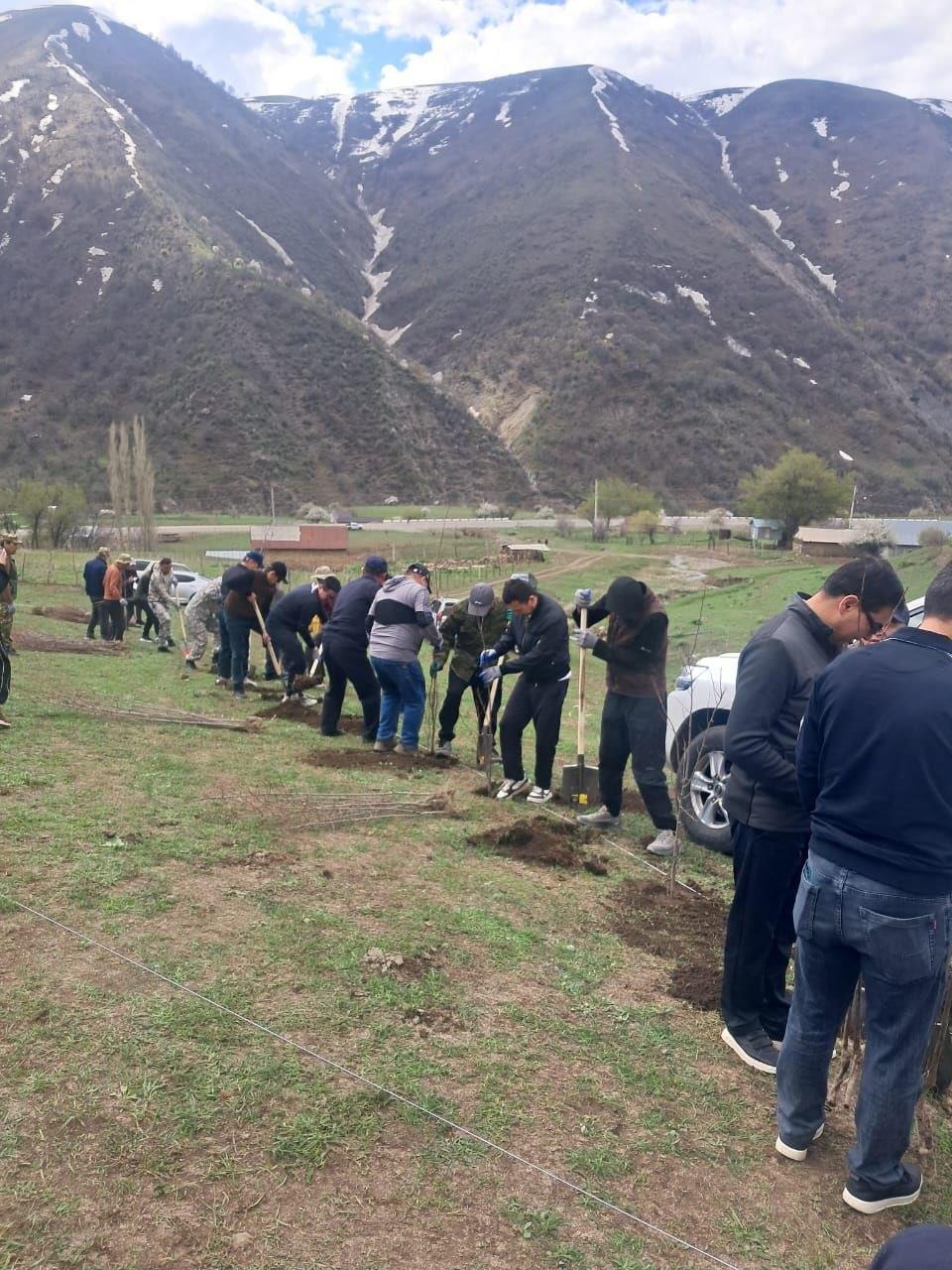
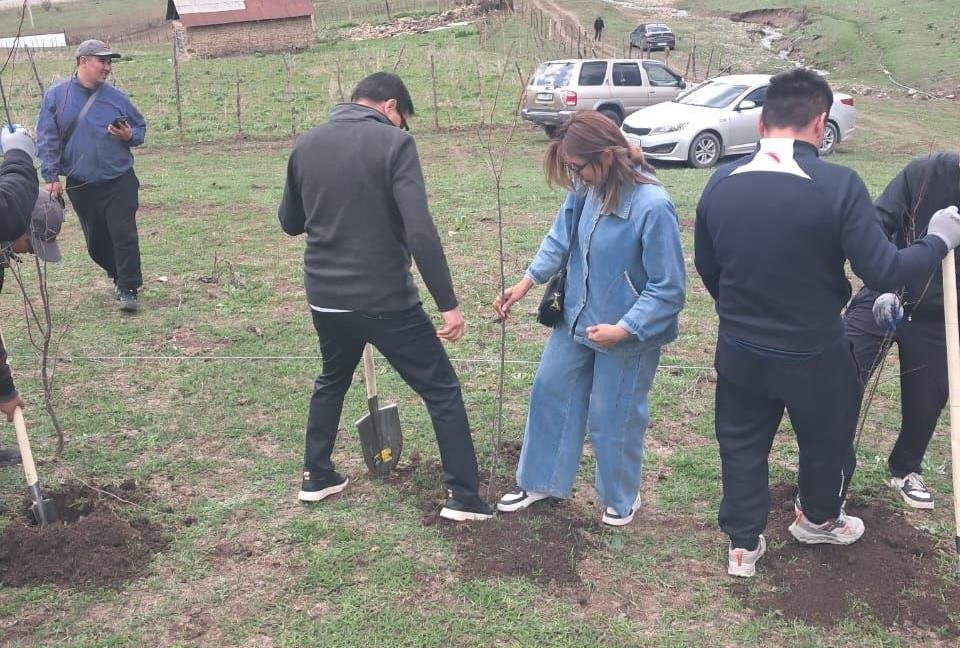
As part of the Ashar, seedlings were planted on degraded slopes with the aim of bioengineering their strengthening and restoration of vegetation cover.
In total, about 5,000 seedlings were planted, including plum, wild apple, and walnut trees.
Irrigation in these areas will be carried out using drip irrigation technology, ensuring the efficient use of limited water resources and significantly increasing plant survival. The planted areas are under the control and protection of the local community.
As a result of the event, all planned seedling planting work was completed in full. The implementation of this project contributes to strengthening the environmental sustainability of the area, reducing the risks of degradation processes, and strengthening the cohesion of local communities to adapt to climate change.
Google machine translated