

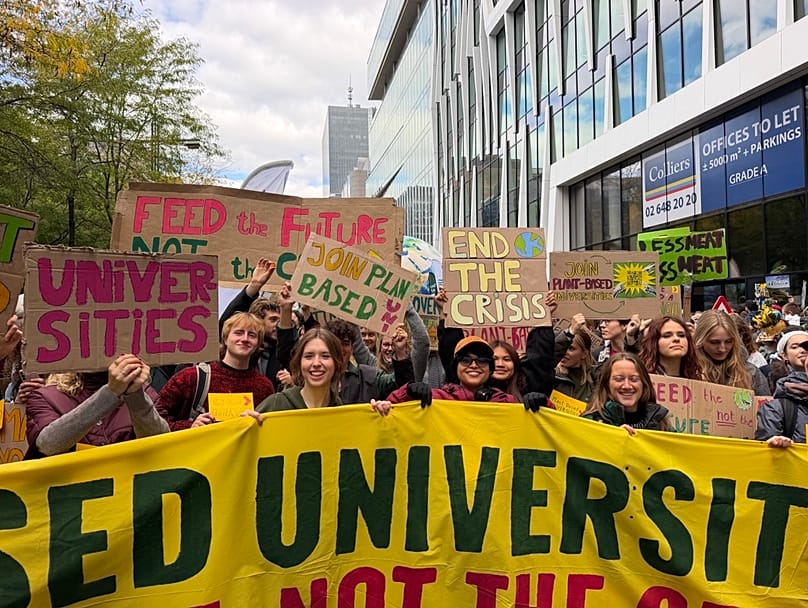
On the eve of a major UN summit, thousands of demonstrators marched through the streets of Brussels, demanding stronger action to combat climate change.
Tens of thousands of people marched through the Belgian capital, Brussels, on Sunday to the EU headquarters. Demonstrators demanded more decisive action to combat climate change.
Record heatwaves that hit Europe last summer have heightened concerns about the impacts of human-induced climate change on the continent.
In November, delegates from around the world will gather in the Turkish resort city of Antalya for the annual UN climate conference (COP).
However, expectations are low: few believe the meeting will bring a breakthrough, as the United States under Donald Trump has effectively withdrawn from the process, and initiative in Europe has waned.
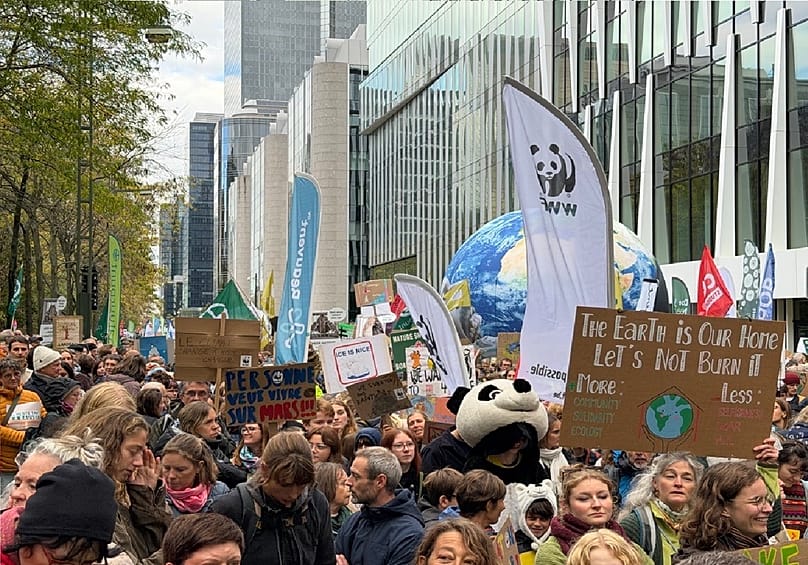
Sunday’s action was organised by the Climate Coalition in collaboration with other organisations, including Groen, the Flemish Green Party.
The Climate Coalition outlined five key demands: the end of fossil fuel subsidies and the introduction of a tax on this sector, more green spaces, a just climate transition, additional support for citizens and businesses in phasing out fossil fuels, and closer international cooperation in the fight against climate change.
Aymen Horch, chairman of the Green Party in Flanders and Brussels, told Euronews that the demands themselves have not changed, but they are more relevant than ever.
Belgium, like many other European countries, has faced an unprecedented surge in excess mortality during the extreme heat waves that have swept the continent this summer.
“People were literally dying from the heat. They felt the conditions in their homes were making it impossible to sleep at night. They saw forest fires burning in the High Fens, one of the country’s most important nature reserves, and they saw that the authorities did nothing,” said Jorge.
Many marchers, including Jorge, expressed disappointment with political inaction: climate goals, they believe, are losing ground on the political agenda, and many governments are curtailing their ambitions:
“We have to fight in the European Parliament and here in Belgium to keep climate at the top of the agenda, because the sense of urgency hasn’t gone away. The heatwaves haven’t gone away. The impact of climate change on people’s daily lives hasn’t gone away.”
Police estimated the number of participants in the march, the latest in a series of similar events in Brussels, at 45,000. Organizers put the number at approximately 60,000.
“There’s a lot of anxiety in society, and it’s not just those who took to the streets today, ” noted economist Etienne de Callatay, who also took part in the march. ” The extreme heat we experienced this summer was something everyone felt. Politicians shouldn’t fear the electoral consequences if they make bold environmental decisions.”
Auror Schreiber, a development and cooperation NGO worker, said she came to the march with her family “so that politicians would finally wake up and hear the voice of citizens.”
“We need to listen to the demands of young people and the most vulnerable, ” she added. ” We need greener and fairer supply chains that take into account workers’ rights and wages.”
Low EU expectations for COP31
After hopes for a more ambitious deal were dashed in Brazil last year, the European Union is deeply sceptical about the upcoming COP31 conference.
Under President Trump, the United States has weakened its efforts to combat global warming.
The outlook now looks even bleaker: soaring energy prices have strengthened the position of major oil and gas producers, who are even less willing than before to discuss abandoning fossil fuels.
The EU says it remains the world leader in climate policy and the largest international donor in this area.
However, the EU is approaching the COP after it itself softened its environmental legislation.
In an effort to keep up with competition from China and the United States, Brussels is increasingly pursuing a policy of supporting business.
The latest example is the European Commission’s proposal last month to delay by a year, from 2027 to 2028, the entry into force of the law on methane, a highly dangerous greenhouse gas that heavily pollutes the atmosphere.
Google machine translated