

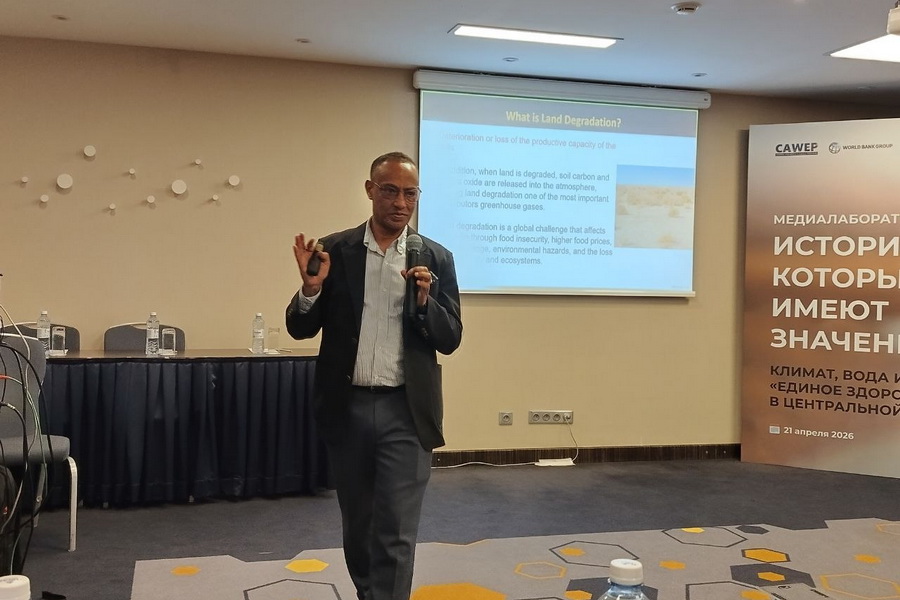
Land degradation costs Central Asia’s GDP by 6 % annually, including through reduced agricultural production, hydroelectric power generation, and deteriorating public health due to air pollution, said Asferachyu Abate , Senior Environment Specialist at the World Bank, speaking at the Central Asian Media Lab in Astana on April 21.
“This is a global challenge that combines economic and environmental issues,” said Asferachyu Abate.
Due to soil degradation, the soil loses its ability to grow crops, pastures decline, and forests disappear. This is becoming not only an economic problem for agriculture but also an additional factor in climate change.
The main drivers of land degradation in Central Asia are:
- outdated agricultural practices of farmers;
- inefficient irrigation systems with high water loss;
- deforestation and overgrazing.
An additional factor is climate change, which exacerbates soil degradation due to high temperatures, drought, and soil erosion.
Dust and sand storms are becoming a pressing challenge for Central Asia.
The World Bank is implementing four $ 242 million projects in five Central Asian countries aimed at improving agricultural practices, including improving irrigation systems, improving pasture conditions, and so on.
“This problem can be solved, and that’s one of the reasons why conferences like the one that begins tomorrow in Astana are being held,” added Asferachyu Abate.
Let us remind you that the Regional Environmental Summit RES2026 will be held in the capital of Kazakhstan on April 22-24 .
Google machine translated