

Across much of the region, winter power outages remain common due to electricity rationing and aging infrastructure operating beyond its design capacity. Electricity demand is projected to more than double by 2050, further straining systems built decades ago.
Despite abundant fossil fuel reserves and significant renewable potential in hydropower, wind, and solar energy, Central Asia continues to face an energy security gap. Fossil fuels account for around 75% of regional electricity generation, exposing economies to global supply disruptions and price volatility.
By 2030, projects supported by the World Bank Group are expected to enable at least 61 terawatt-hours of clean electricity generation annually — equivalent to the yearly consumption of 66 million people, or roughly 80% of the region’s current population.
Expanding and Diversifying Energy Supply
In Tajikistan and the Kyrgyz Republic, support focuses on large hydropower facilities, including the Rogun hydropower plant and the Kambarata-1 project. In Uzbekistan, the approach combines rapid renewable energy deployment with investment in high-efficiency gas-fired generation such as the Syrdarya-2 plant to replace outdated infrastructure.
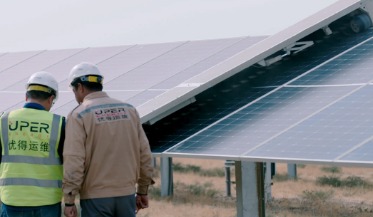
Under the Scaling Solar Program, the International Finance Corporation (IFC) and the Multilateral Investment Guarantee Agency (MIGA) are structuring and de-risking private solar investments in Uzbekistan. Targeted guarantees have mobilized nearly $1 billion in private financing, enabling the launch of the country’s first privately owned solar plants.
To date, this approach has delivered 890 MW of solar capacity and 63 MW of battery storage across Uzbekistan. Projects developed with Abu Dhabi Future Energy Company PJSC (Masdar) in Bukhara, Navoi, Jizzakh, Khorezm, and Samarkand regions are expanding and diversifying the national energy mix.
Strengthening Grid Infrastructure
Modernization of transmission and distribution networks is advancing through projects such as:
· Electricity Sector Modernization and Sustainability Project (KEMS) in the Kyrgyz Republic;
· Tajikistan Rural Electrification Project (TREP);
· Modernization and Upgrade of Transmission Substations (MUTS) and Energy Sector Transformation and Resilient Transmission (ESTART) in Uzbekistan.
KEMS is rolling out smart meters nationwide, putting the Kyrgyz Republic on track for 100% coverage by 2027. More than 500,000 meters have already been installed, reducing losses and improving reliability.
In Uzbekistan, upgrades to obsolete transmission substations in Tashkent have reduced emergency shutdowns and electricity losses, improving voltage stability for major industrial consumers including the Navoi and Almalyk mining and metallurgical complexes.
Electrifying Remote Communities
Through TREP, the International Development Association has financed rural electrification in Tajikistan’s Khatlon Region and Gorno-Badakhshan Autonomous Oblast (GBAO), connecting isolated villages to power networks for the first time. Solutions include new transmission lines as well as micro- and mini-grids based on solar, hydro, and battery storage systems.
In Alichor village in Murghab District, a 2.8 MW solar installation with 1.4 MWh of battery storage now supplies electricity to local residents, replacing traditional fuel sources and improving living conditions.
Energy as a Driver of Jobs and Growth
Energy infrastructure investments are generating employment in construction, operations, and maintenance. During construction of a solar plant in Uzbekistan’s Samarkand region, nearly 1,500 local residents were employed. Smaller hydropower and mini-grid projects in Tajikistan similarly prioritize hiring local workers.
Reliable electricity is also enabling business expansion. Manufacturers, clinics, retail operations, and service providers report improved productivity and reduced operational risk due to stable power supply.
According to the World Bank Group, coordinated investments in generation capacity, grid modernization, and expanded access are laying the foundation for stronger energy security, economic resilience, and sustainable growth across Central Asia.
https://qazaqgreen.com/en/news/central-asia/3384/