

But we definitely need to solve at least two problems: increase the percentage of Internet coverage and find specialists.

Tajikistan will be able to receive $4-6 million in benefits annually in the coming years thanks to the introduction of modern satellite technologies for drought monitoring.
On August 20, 2025, the launch of a large-scale regional project to monitor droughts using Earth remote sensing (ERS) technologies was announced in Tashkent. The initiative is being implemented with the support of the United Nations Economic and Social Commission for Asia and the Pacific (ESCAP), and its budget for the first stage is $300 thousand.
In the next two years, the system will be tested in Uzbekistan, and by 2027 it will be adapted for Kyrgyzstan and Tajikistan.
Experts estimate that once launched, the system will allow Tajikistan to receive annual benefits of $4 million to $6 million through reduced crop losses, more efficient water management, and timely response to climate threats.
Tajikistan: 22% of GDP at risk due to climate
Central Asia is considered one of the world’s most vulnerable regions to climate change. Over the past three decades, the average annual temperature has increased by 1.2°C, which is higher than the global average of 0.85°C.
At the same time, the amount of precipitation decreased by 15-20%, and droughts began to recur more frequently and cover larger areas.
This problem is particularly critical for Tajikistan: about 22% of the country’s GDP comes from agriculture, and more than 15% of the population – approximately 1.5 million people – live in drought-prone areas.
The situation is aggravated by the mountainous terrain and limited water resources, which means that even minor climate fluctuations can have serious consequences for the economy and human life.
Traditional monitoring does not help
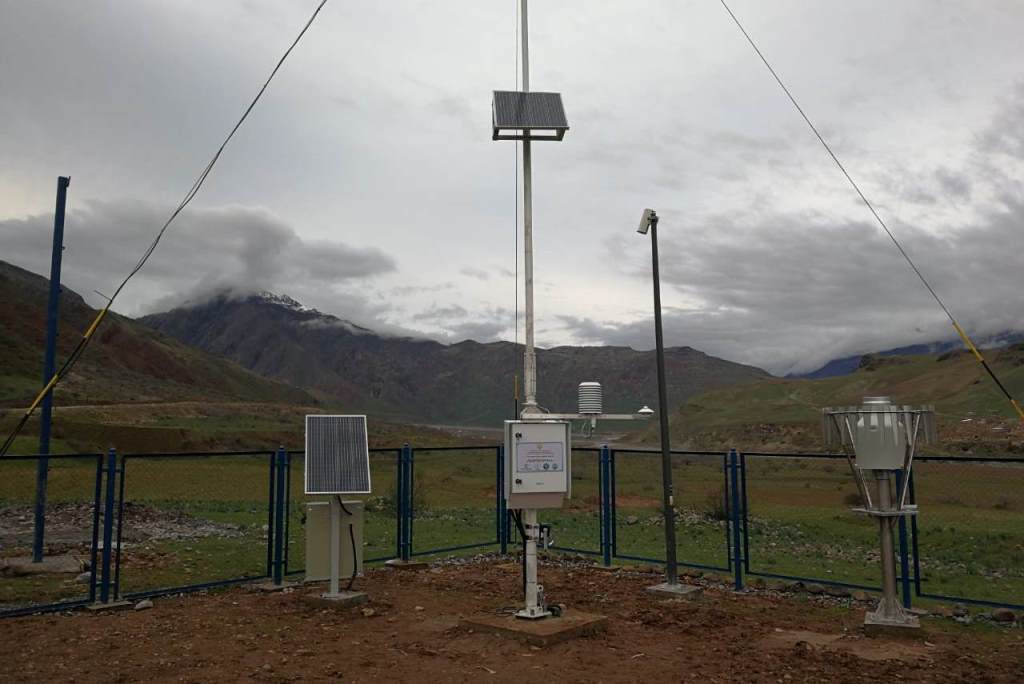
The existing meteorological stations in Tajikistan do not allow for the full recording of local changes in soil moisture or vegetation conditions.
In mountainous areas, where weather conditions vary literally from valley to valley, traditional monitoring is unable to provide the necessary accuracy and speed
Instead, the new system will use data from European Sentinel-2 and American Landsat-8 satellites. They allow tracking the vegetation index (NDVI) – the condition of crops, recording surface temperature and determining soil moisture.
The accuracy of forecasts reaches 80-85%, and data is updated every 5-10 days.
For farmers and agricultural agencies, this means the opportunity to prepare for drought in advance: plan irrigation, select crops, and use water more efficiently.
In 2024, a project to create a climate monitoring system in Central Asia was launched. At the first stage, a methodology was developed and data was collected. Already in 2025, pilot projects began in Karakalpakstan and the Fergana Valley, which should demonstrate the effectiveness of the approach in practice.
The next step will be the implementation of the system throughout Uzbekistan in 2026. And by 2027, it is planned to connect Kyrgyzstan and Tajikistan to the project.
The initiative will train around 150 specialists and will also establish the integration of satellite data into national meteorological services, which will significantly improve the accuracy of forecasts and the region’s resilience to climate risks.
Saving Millions and Curbing Migration
The introduction of a climate monitoring system promises tangible economic and social benefits for Tajikistan.
According to experts, it will reduce crop losses by 10-15% annually, providing, as already noted, an economic gain of $4-6 million. This will directly strengthen the country’s food security and reduce social tension in rural areas, where most of the population depends on agriculture.
In addition to the economic benefits, the project will act as a deterrent to migration caused by water shortages and loss of livelihoods.
An important part of the programme is the integration of national monitoring systems with global platforms such as Copernicus, which will improve the quality of forecasts and the speed of response.

The environmental and social consequences of droughts in Central Asia are already being felt:
– 4.2 million people (12% of the population) live in the risk zone in Uzbekistan
– in Kyrgyzstan – 1.1 million (16%)
– in Tajikistan – 1.5 million (15%).
In Uzbekistan alone, over the period 2018-2023, a reduction in water supply led to the migration of 120 thousand people.
The introduction of a monitoring system can mitigate such impacts, ensuring a more equitable distribution of water resources and humanitarian aid.
Peace experience is the basis for Central Asia
Successful international experience will be used in creating a climate monitoring system in Central Asia. Similar technologies have already proven their effectiveness in other countries.
For example, in Australia, the DroughtWatch system has reduced losses in the agricultural sector by 12%, while in India, thanks to the INSAT-3D system, forecast accuracy has increased to 78%.
These developments will form the basis for the development of a regional platform that will help Central Asian countries respond promptly to climate risks and minimize the effects of droughts.

Internet, personnel and finances are barriers on the way
Despite promising plans, Tajikistan faces several serious challenges in implementing a climate monitoring system.
In rural areas of the country, internet coverage only covers about 55% of the territory, making it difficult to quickly exchange data.
In addition, there is a shortage of specialists with skills in working with remote sensing data.
An additional obstacle remains the high cost of maintaining the system, estimated at approximately $50,000 per year.
Future steps
However, ESCAP and its partners intend to support the country by organizing training for specialists and ensuring integration into the global platforms Copernicus and UN-SPIDER. This will allow the use of international resources and reduce the financial burden on the national budget.
After the successful adaptation of the system in Tajikistan, the project is planned to be expanded to Kazakhstan and Turkmenistan. In the future, it is planned to integrate artificial intelligence algorithms, which will increase the accuracy of forecasts to 90%.
The final stage will be the creation of a unified regional water resources management system covering all Central Asian countries and strengthening their resilience to climate challenges.
https://asiaplustj.info/ru/news/tajikistan/security/20250820/novaya-sistema-monitoringa-zasuh-pomozhet-tadzhikistanu-sekonomit-millioni
Google machine translated