

Climate is not only about nature. It is about economics. And about very big money. How do Central Asia and Kazakhstan react to climate change? Experts looked for answers to these questions in the new edition of the program “Big Diplomacy” on the Jibek Joly TV channel, the correspondent of the Kazinform agency reports.
On collective efforts and concerns
Ten years have passed since the signing of the Paris Agreement, an international document that was supposed to stop the rise in temperature on the planet. But the 30th anniversary climate conference COP is not causing hope, but alarm: the US has once again refused its commitments, global emissions are not decreasing, and the past year has become the warmest in recorded history.
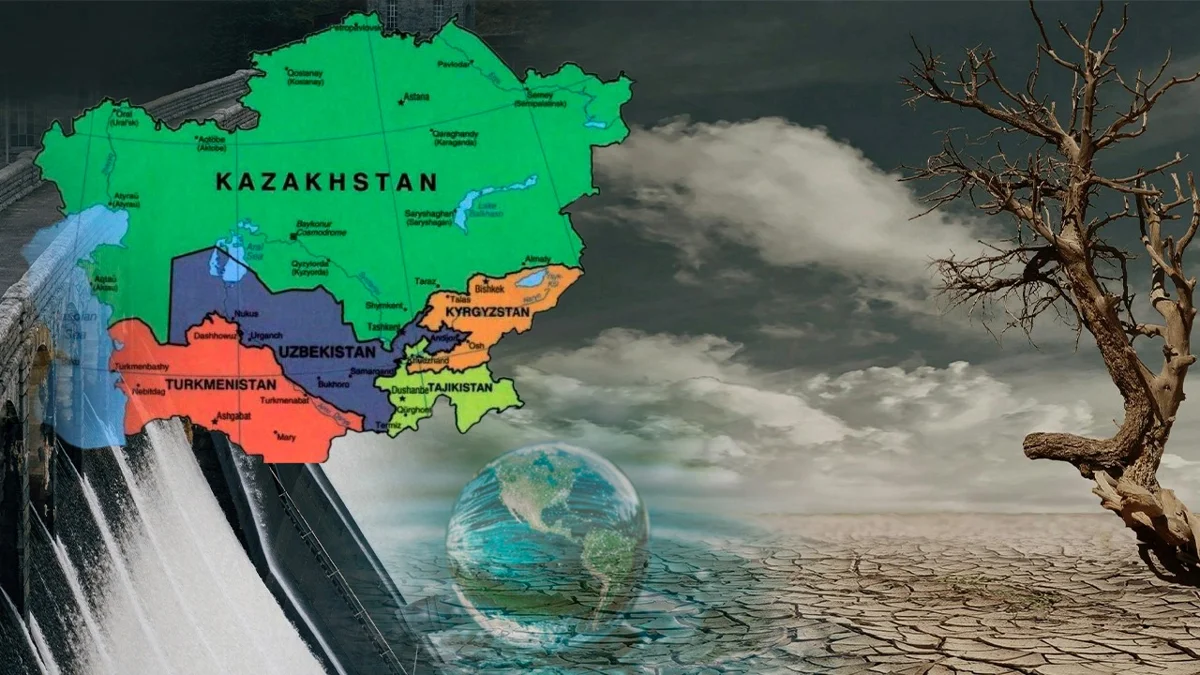
Kazakhstan and Central Asia in this context are setting an example of successful regional integration. President Kassym-Jomart Tokayev announced a new initiative: the creation of a water and energy consortium in the region. This is an important step against the backdrop of increasingly clear challenges: droughts, water shortages and rising temperatures in the steppe and mountain zones. Kazakhstan, in essence, is proposing to the countries of the region not only to strengthen water diplomacy, but also to build coordinated mechanisms capable of protecting the economy and agriculture from climate shocks.
Meanwhile, contradictions are growing in the world. International expert on water resources management and climate change Bulat Yesekin, who spoke in the program studio, noted that although countries declare commitments at climate forums, in reality many of them do not fulfill these promises.

— Large economies are returning to oil and coal production, and are also reducing support for “green” energy. For example, the US decision to reopen all oil and coal fields and reduce subsidies for renewable energy is just one of these, — the expert notes.
According to him, humanity has been developing at the expense of nature for decades. And today, no country can give up economic growth for the sake of reducing emissions. Even those who speak loudest about the climate.

Architecture for a Sustainable Future
Despite global skepticism, Kazakhstan continues to move towards climate responsibility. And as the current diplomatic agenda shows, especially in the water sector, the country has a real chance to become one of the key architects of a sustainable future in Central Asia.
In particular, Kazakhstan and Uzbekistan, the two largest states in the region, have joined forces to advance the climate agenda and have begun to form a sustainable alliance. This was stated on the air of the program by Eldor Aripov, Director of the Institute for Strategic and Interregional Studies under the President of Uzbekistan.
According to the expert, for the first time in history, the heads of state of Central Asia and representatives of the European Union gathered at a climate forum in Samarkand on the initiative of the President of Uzbekistan Shavkat Mirziyoyev. At the suggestion of the President of Kazakhstan Kassym-Jomart Tokayev, a regional climate summit will be held in Astana in 2026 under the auspices of the UN.
“This is a clear example of coordinated actions between the two countries. We are going beyond the economic agenda and are starting to talk about the future of the climate as a common cause. The climate has already become part of the allied partnership of the two countries, and challenges – from droughts to melting glaciers – do not recognize state borders,” Aripov noted.

Against the backdrop of global warming and population growth, the water issue remains one of the most pressing for Central Asia. Over the past 50 years, the region has lost about 30% of its glaciers. And by 2050, the population could reach 100 million people. Demand for water is growing, but the quality of management remains a critical issue.
— We are not in a water apocalypse. There is enough water — about 2.5 thousand cubic meters per person. The problem is not the volume, but that it is used inefficiently, the problem is in the worn-out infrastructure. Losses in water supply systems can reach 50%. However, the countries of the region have started working together: the water resource management system is developing, institutional ties are strengthening, — Aripov explained.
Today, common approaches to climate challenges are being formed in the region. A broad legal framework has already been created that allows for joint actions.
“The climate issue is not a task for one country. It is a shared responsibility. And the contribution of each country is important,” the expert emphasized.
Balance between economy and ecology
The rate of warming in Central Asia is twice as high as the global average. And if Kazakhstan does not adapt to these changes, it will lose up to 3.8% of its GDP annually. These are the estimates of the Asian Development Bank.
But even more alarming are the long-term forecasts in the Asia-Pacific region: with high emissions, losses could reach 17% of GDP by 2070, and by the end of the century – as much as 41%.
“Climate is not only about nature. It is about economics. And about very big money,” noted economist and director of the Central Asian Climate Fund Erlik Karazhan.
According to him, costs are already rising: droughts, floods, rising energy prices, land degradation – all this directly affects the well-being of families and the stability of countries.
— Changes happen slowly, but the consequences are very specific. And we need to act now, otherwise it will be too late. This often seems distant and abstract. But I will give you an example — what happened with the Aral Sea. It happened before our eyes, and many felt helpless: nothing could be done, and it was not possible to predict it in time, — Karazhan noted.
He stressed that climate diplomacy – that is, building partnerships, coordination within the region and access to climate finance – could be the key to a solution.
— Climate change knows no borders. And our part in the global fight is adaptation. We may not be able to stop these processes completely, but we can buy time and create systems that will protect us from catastrophic consequences. For example, we are talking about creating protective infrastructure against floods, developing water-saving technologies, supporting farmers in arid regions. All these measures require coordination. Climate diplomacy in this sense is a search for a balance of interests, — the expert explained.
According to him, we must join forces with all the countries of Central Asia and without diplomacy, without cooperation, without open dialogue we will not cope.
— One of the main solutions is to build a trustful regional dialogue in order to then form global partnerships. And in this sense, climate finance is a key instrument, — summed up Erlik Karazhan.
Climate diplomacy in Kazakhstan began to take shape back in the 1990s, when the country was the first in the region to ratify the UN Framework Convention on Climate Change. Later came the Kyoto Protocol, the Paris Agreement, and the launch of the first emissions trading system in Central Asia.
Today, Kazakhstan has its own Carbon Neutrality Strategy until 2060, an adopted environmental code, green bonds, renewable energy projects and transport electrification. The water diplomacy direction is actively developing.
Thus, at the initiative of the presidents of Kazakhstan and France, the international One Water Summit was held in Saudi Arabia, where problems and solutions in the field of water resources were discussed. As the Ambassador of Kazakhstan to France Gulsara Arystankulova said, the summit was not just an image step, but also a platform for launching real projects.

— In addition to the image component, the summit launched specific projects. Kazakhstan is currently negotiating with the world’s largest players in water resource management — Violia and Suez. They are already showing interest in the regions of Kazakhstan, including Karaganda and Aktobe Oblast, — she said.
In addition, in partnership with the French Development Agency and the Geological Bureau, Kazakhstan is working to create a digital platform for managing the water resources of Balkhash and Ili.
The climate agenda has already entered national security strategies. And Kazakhstan shows that even as a country with an energy-intensive economy, it is possible to protect its interests through climate diplomacy – taking into account global risks, local challenges and the interests of future generations.
Let us recall that the Head of State recently emphasized that the issue of water security has become the main condition for the sustainable development of Kazakhstan. He also stated that Kazakhstan should engage in strengthening water diplomacy.
https://www.inform.kz/ru/klimaticheskaya-diplomatiya-tsentralnaya-aziya-vibiraet-put-kooperatsii-aa4b80
Machine Translated by Google