

Rising average annual temperatures, droughts and declining water resources pose the challenge of deep structural transformation for Kazakhstan’s agricultural sector, reports a correspondent for the Kazinform agency.
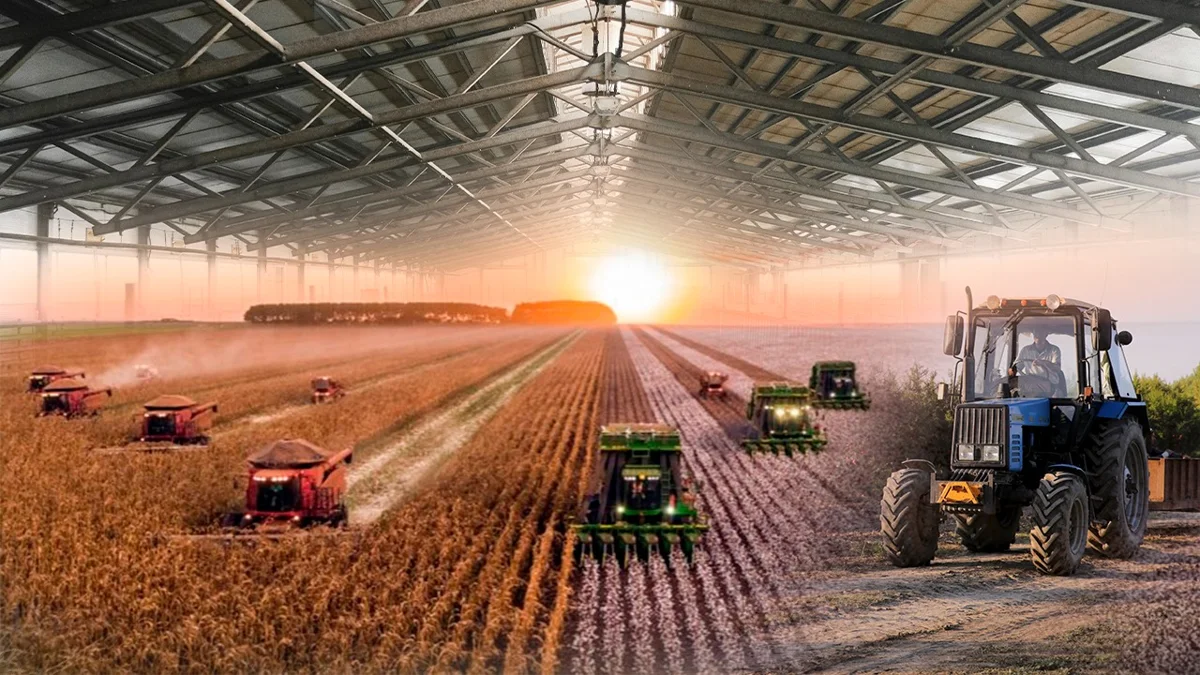
In response to these challenges, the country is consistently introducing modern systems of efficient water use, diversifying crop areas and developing financial instruments to support agricultural producers.
What systemic measures are being taken to ensure food security and maintain agricultural productivity, how water-saving technologies are being implemented, and what strategic goals are included in the plans until 2030 – Vice Minister of Agriculture Azat Sultanov spoke about this in an exclusive interview with Kazinform.
— What measures is the ministry taking to adapt the agricultural sector to the consequences of climate change and water shortages?
— In the conditions of a changing climate, agriculture in Kazakhstan faces the task of minimizing the negative consequences of drought, flooding and desertification. To this end, government agencies, together with scientific organizations, business and society, are implementing a number of measures aimed at preventing and avoiding these risks.
Long-term solutions include diversification of crops, increase in the area of highly profitable crops, reduction of water-intensive and monoculture crops, rational use of land, introduction of new technologies, including water-saving ones, as well as tariffication and digitalization of water consumption accounting. Digitalization and tariffication of water accounting are also actively implemented to ensure effective water resource management, notes Azat Sultanov.
— What forms of state support are provided for agricultural producers affected by drought and water shortages?
— In order to support agricultural producers affected by natural disasters, a document approved by order of the Minister of Agriculture dated May 17, 2024, No. 167, is in effect — the rules for compensation for damage.
According to these rules, compensation for damage is carried out one-time at the expense of budgetary funds of local executive bodies, allocated for the elimination of the consequences of emergency situations, as well as at the expense of funds of organizations and voluntary contributions. The document describes in detail the procedure for compensation for damage in both crop production and livestock farming, – says the vice minister.
— Is it planned to introduce rational water use systems, including water-saving technologies, at the regional level?
— In recent years, the vegetation period has been characterized by a low-water cycle, and one of the main tasks of the ministry is to build an effective water consumption system. The implementation of crop diversification programs continues, with an emphasis on reducing water-intensive crops. At the same time, state support is provided for the implementation of water-saving technologies.
For example, the area of cotton using water-saving technologies is planned to increase to 50 thousand hectares in 2025 (compared to 1.9 thousand hectares in 2024). Work is also underway to increase the area of irrigated land using water-saving technologies. In 2024, the area of such land was increased by 101 thousand hectares, while an additional 57 thousand hectares of land were leveled using a laser planner.
In general, the area of irrigated lands with water-saving technologies has reached 470.1 thousand hectares. By 2030, it is planned to expand it to 1 million 362 thousand hectares. The Ministry supports the introduction of such technologies through investment subsidies (up to 80% of costs), subsidizing the cost of water supply services, as well as equipment lending and leasing programs, the speaker explains.
— What do such climate processes lead to: the death of crops, a reduction in sown areas, a decrease in livestock productivity?
— Indeed, the negative climate events of recent years, such as the drought in the Zhambyl region in 2023 and the floods of 2024 in the northern regions, have led to certain losses. For example, in the Zhambyl region, due to insufficient water supply from the Kyrgyz Republic, a regional emergency was declared. Subsequently, in accordance with the Decree of the Government of the Republic of Kazakhstan No. 834 of September 26, 2023, 358 entities of the agro-industrial complex were compensated for damage on a total area of 8,049 hectares.
As for the 2024 floods, despite the recorded facts of flooding, the sowing campaign was not affected – the flooded areas were restored due to fallow fields.
— Were foreign experts or consultants involved in developing adaptation strategies? If so, in what areas is cooperation conducted and what results have been achieved?
— As part of the instructions of the Head of State, the Concept for the Development of the Agro-Industrial Complex for 2021–2030 was adopted on December 30, 2021. It reflects approaches to Kazakhstan’s transition to a “green economy” and achieving carbon neutrality by 2060.
To achieve these goals, an action plan (Roadmap) has been developed to achieve carbon neutrality, which was drawn up with the participation of international experts, including the Food and Agriculture Organization of the United Nations (FAO). This plan is currently under consideration and provides for a set of measures for sustainable management of natural resources, reduction of greenhouse gas emissions and implementation of climate-resistant technologies, the vice minister explains.
— Is a national or regional strategy for sustainable agriculture in the context of climate risks being developed?
— Yes, this work is underway. The concept for the development of the agro-industrial complex for 2021–2030, adopted at the end of 2021, is the basis for developing a national strategy for sustainable agriculture. It integrates all key areas, including measures to diversify agricultural production, introduce innovative technologies, and rationally manage water and land resources.
In addition, close coordination with the Concept for the transition to a “green economy” and the Strategy for achieving carbon neutrality by 2060 is envisaged, which allows for the formation of a long-term sustainable course for the development of the industry, summarizes Vice Minister of Agriculture Azat Sultanov.
It was previously noted that the Migration Committee of the Ministry of Labor conducted a study that established a connection between the latest climate change and migration processes in Kazakhstan.
https://www.inform.kz/ru/kak-kazahstan-perestraivaet-agropromishlenniy-kompleks-v-usloviyah-klimaticheskih-izmeneniy-fb2470
Machine Translated by Google