

The development of alternative energy sources does not require large government investments; here, market incentives are much more important than investments. The analytical observer of Kazinform examined the topic.
Natural alternative
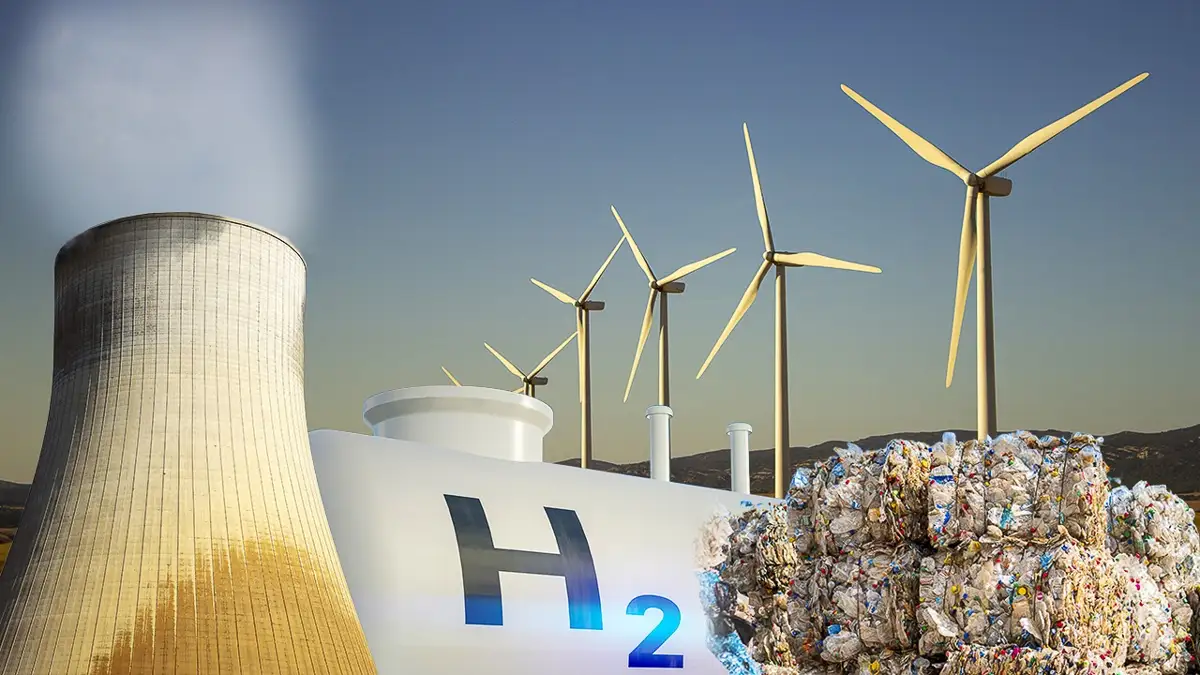
Alternative energy sources are those that do not relate to traditional types of fuel such as oil, gas, coal, and include nuclear and hydrogen energy, the use of low-potential (geothermal and so-called waste) heat, as well as industrial and metallurgical gases.
– Apart from the rapidly developing renewable energy sector, Kazakhstan is still at the very beginning of the development of alternative energy. This potential is still poorly used in our country, everything is “locked” to traditional types of energy. Therefore, it is very important that now, on the instructions of the Head of State, the Ministry of Energy, with the assistance of the Kazenergy Association, is actively developing a law on alternative energy. I myself participate in the working group and hope that this law will appear within the established time frame, – notes the Chairman of the Association of Energy Supply Organizations of Kazakhstan Sergey Agafonov.
Meanwhile, according to the expert, we have quite a large potential for using alternative energy sources. For example, the same waste heat, including sewage, from which heat can be taken and the temperature increased using a heat pump – a heat transformer.
– A separate area is the use of landfill gas, including through various types of synthesis to increase its productivity as a fuel for the production of heat and electricity. No less significant potential is in the use of industrial and metallurgical gases for similar purposes. In Kazakhstan, there is already such a facility in the Pavlodar region, where industrial gas released during the production of petroleum coke is used to generate electricity, – said Sergey Agafonov.
Tasks and advantages
The main goal today is to increase the share of alternative sources, not only in the structure of the electric power balance, but in the entire fuel and energy balance of the country. In addition, each of the areas of alternative energy should have its own goals, since this is often associated with the development of technologies.

For example, the most important aspect in hydrogen energy is reducing the cost of producing “green” hydrogen, because the main problem now is the fairly high cost of its production.
– In the situation with low-potential heat, as a priority measure, I would name the need to form a corresponding market, even two. One of them is a local heat market in the regions. It must be admitted that our share of low-potential heat use is now negligible, unlike other countries, where even along with centralized heat supply, the use of low-potential heat is widespread, – notes S. Agafonov.
Another promising market for low-potential heat is the sphere of activity of producers of thermal and electric energy, as well as all kinds of public utilities: currently these entities have neither the means nor, it must be admitted, the motivation to engage in this.
The economic and environmental benefits of switching to alternative energy sources are hard to overestimate. Hydrogen energy is designed to reduce the carbon footprint. Nuclear energy, in addition to solving environmental problems associated with emissions, also has economic advantages.
– This is the type of energy that has the lowest possible present value. That is, after the payback period of the nuclear power plant, we will receive cheap electricity from it for many decades to come, – the expert explains. – In terms of low-potential heat: no one is currently analyzing the feasibility of connecting facilities to centralized heat supply. It is believed that there is no alternative, and supply using low-potential heat is not even theoretically considered. Although this may be more economically advantageous, especially if we are talking about consumers who are significantly remote from the heat source. Losses during the transportation of thermal energy are the main problem in this area.
The use of industrial and metallurgical gases as a cheap source of fuel for electric power engineering can be just as economically advantageous. It is precisely this utilization of these gases that will give an obvious effect for the environment.
Investment attractiveness
Investments in alternative energy are obviously needed, but, the expert emphasizes, it is important to structure them correctly. For example, the same hydrogen energy requires venture capital for now: first of all, in the development of technologies that reduce the cost of producing “green” hydrogen.
– As for nuclear energy, this sphere is quite capital-intensive. Specific investments, calculated per kilowatt of installed capacity, in this industry are among the highest. True, they are then “paid off” with interest. This is already a completely commercial “story”, – explained Sergey Agafonov.

If we talk about low-potential heat or the use of industrial, metallurgical, landfill gases, the investment scheme is slightly different: it is necessary to create markets where specialized energy service companies (ESCOs) will come, which will “bring” investments, implement projects, but will earn, as well as recoup investments, only in the event of achieving the corresponding savings in energy resources.
Technologies that are still at the development stage, of course, need state support. But as for the ESCO market, here the state only needs to create market incentives.
Let’s give a simple example: in Kazakhstan, heat and electricity producers have not been required to monitor their specific fuel consumption for many years. Since there is no market or administrative control, these specific costs can be anything, but everything is included in the tariff, which is fully paid by consumers.
– What can the state do? Set requirements for monopoly producers to reduce specific costs, while at the same time obliging them to regularly hold competitions between ESCOs for the purpose of using the same waste heat, which in turn will directly affect specific costs. And the state does not need to invest in this case, ESCOs themselves must find investments for these projects, – the expert suggested.
Thus, in some areas of alternative energy, the state can act as a venture investor, but mainly as a regulator that must create the right market incentives. Alternative energy itself is about saving, about earning, not spending. Therefore, to develop this area, the state does not need any big money, here market incentives are much more important than investments.
Prospects and Challenges
Most alternative energy sources are promising for Kazakhstan. Renewable energy sources are, so to speak, “taking the rap” for everyone, but we have significant potential in each of the areas of alternative energy.
First of all, of course, we are “betting” on nuclear energy – taking into account all the existing components: our place in uranium mining, its reserves, already mastered technologies, the general state of this sphere, which has been developing in one way or another all this time.
There is a huge potential for using low-potential heat, because we are in a climate zone where heating is indispensable. Accordingly, there are great prospects for reducing heat losses associated with its discharge. There is a very good potential for using industrial and metallurgical gases in our mining and metallurgical complex. Landfill gases are also waiting for their time …
But we must also acknowledge that in order to develop alternative energy in Kazakhstan, we must overcome a number of barriers.
– The first is the lack of the necessary legislative framework. Last year, we finally had a law on thermal energy. But now we need to have a subject that produces and sells thermal energy to consumers using low-potential heat. That is, de facto, such subjects already exist on the market, but their subjectivity has not yet been recognized by legislation, de jure, – complains S. Agafonov. – The second is the lack of appropriate market incentives. They should appear thanks to these laws and by-laws. Some subjects should be interested in saving, others – for example, ESCOs – should have the opportunity to participate in this market, attract investments and earn money.
Thirdly, the lack of culture and motivation to save resources: that is, we must start looking at the possibilities of the alternative energy sources sphere a little differently. So far, people do not trust this, thinking that using the same landfill gas is “not serious”.
– Today, the share of electricity generated by biogas in our electricity balance is only 0.1%. Meanwhile, this is a very developed area all over the world. All landfills, all garbage and waste from them are recycled, including used to generate electricity. And we still look at this as exotic, and in vain, – the expert notes.
“Green” future
Meanwhile, in recent years, successful agreements have been concluded and profitable projects have been implemented in the field of alternative energy.
– I would still put nuclear energy in first place. The creation of an entire cluster, where at least three NPPs of different configurations and capacities are supposed to be, is so far the most successful decision that we made at the time through a referendum. The project for the production of “green” hydrogen on the Caspian coast and its subsequent export to Europe is worthy of attention, – added S. Agafonov.
The future of the energy sector of Kazakhstan in 20 years, taking into account the use of alternative energy sources, looks quite positive and “green”.
– Let’s do some visionary work. Firstly, nuclear power plants: 20 years is a period that, I think, will be enough to create an entire nuclear cluster. Secondly, thanks to our potential in the field of renewable energy sources, as well as technologies in the field of producing “green” hydrogen, which continue to improve all over the world, we can become one of its leading exporters with good prospects for entering the European markets, – the energy specialist reasons.
It would be great if by 2045 the transformation of low-potential heat takes up about 20% of the heat supply market, and industrial, metallurgical and landfill gases are fully used for the production of electrical and thermal energy.
During this same time, it is also quite possible to install household energy storage systems, say, in a quarter of households in Kazakhstan: approximately the same number of them by this time can be equipped with small-scale renewable energy facilities, and household storage systems will allow electricity to be accumulated when it is not in demand and used during peak load hours, thereby leveling the schedule of the entire energy system and, at the same time, reducing the costs of the households themselves.
“The goals are quite realistic, and 20 years is not such a long period, so you and I can personally see this ‘green’ future,” says S. Agafonov.
https://www.inform.kz/ru/ob-alternativnoy-energetike-i-nerealizovannom-potentsiale-32e31d