

Carbon dioxide emissions continue to rise, and scientists around the world are searching for geoengineering methods that could cool the planet. A recent study has shown that one popular method could disrupt one of the planet’s most important climate systems.
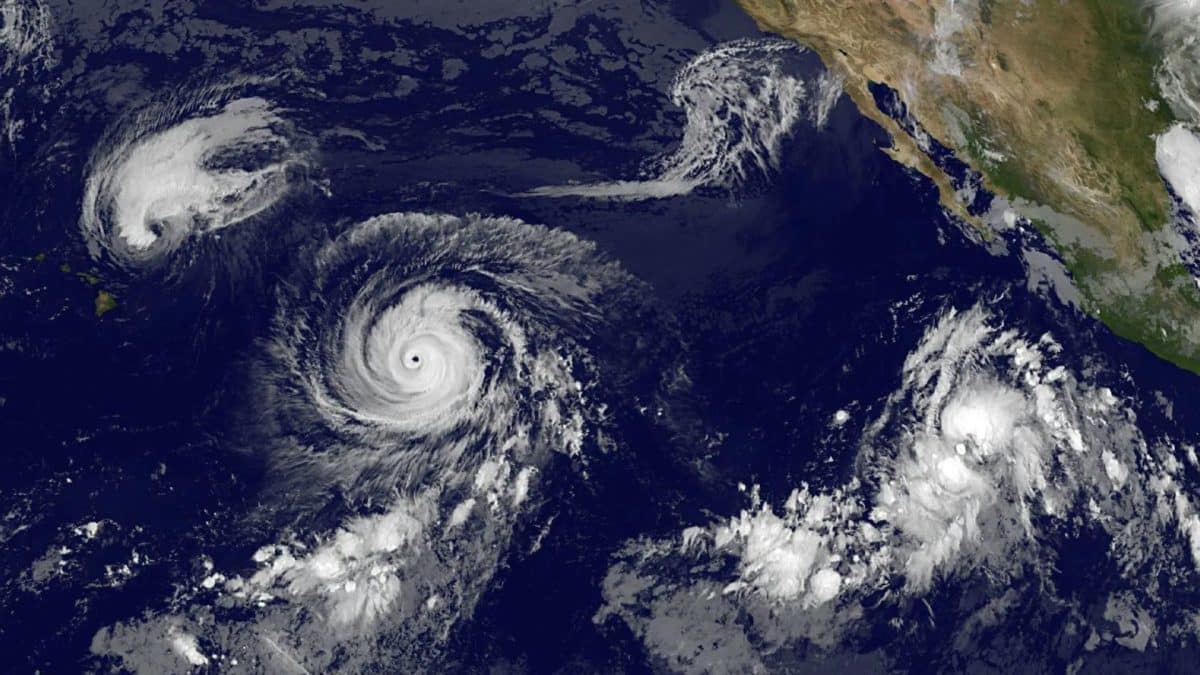 The El Niño Southern Oscillation affects weather patterns around the world / © NASA
Climate scientists from the University of California, Santa Barbara, decided to investigate how geoengineering might impact marine ecosystems. They studied two approaches aimed at cooling the planet. Both methods release tiny particles into the atmosphere, but differ in the materials used and the altitude at which the particles are released. In both cases, some sunlight is reflected back into space. The results of the study were published in the journal Earth’s Future .
The second method is called stratospheric aerosol injection. In this case, sulfate particles are released into the stratosphere. They are distributed more evenly across the globe, blocking some of the incoming sunlight over a much larger area.
The use of marine cloud brightening is often proposed for eastern ocean basins due to its high cooling potential. However, the southeastern Pacific Ocean also plays a significant role in maintaining the El Niño-Southern Oscillation (ENSO).
ENSO is a natural climate cycle that repeats every two to seven years. Warm ocean water moves across the tropical Pacific Ocean, influencing weather patterns worldwide. During El Niño, warmer waters move toward the west coast of the Americas. This leads to wetter winters in California. During La Niña, warmer waters remain in the western Pacific Ocean. This intensifies monsoon rains in parts of South and Southeast Asia.
In modeling, the scientists found that brightening of marine clouds in the subtropical eastern Pacific Ocean dramatically reduces the amplitude of ENSO by about 61 percent.
Modeling has shown that brightening marine clouds alters regional weather patterns. Brighter clouds cool the ocean surface beneath them, reducing precipitation. Cooler, drier air spreads into the central Pacific. This reduces evaporation, weakens atmospheric circulation, and strengthens equatorial winds. This increases the upwelling of colder water, further cooling the ocean surface.
Together, these effects had a strong impact on ENSO. Researchers expected that brightening of marine clouds would affect climate, but they didn’t expect it to this extent. They believe that cloud brightening over the eastern Pacific Ocean should definitely not occur, as such an impact on ENSO could lead to an excessively strong chain reaction.
The second strategy had virtually no effect on ENSO. The researchers attributed this to the height of the particle emissions. When marine clouds brighten, the particles concentrate near the Earth’s surface in one specific region. However, when sulfate particles are released into the atmosphere, they spread over a much larger area, creating a more uniform cooling effect. This does not disrupt processes in the tropical Pacific Ocean as much.
However, the authors believe that the idea of cloud brightening should not be abandoned entirely. They note that such consequences could occur if the method is implemented in a specific region.
According to researchers, failure to intervene also carries risks. Uncontrolled climate change could disrupt ecosystems, natural climate cycles, and impact human lives.
However, it’s important to consider that reflecting more sunlight away from Earth could impact photosynthesis. This would reduce the productivity of crops, forests, and seaweed. These consequences are also important to consider in geoengineering.
Google machine translated