


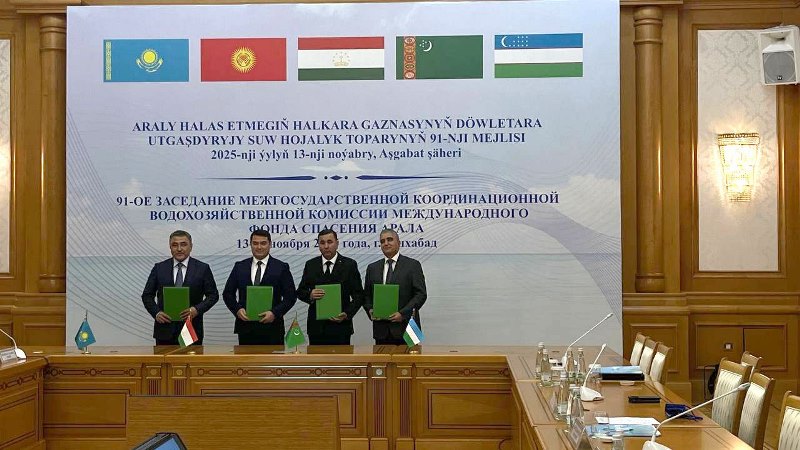
In 2026, Tajikistan will receive 9,821 million cubic meters of water from the Amu Darya River and 365 million cubic meters from the Syr Darya. The Interstate Commission for Water Coordination (ICWC) of Central Asia recently published the results of its 91st meeting, which took place in Ashgabat on November 13, 2025.
Water balance on the Amu Darya
Regarding the Amu Darya, the commission was most interested in two things: whether the countries had enough water and whether they had managed to maintain the flow level in the lower reaches, where there are many fields and millions of people live.
Overall, the season proved challenging. At the Kerki monitoring station, the water level was approximately 93% of normal, slightly lower than the previous year. In the spring, the water inflow fluctuated greatly, but in August and September, when glacier melt intensified in the mountains, the water level increased significantly—up to 115% of normal. This helped ensure that the reservoirs had the necessary volume for the lower reaches by the end of the season.
During the growing season, the countries used approximately 86% of their approved Amu Darya quotas. Tajikistan used approximately 83% of its volume, Turkmenistan – almost 92%, and Uzbekistan – approximately 82%. Below the Kerki River, actual use was 87.4% of the total quota.
The Nurek and Tuyamuyun reservoirs operated in a regulated release mode: the former smoothed out flow fluctuations, while the latter promptly supplied water downstream. Thanks to this, there were no serious disruptions in water supply to fields and settlements.
Syrdarya: inflows are above normal, but there is a shortage of water in reservoirs
The picture for the Syr Darya River was more complex. Forecasts from the Hydrometeorological Center of Uzbekistan showed that water levels in various parts of the basin would range from 70% to 105% of normal. In fact, the total inflow to the upper reservoirs was even higher than expected – 6,119 million cubic meters, or 119% of normal.
This seemed like good news, but by the end of the season it became clear that the reservoirs themselves had less water than planned.
The Toktogul reservoir was short more than half a billion cubic meters, the Andijan reservoir was short about 320 million, and the Charvak reservoir was short 428 million. The Bakhri Tojik and Shardara channel reservoirs had deficits of 217 and 576 million cubic meters, respectively.
Overall, the cascade was short of approximately 2.1 billion cubic meters compared to the forecast. Moreover, during the 2024–2025 non-growing season, the cascade discharged almost 1.8 billion cubic meters more water than planned.
Increased releases were needed to maintain sanitary flow in the riverbed and provide water to countries downstream.
Even with shortages in some reservoirs, the 2025 irrigation season along the Syr Darya River proceeded without critical problems. This was aided by reserves from previous years, additional inflows, and the coordinated efforts of water services in Kazakhstan, Kyrgyzstan, Tajikistan, and Uzbekistan.

How will water be divided in winter and spring?
At the ICWC meeting, the countries agreed on how to use water during the upcoming non-growing season of 2025–2026.
For the Amu Darya, the total water withdrawal limit for the water management year from October 2025 to October 2026 is set at approximately 55.4 billion cubic meters. Of this, 15.9 billion cubic meters are allocated during the cold season – from October to April.
Tajikistan has been allocated 9.8 billion cubic meters per year, Turkmenistan and Uzbekistan – 22 billion each.
A significant portion of the flow – 44 billion cubic meters – should pass to the given section of the Kerki hydropost, ensuring the lower reaches of the river.
Water volumes for the Aral Sea and the Amu Darya Delta are separately specified: 4.2 billion cubic meters, half of which is supplied in winter and early spring. Sanitary and environmental releases to the irrigation systems of the Dashoguz velayat, Khorezm region, and Karakalpakstan will amount to an additional 800 million cubic meters.
This is important for the preservation of floodplain ecosystems and for the population of the Aral Sea region, which already lives in conditions of water shortage.
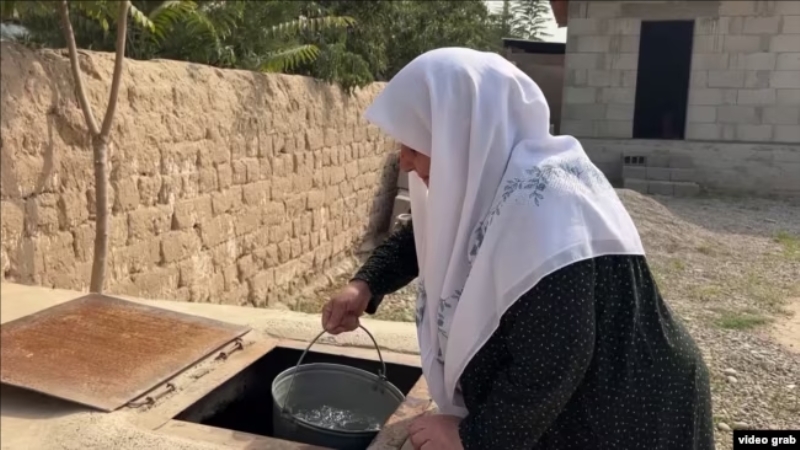
The total water withdrawal limit for the Syr Darya during the non-growing season will be 4.219 billion cubic meters. Kazakhstan will receive 460 million cubic meters through the Dustlik Canal, Kyrgyzstan 47 million, Tajikistan 365 million, and Uzbekistan will receive the largest share at 3.347 billion cubic meters.
These figures are calculated taking into account the expected inflow, reserves in reservoirs and the need to maintain environmental flow in the riverbed.
What will happen to the reservoirs?
The commission also approved the operating modes of the largest reservoirs. According to forecasts, the Nurek Reservoir will enter the non-growing season with a capacity of approximately 10.5 billion cubic meters and end it at approximately 9.7 billion.
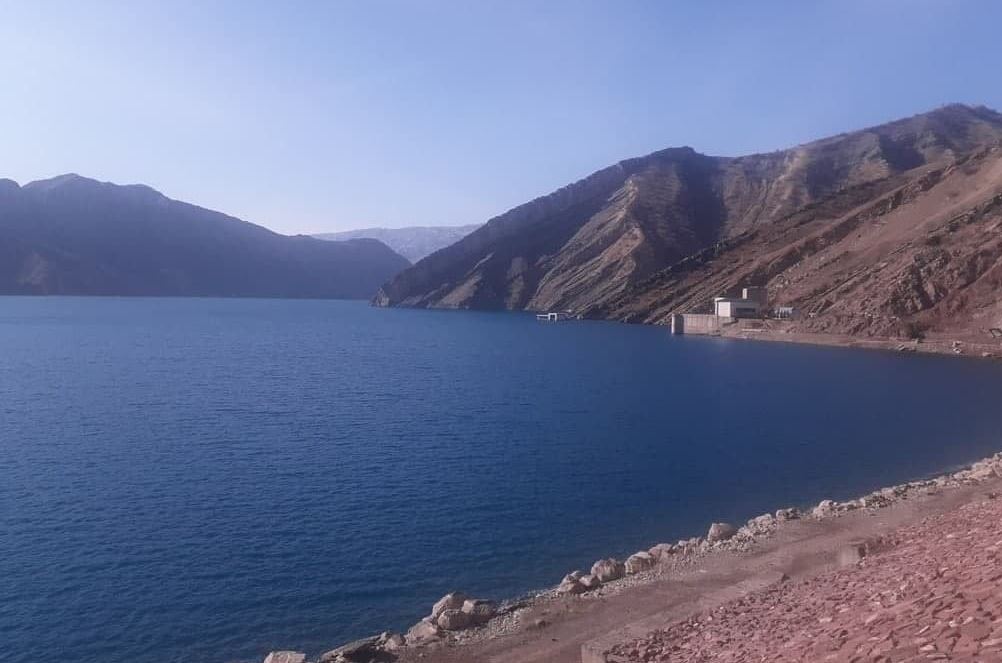
Tuyamuyunskoye will begin the season with a reserve of approximately 4.5 billion cubic meters and will reduce its capacity to 3.4 billion by spring. Both hydroelectric complexes will gradually release water downstream to provide irrigation in Turkmenistan and Uzbekistan and maintain a healthy flow in the Amu Darya River.
In the Syr Darya, the total water reserves in the Toktogul, Andijan, and Charvak reservoirs at the beginning of the non-growing season are estimated at approximately 10.6 billion cubic meters, which is slightly below normal.
In Bahri Tojik and Shardara, approximately 2.6 and 1.65 billion cubic meters are expected, respectively.
By the beginning of winter, the Syr Darya basin reservoirs will contain approximately 14.9 billion cubic meters of water—approximately 90% of the average annual level. This isn’t critical, but it leaves less of a safety margin, so the cascade’s operation will be more cautious.
The next, 92nd, meeting of the commission will be held in Dushanbe. There, the countries will review reservoir performance and water use during the 2025–2026 non-growing season and decide on the next steps to ensure water security in the region amid growing climate challenges.
Total limit of the Amu Darya: 55,391 million m³ (for the non-growing season – October–April – 15,865 million m³). Total limit for the non-growing season (Syr Darya): 4,219 million m³
https://www.asiaplustj.info/ru/news/centralasia/20251203/kak-v-tsentralnoi-azii-podelili-vodu-na-2026-god