
An international practical training course, “Instrumental and Remote Sensing Methods for Glacier Monitoring,” was completed in Kyrgyzstan. It was organized by the Tien Shan International Scientific Center (TISC) at the Institute of Water Problems and Hydropower of the National Academy of Sciences of the Kyrgyz Republic within the framework of the World Bank’s “Sustainable Landscape Restoration in the Kyrgyz Republic” project, the RESILAND CA+ Program (KG RESILAND).
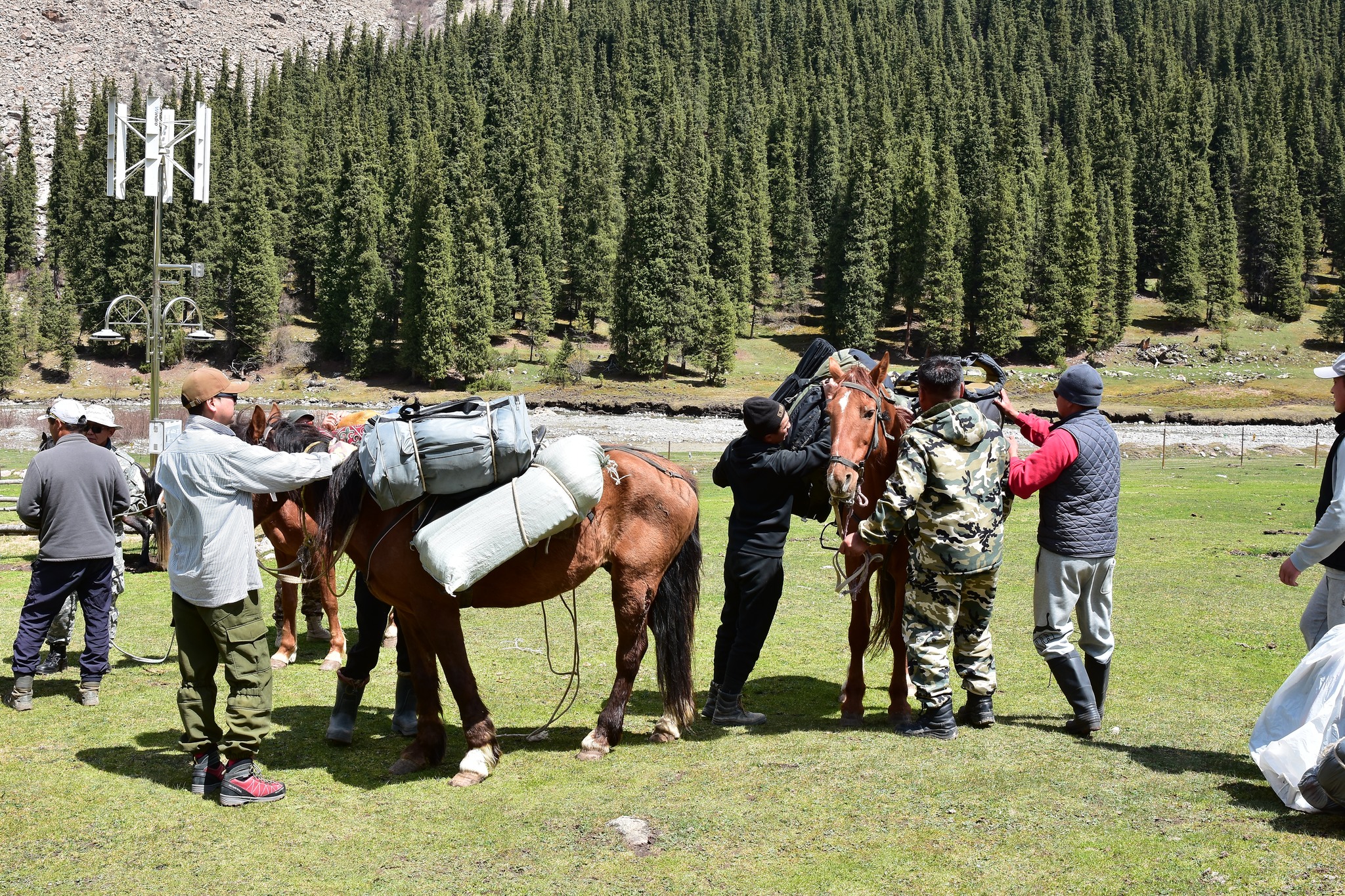
Within the framework of KG RESILAND, the foundation for the development of a modern glacier monitoring system in Kyrgyzstan and Central Asia is currently being laid—with specialist training, the implementation of field and remote observation methods, and the strengthening of the region’s scientific potential.
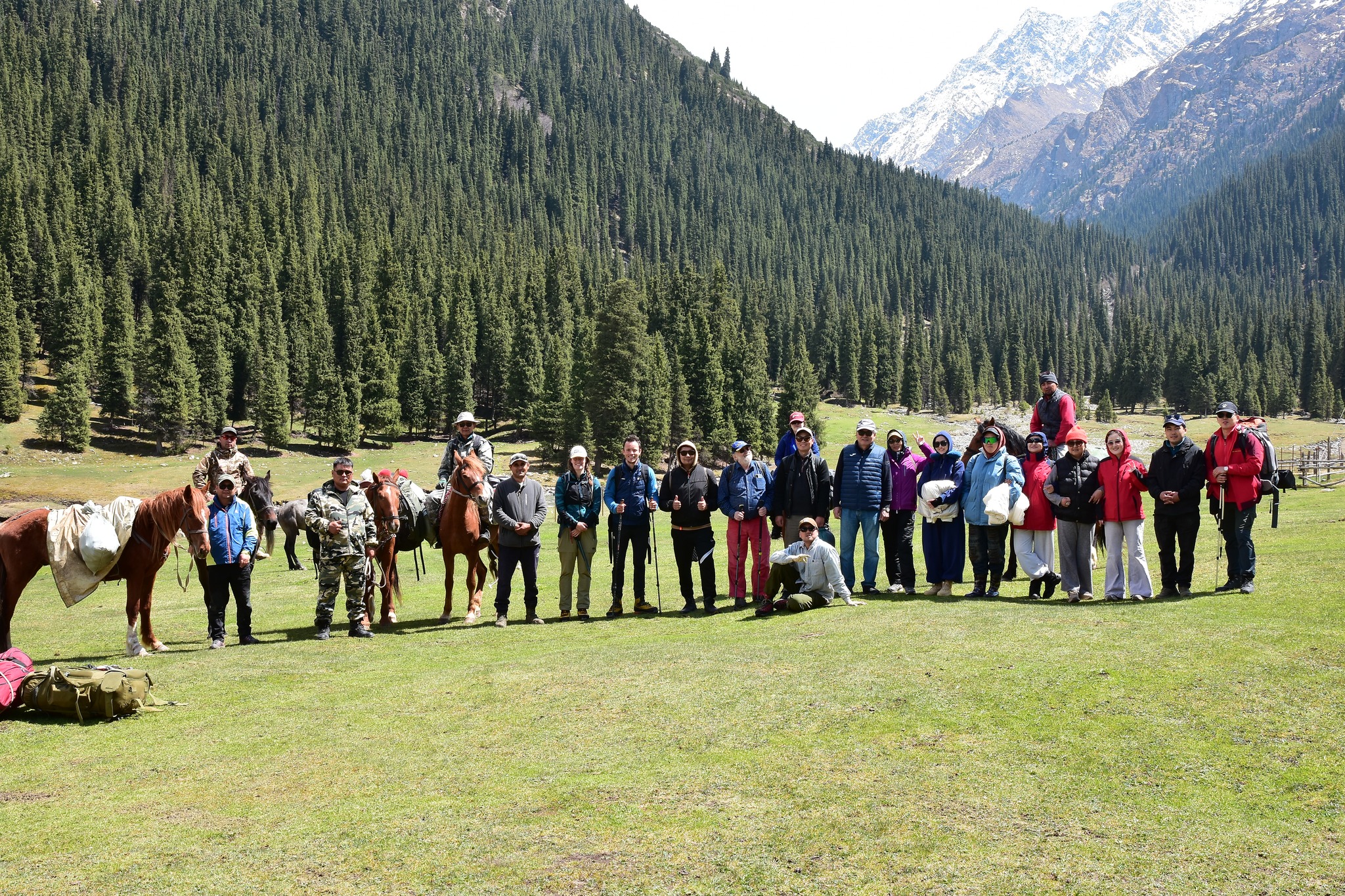
The training took place from April 27 to May 2, 2026, at the TShMNC base in the village of Kyzyl-Suu and directly on the Kara-Batkak glacier (3,330 m) on the northern slope of the Teskey-Ala-Too mountain range. Participants included specialists from Kyrgyzhydromet, staff from research institutions, graduate students, and young researchers working in glaciology, climatology, and natural resource monitoring.
The participants worked with experts and practicing glaciologists from the Free University of Brussels (Belgium), Lomonosov Moscow State University (Russia), and specialists from the TShMNC at the Institute of Hydrometeorology and Geophysics of the National Academy of Sciences of the Kyrgyz Republic.
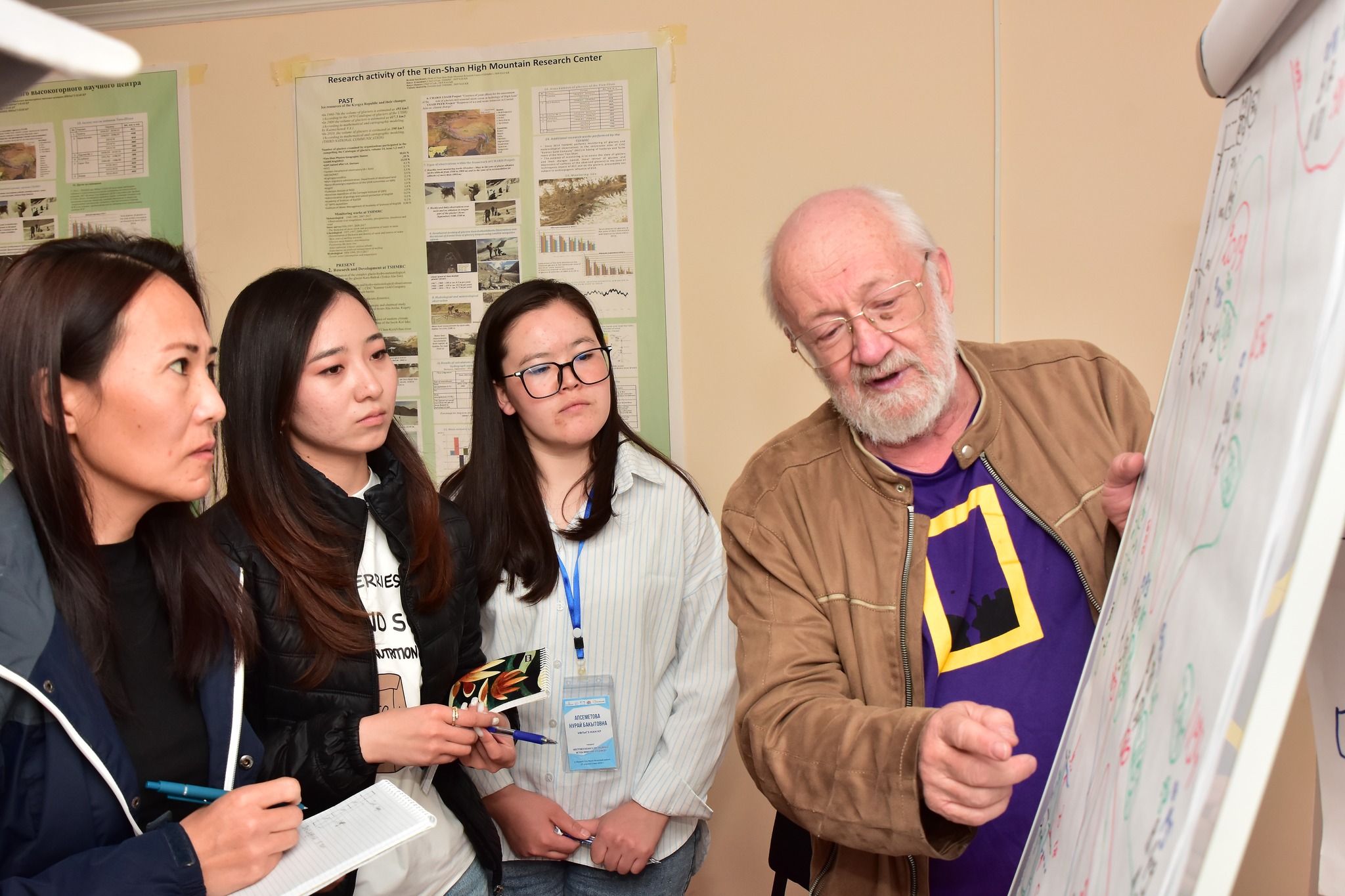
The key feature of the training was the combination of classical instrumental glaciological methods and modern remote sensing technologies. The first days were devoted to theoretical training: participants studied the processes of glacier mass balance formation, accumulation and ablation mechanisms, the specifics of snow measurement, and the role of glaciers in the formation of water resources in Central Asia.
Particular attention was paid to the fact that instrumental field measurements remain the “gold standard” of glaciology. Such data are used to verify and refine remote sensing results, as well as to fine-tune climate models and assess glacier changes under climate change.
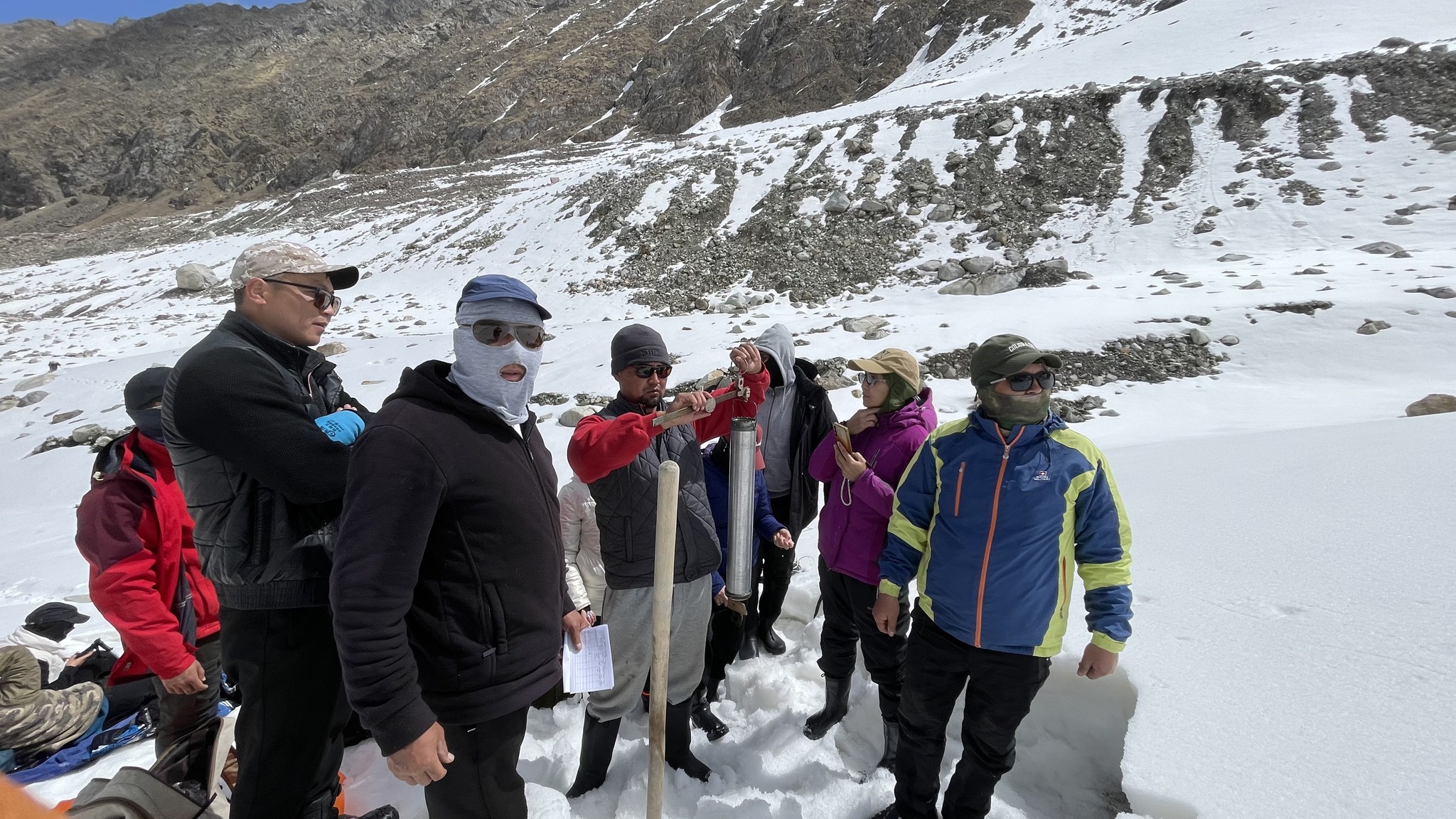
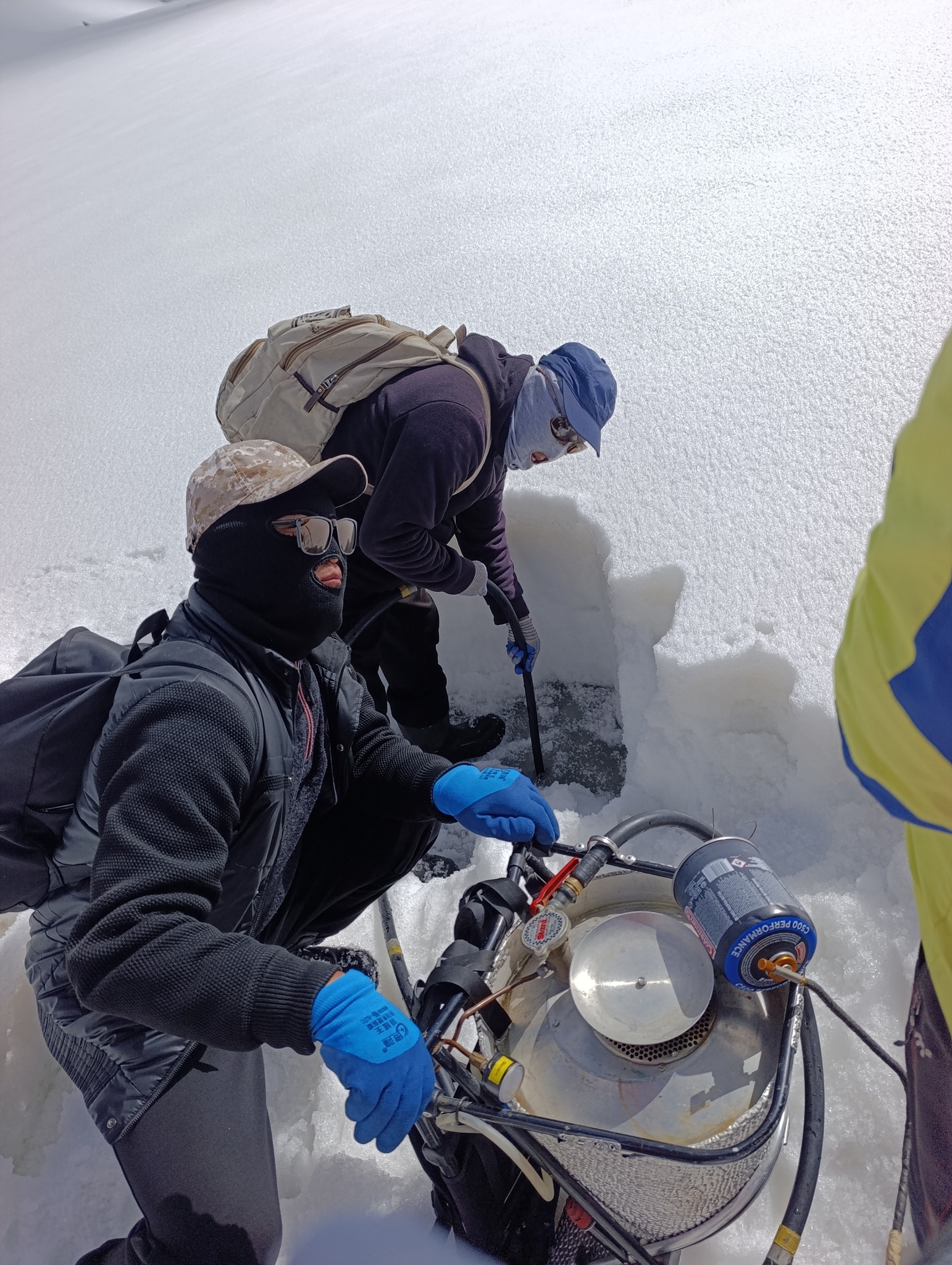
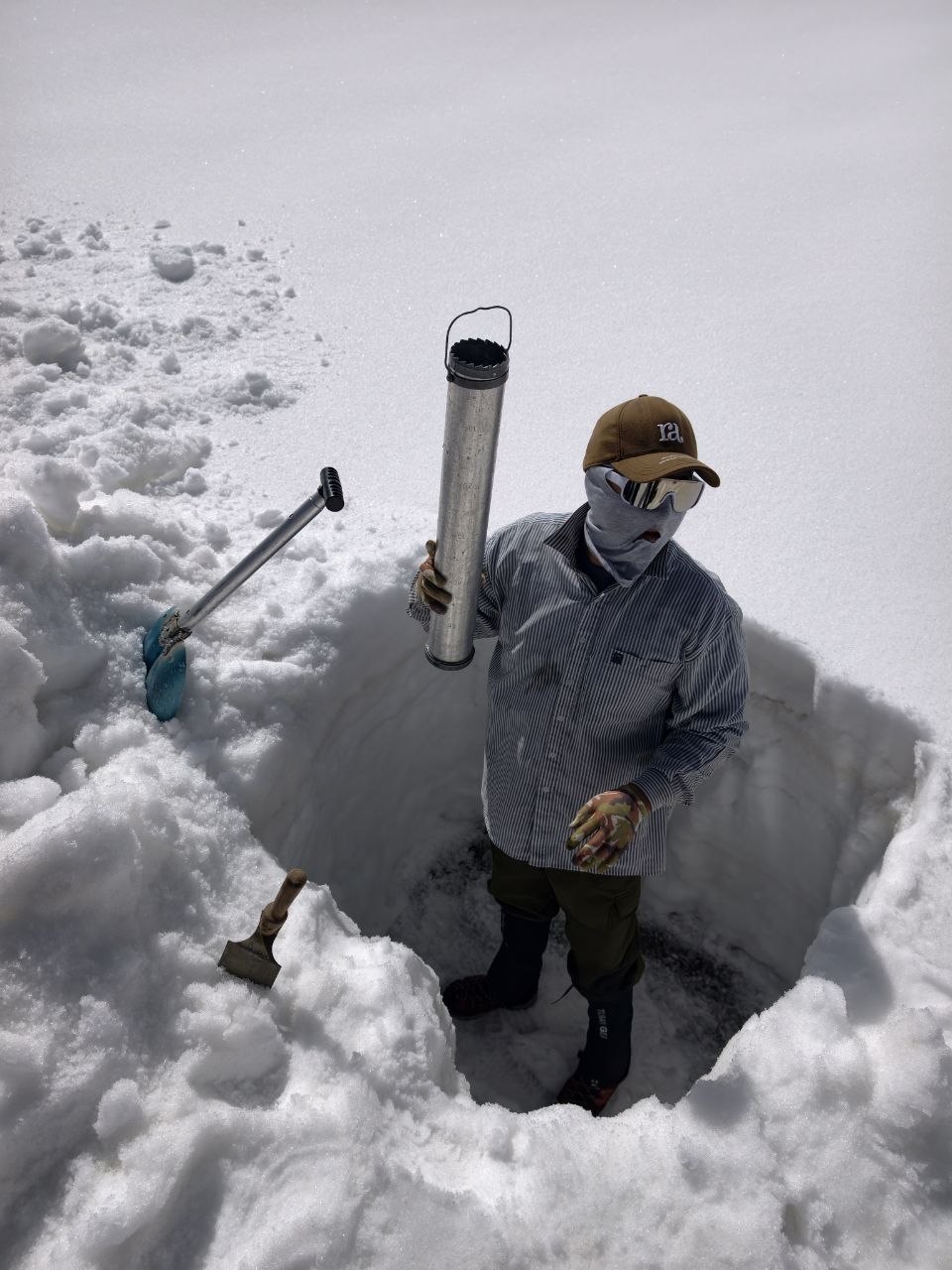
Following the theoretical part, the participants moved on to practical work directly on the Kara-Batkak glacier. During the fieldwork, the following was conducted:
● snow survey and measurement of snow cover thickness;
● laying snow pits and densimetric measurements (measurements of the density of snow and ice);
● installation of ablation rods (installation of special measuring rods to monitor glacier melting);
● GPS survey of the glacier surface;
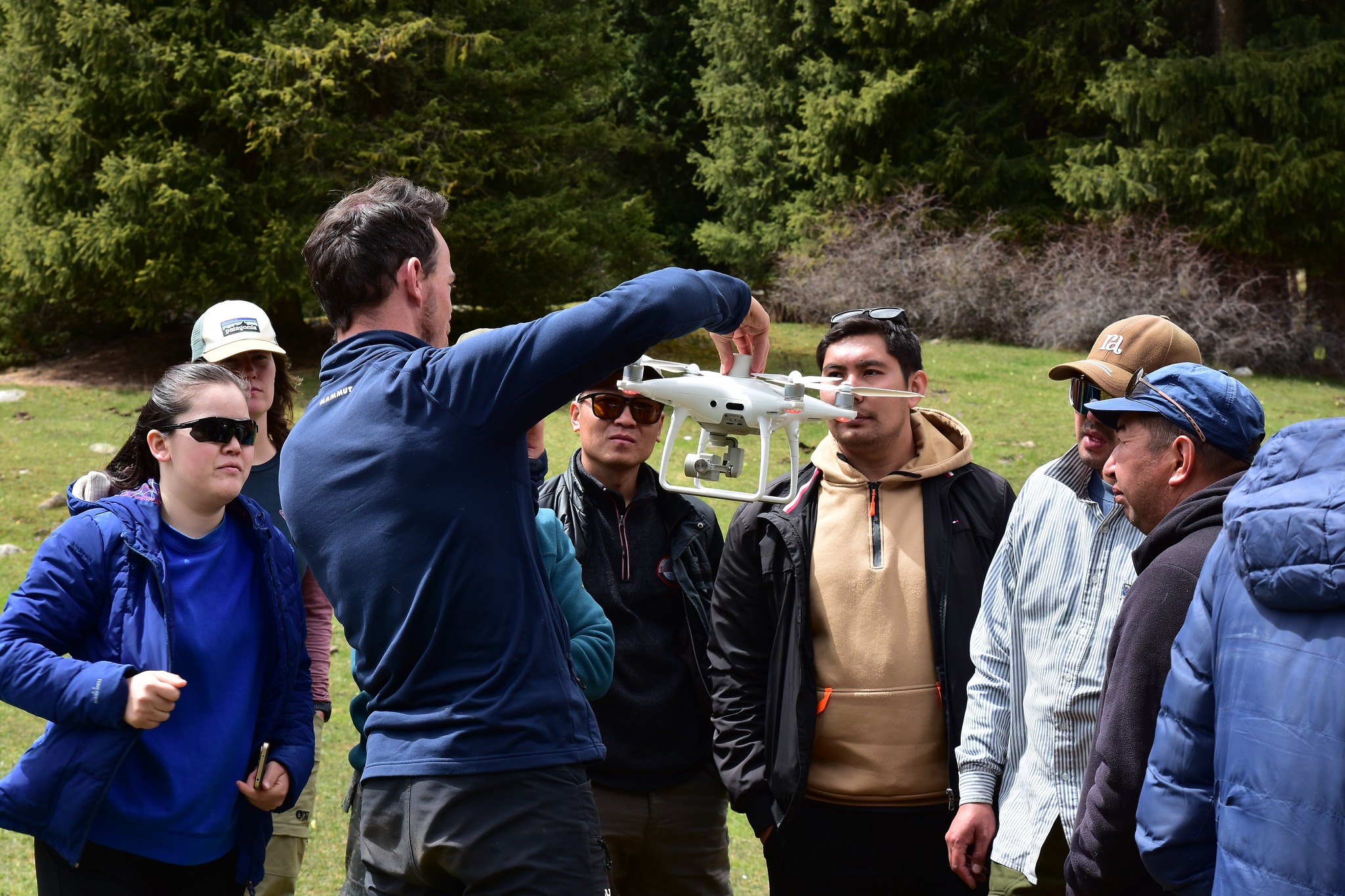
● remote survey of open areas of the glacier using UAVs;
● data collection for the construction of digital elevation models.
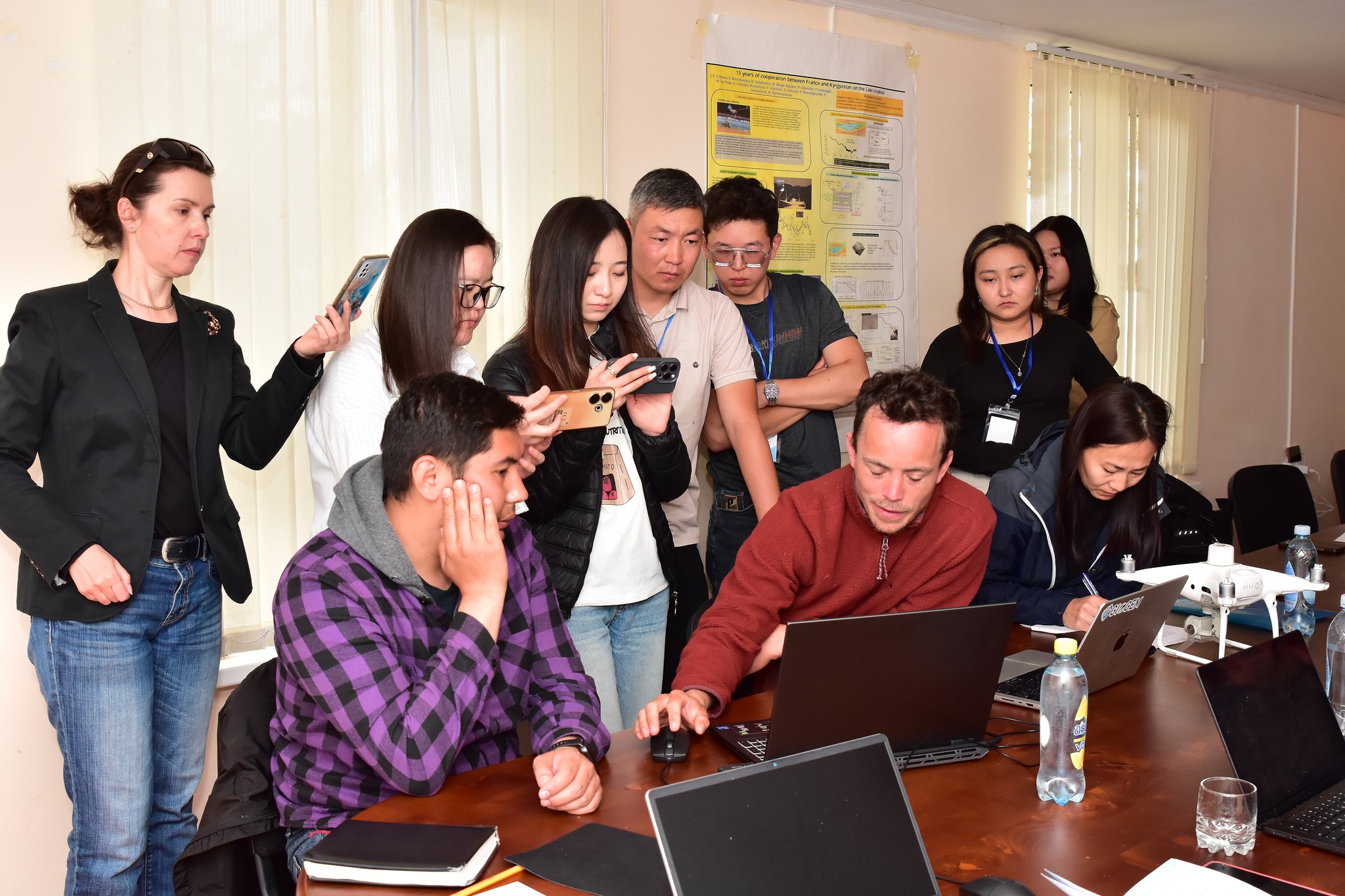
During the final stage, participants independently processed the collected data, calculated the glacier mass balance, constructed accumulation and ablation maps, analyzed the water content of seasonal snow, and mastered the processing of aerial photography using Pix4D.
The training also included the development of methodological materials on snow measurement, remote sensing data processing, and glacier mass balance calculations. This provides the basis for standardizing approaches to glacier monitoring and further developing a unified observation system in the region.
The training was attended by 20 representatives of scientific, educational, and government institutions of Kyrgyzstan.
Upon completion of the training, participants received not only certificates but also practical experience in full-fledged research work—from field measurements to data analysis and interpretation.
Work in this area will continue. During the 2026 summer season, the TsMNC, together with international partners, plans to conduct new practice-oriented events, including a training course on buried ice monitoring, a regional glaciological expedition, a summer school for knowledge exchange, and a youth climate camp.
Such initiatives are creating a sustainable scientific and educational platform in Central Asia for studying glaciers, training young specialists, and developing regional cooperation in climate change monitoring.