

Kyrgyzstan is actively increasing its hydropower potential, positioning this area as the basis for sustainable development and the path to “green” energy. As Minister of Energy Taalaibek Ibrayev stated at the 9th International Congress “Hydropower Central Asia and the Caspian 2025” in Bishkek, the country has the capacity to build hydroelectric power plants with a total output of up to 142 billion kWh. According to him, the use of this potential has already increased from 10% in 2020 to 15% now, with special attention being paid to small hydroelectric power plants, the capacity of which is planned to be increased from the current 48-50 MW to 400-500 MW by 2027-2028.
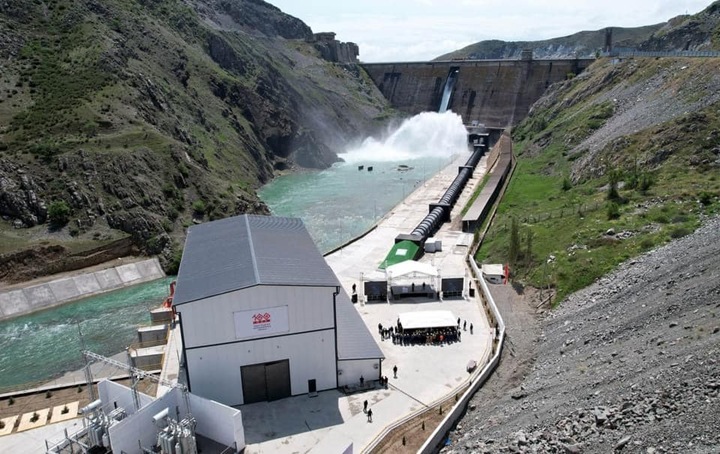
Hydropower is officially declared a strategic direction designed to ensure energy security, economic growth and compliance with international environmental standards. The Minister of Energy emphasized that in 2024, about 90% of all electricity in the country was generated by hydroelectric power plants, and this sector will only expand against the backdrop of the growing needs of the region. Reforms are being introduced to attract investment, existing stations are being modernized and new ones are being built, including renewable energy facilities such as solar and wind stations, implemented through public-private partnership (PPP) mechanisms.
However, behind the ambitious plans and statements about “clean green energy” there are serious challenges and potential risks that cause concern. Shakir Saidov, General Director of Chakan HPP OJSC, admitted at the same congress that the equipment depreciation at the company’s operating small hydroelectric power plants reaches 80-90%. This not only reduces production efficiency, but also carries man-made and environmental threats, requiring significant funds from international donors for modernization.
The drive to rapidly increase capacity also raises questions about the quality of planning and environmental impact assessment. Nurbek Anarbekine, Director of the PPP Centre, noted that despite discussions with the Ministry of Energy on the need to prepare high-quality feasibility studies, pre-feasibility studies and master plans for future projects, “this remains at the talk stage for now.” Delays in the preparation and selection of sites for the construction of hydroelectric power plants, as well as the promise to “fully prepare sites for investors” in the future, may indicate a risk of accelerated project implementation without proper environmental assessment.
Meanwhile, construction of new hydropower facilities in Kyrgyzstan is in full swing. Several small hydroelectric power plants with a total capacity of about 15 MW are planned to be commissioned in the Issyk-Kul, Chui and Jalal-Abad regions by the end of 2025. The Boz-Uchuk (5.4 MW), Aksu (4 MW) and Issyk-Ata 2 (4.5 MW) hydroelectric power plants are in the final stages. The Ministry of Energy predicts that private small hydroelectric power plants alone will generate 600 million kWh in 2025, and a total of 18 such stations with a total capacity of 64.2 MW are planned to be commissioned.
Along with small hydroelectric power plants, large projects are also being implemented. Of particular interest is the Kazarman Cascade of Hydroelectric Power Plants on the Naryn River, which includes four hydroelectric power plants with a total capacity of 1,120 MW. According to Muhammet Khaluk Sur, General Director of the Central Asian Investment Holding OJSC, the company is in the final stages of concluding an investment agreement. The project includes the construction of the Ala-Buga (600 MW with a dam height of 220 m), Kara-Bulun-1 (149 MW) and Kara-Bulun-2 (163 MW) hydroelectric power plants. The scale of these structures will inevitably entail significant anthropogenic impact on river ecosystems and adjacent territories.
The economic incentive for increasing generation is not only domestic demand, but also export opportunities. Within the framework of the CASA-1000 project, Kyrgyzstan plans to annually export 1.5 billion kWh of electricity from May to September to Afghanistan (at 8 cents per kWh) and Pakistan (at 9 cents per kWh), where there is an energy deficit in the summer. This creates additional pressure on the energy system and stimulates the accelerated construction of new capacities.
The law on renewable energy sources (RES) is in force in Kyrgyzstan to regulate the industry. According to the 2024 amendments, the tariff for new hydroelectric power plants is set at 4.42 soms per 1 kWh, while for old stations it remains at 2.62 soms. The general director of Chakan HPP, Shakir Saidov, clarified that the possibility of concluding contracts in foreign currency is being discussed in order to avoid tariff indexation, which also underlines the desire to attract foreign investors. However, the question remains open as to what extent the existing tariffs and legislation of Kyrgyzstan stimulate not only construction, but also compliance with strict environmental standards and timely modernization of outdated equipment.
Thus, the hydropower boom in Kyrgyzstan carries both the prospects of strengthening energy independence and receiving export revenues, and serious risks. The deterioration of the existing infrastructure, potential problems with the quality of planning and environmental impact assessment of new, especially large, hydropower projects, as well as the intervention in river ecosystems themselves require close public attention and a responsible approach from the authorities and investors, so that the pursuit of kilowatt-hours does not result in irreversible damage to the unique nature of Kyrgyzstan.
Alexander Yeskendirov (Rivers.Help!)
Новые ГЭС Кыргызстана: энергетические мощности, экологические риски