

Ten years ago, the Paris Agreement on climate change was adopted. The five Central Asian states that signed this international agreement committed to reducing greenhouse gas emissions and developing renewable energy. Kazinform’s own correspondent explores how the region is transitioning to clean energy.
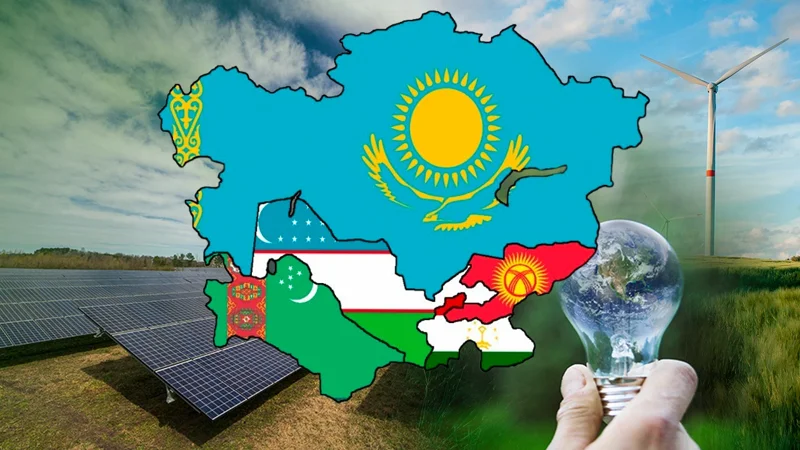
According to the International Renewable Energy Agency (IRENA), Central Asian countries made some progress in transitioning to green energy between 2015 and 2024, but the energy sector remains predominantly green. In 2023, the total capacity of renewable energy sources (RES) in Central Asia exceeded 17.3 GW, representing a significant increase of 26.6% compared to 2018.
Kazakhstan is the regional leader in renewable energy
Kazakhstan, which has committed to achieving carbon neutrality by 2060, is a regional leader in renewable energy development, attracting investment in solar and wind energy and implementing large-scale projects aimed at increasing the share of renewable energy sources in the energy mix.
According to the Ministry of Energy of the Republic of Kazakhstan, the share of electricity generated from renewable energy sources exceeded 6% by the end of 2024, reaching 6.43%, double the 2020 figure (3%). Last year, eight new projects with a total capacity of 163 MW were commissioned. Over the past five years, the country has seen stable positive growth: 3.69% in 2021, 4.53% in 2022, 5.92% in 2023, and 6.43% in 2024.
Over the past decade, the installed capacity of renewable energy facilities in the country has increased more than 17-fold, reaching 3,082 MW.

In 2025, nine more projects with a total capacity of 455.5 MW are planned to be commissioned, which will significantly increase the share of green energy in the country’s energy balance and reduce its carbon footprint.
Since 2018, the country has been implementing a transparent auction mechanism, attracting approximately 260 companies from 13 countries. This has allowed not only to increase capacity but also to significantly reduce tariffs for green electricity: by almost half for wind power plants and by 2.5 times for solar power plants. Investors are offered some of the most attractive terms, including 20-year power purchase contracts, tariff indexation, and investment incentives.
The country’s government plans to increase the share of renewable energy sources in the country’s energy mix to 15%. To achieve this, 91 new projects with a total capacity of 2,258 MW are planned for commissioning by 2030. By that time, the total installed capacity of renewable energy sources will reach 10 GW.
“Sunny House” in Uzbekistan
Uzbekistan is also demonstrating a growing interest in renewable energy sources, launching solar and wind power plants with the support of international financial institutions. According to the ” Uzbekistan 2030″ strategy, the government plans to increase the share of renewable energy in electricity generation to 40% (with a capacity of 25 GW) by 2030. The country is undertaking large-scale work to introduce renewable energy sources and has created a legal framework for alternative energy. In 2019, the Law “On the Use of Renewable Energy Sources” was adopted, aimed at creating a legal framework and stimulating investment in this sector.
By 2024, the total capacity of renewable energy sources in Uzbekistan reached 4.5 GW, and their share of the total energy sector was 16%. Renewable energy sources have saved nearly 1 billion cubic meters of natural gas and prevented the emission of 1.4 million tons of greenhouse gases into the atmosphere.
According to the official website of the country’s president, the industry has attracted $2.1 billion in foreign direct investment, with projects worth another $13 billion underway. Modern solar and wind power plants are being built in almost every region. Specifically, nine large solar and wind power plants with a total capacity of 1.6 GW have been commissioned in Bukhara, Jizzakh, Kashkadarya, Navoi, Samarkand, and Surkhandarya. Six large and small hydroelectric power plants with a total capacity of 183 MW have been commissioned in the Andijan, Samarkand, Surkhandarya, and Tashkent regions.
Solar panels with a total capacity of 457 MW have also been installed at social facilities, businesses and organizations, businesses, and residential buildings. Banks allocated nearly 2 trillion soums for this purpose. This has created the capacity to generate an additional 5 billion kilowatt-hours of clean electricity and save 1.5 billion cubic meters of gas.
According to Uzbek President Shavkat Mirziyoyev, green energy is becoming one of the country’s economic drivers. Within three years, 28 large solar and wind power plants with a total capacity of 8 GW will be commissioned.
The country has a “Solar Home” program, which pays residents who install solar panels 1,000 soums per kilowatt of electricity. By 2024, approximately 11,000 homeowners had effectively taken advantage of this program.
Additional incentives are being created for entrepreneurs in the solar energy sector. Specifically, customs exemptions on the import of solar panels, inverters, and batteries will be extended for another five years.
Small and medium-sized hydroelectric power plants in Kyrgyzstan
In recent years, Kyrgyzstan has placed particular emphasis on the construction of small hydroelectric power plants, solar and wind power plants to increase the country’s energy capacity, strengthen energy security, and reduce dependence on traditional energy sources.
The country is actively developing its hydropower sector, focusing on the construction of small and medium-sized hydropower plants (HPPs) by domestic investors. According to the Kyrgyz Ministry of Energy, 39 HPPs are operating in the country. By the end of 2025, 18 small HPPs with a total capacity of approximately 78 MW, operating on existing water resources, are planned to be commissioned. In 2026, 13 small HPPs with an estimated capacity of 148 MW are planned to be commissioned, and in 2027, another 14 small HPPs with a total capacity of approximately 170 MW.
In the solar energy sector, the largest initiative is the project being implemented in the village of Toru-Aygyr in the Issyk-Kul region. A 300 MW solar power plant is being built on a 407-hectare site, with a total investment of $270 million.
The city of Balykchy is currently implementing its first wind farm project. The 9.8-hectare site will be home to 100 wind turbines, each generating 2 MW. The total capacity of the plant will be 200 MW. Plans call for the construction of 34 more small hydroelectric power plants, five solar power plants, and one wind farm in the region.
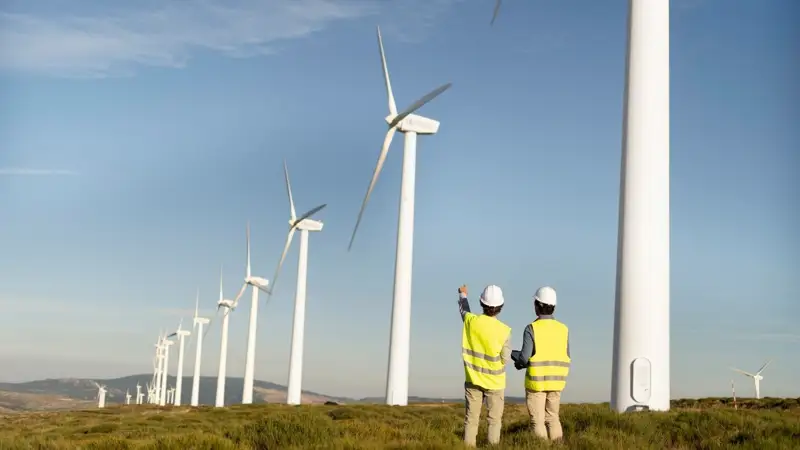
As Kundus Kyrbasheva, Chairperson of the Association of Wind and Solar Power Plants of the Kyrgyz Republic, noted, renewable energy facilities in Kyrgyzstan are currently under construction. The share of alternative energy in the country’s total electricity capacity is still small. However, the “National Development Program of the Kyrgyz Republic until 2030, ” recently signed by the President, stipulates that the share of renewable energy in total electricity generation will increase significantly.
According to the document, the strategy centers on three key priorities: energy security, energy independence, and environmental sustainability. To achieve these, five interrelated areas are envisaged, covering all aspects of energy development. Key measures will include the expansion and diversification of generating capacity, improving energy system efficiency and demand management, modernizing energy infrastructure, strengthening regional integration, and ensuring climate resilience.
Among the challenges in the renewable energy sector that businesses most often face, the expert identified gaps in the legislative framework and the lack of a “single window” system.
“Kyrgyzstan hasn’t yet developed a ‘single-window’ mechanism where a government agency can provide permits, land plots for renewable energy projects, sign contracts, and approve tariffs in one place,” she commented.
According to Kundus Kyrbasheva, Central Asian countries have the potential to develop green energy.
“The states of the Central Asian region need to unite, collaborate closely on developing alternative energy sources, and utilize their water potential more for agricultural needs and food security,” the expert expressed her opinion.
Green Tajikistan
Tajikistan generates 98% of its electricity from hydropower. According to statistics from the International Renewable Energy Agency (IRENA), from 2015 to 2024, the country’s installed renewable energy capacity increased by 15.8%, or 781 MW—from 4,957 MW to 5,738 MW. The country ranks sixth in the world in terms of its share of renewable energy.
In accordance with the Republic’s Green Economy Development Strategy for 2023–2037, by the end of the document’s term, the country’s renewable energy generation capacity will increase by 10%. Solar energy generation capacity will be increased to 800 MW.
Tajikistan President Emomali Rahmon stated that, based on the Green Economy Development Strategy, the country intends to fully generate electricity from renewable sources by 2032 and become a green country by 2037.
Experts note that Tajikistan has enormous potential for solar energy development, with 260 to 330 sunny days per year. The total technical potential for solar generation is estimated at 25 billion kWh per year, which could cover up to 80% of the population’s electricity needs for ten months. However, despite this, solar and wind energy in the country are still in their infancy.
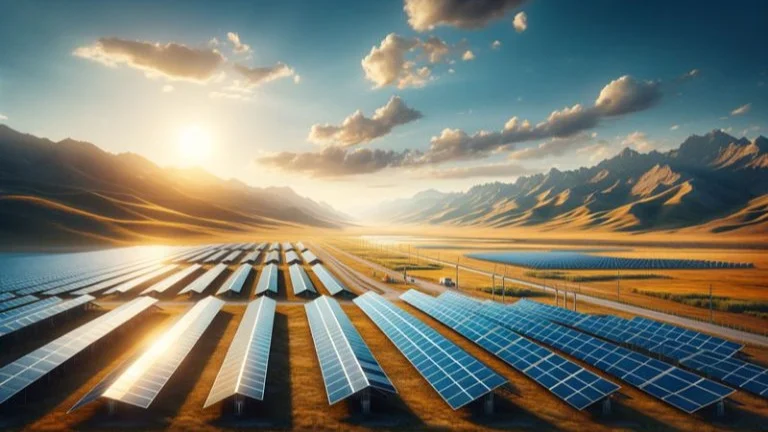
The only commercial solar power plant with a capacity of 220 kW was commissioned in Murghab in 2020. Construction of a 200 MW solar power plant will begin in Sughd Oblast in 2025. Small solar power plants with a total capacity of over 14 MW are planned for construction by 2027. Furthermore, a mandatory requirement for all new and renovated buildings to be equipped with solar power systems came into effect on April 1, 2024. In recent years, solar kitchens, dryers, and greenhouses have been introduced across the country, demonstrating the gradual adaptation of technologies to local conditions.
According to experts, the transition to green energy in the economies of Central Asian countries looks promising. Developing renewable energy in the face of growing electricity shortages will help reduce dependence on traditional energy sources, avoid the negative environmental impacts of fossil fuel use, and stimulate economic growth.
However, despite the successes achieved, the development of green energy in the Central Asian region faces a number of challenges. These include the need to modernize energy infrastructure, attract private investment, create a favorable regulatory framework, and raise public awareness of the benefits of renewable energy. Overcoming these challenges will allow Central Asian countries to fully realize their clean energy potential and contribute to global efforts to combat climate change.
You can read about what renewable energy sources are and what the prospects for their use in Kazakhstan are here .
https://www.inform.kz/ru/kitay-gotov-vlozhit-do1mlrd-vzelenuyu-energetiku-kirgizstana-e79749d5
Google machine translated