

Melting glaciers in Tajikistan are already increasing the number of natural disasters in the country. Saving glaciers at the local level is difficult, as the main cause is global greenhouse gas emissions, scientists say.
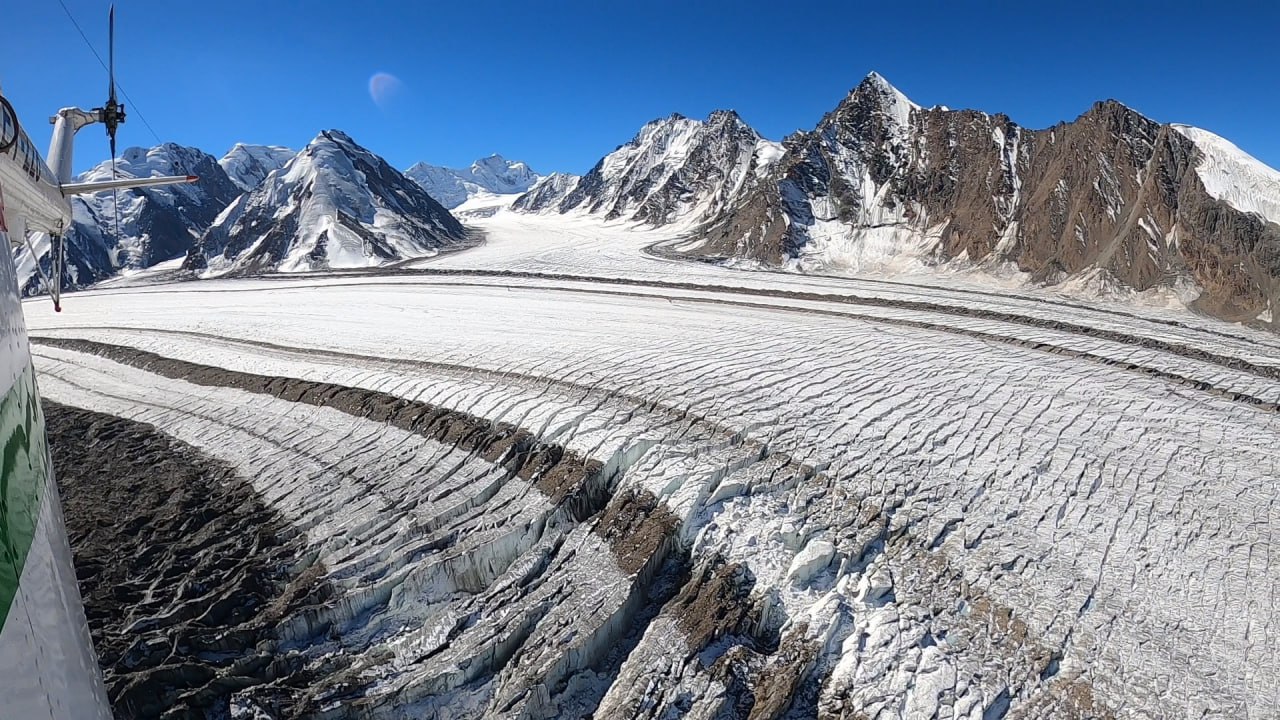
According to the Committee for Environmental Protection under the Government of the Republic of Tajikistan, warming of 1.5°C in the mountains of Tajikistan over the past 70 years is already leading to frequent natural disasters. Glaciers are gradually melting, forming numerous lakes on the surface, which can burst at any moment, causing landslides and flooding the villages located at the foot of the mountains.
Climate change, rising temperatures, and increasingly frequent sand and dust storms in Tajikistan, which now reach the peaks of snow-capped mountains, are leading to faster melting of snow and ice in the mountains.
The area of glaciation in the mountains of Central Asian countries is approximately 17 thousand square kilometers, of which approximately 65% is located in Tajikistan.
The bulk of the glaciation is concentrated in the area adjacent to the republic’s highest peaks – the Somoni and Abuali ibn Sino peaks in the eastern part of the country in the Gorno-Badakhshan Autonomous Region.
Tajikistan has the largest number of glaciers in Central Asia. The country is home to over 14,000 glaciers, 19 of which are large. Although glaciers cover only 6-8% of the country’s territory (8,476.2 square kilometers), they store approximately 460 cubic kilometers of fresh water.
Tajikistan’s large glaciers feed the Amu Darya and Zeravshan river systems, whose waters flow to downstream countries—Uzbekistan, Turkmenistan, and Kazakhstan. Therefore, it is commonly said that Tajikistan accounts for the majority of the region’s water supply. Rapid glacier melting in the near future will lead to increased river levels, leading to natural disasters. These consequences are, or will be, detrimental not only to Tajikistan but to the entire region.
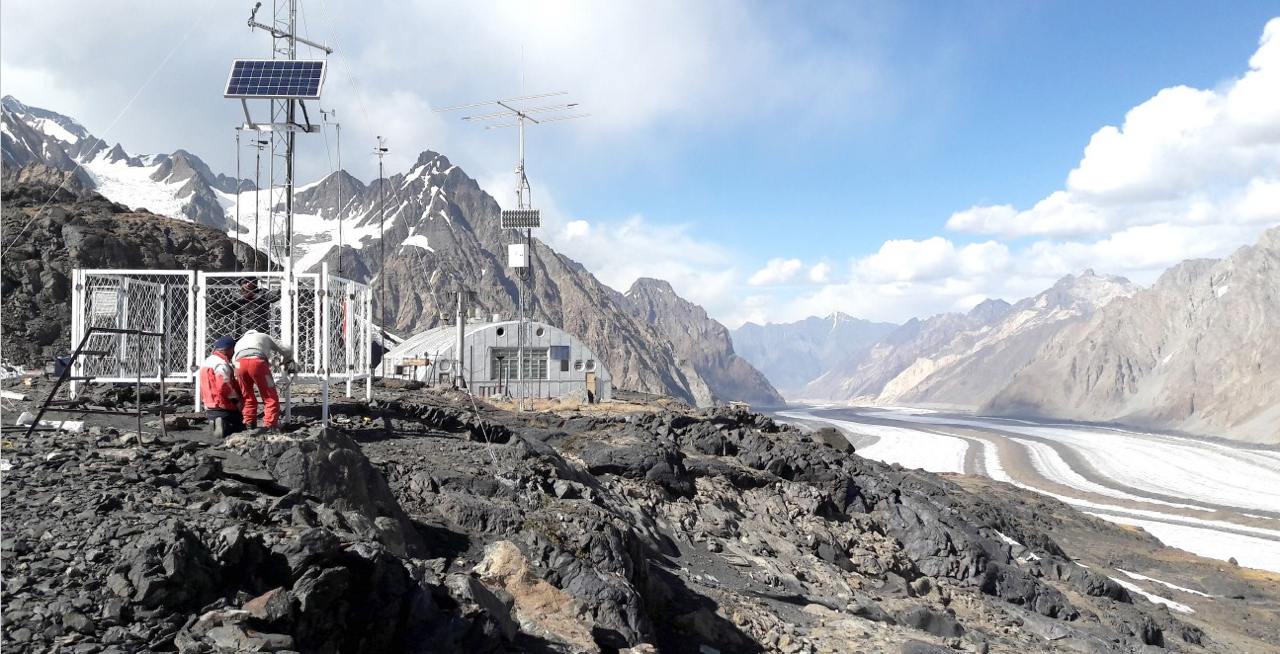
Glaciologists note that glacier melting is an irreversible process; they have always melted and will continue to do so. However, in the late 20th and early 21st centuries, this process accelerated, not without human intervention.
The average annual air temperature in the highlands of Tajikistan has increased by more than 1.5 degrees, which has led to hundreds of small glaciers completely disappearing and will continue to disappear, while large glaciers will primarily retreat.
Industrial development and greenhouse gas emissions are accelerating the melting of glaciers around the world by warming the Earth’s atmosphere, increasing air temperatures, and leading to frequent natural disasters and other negative consequences on the planet.
Global greenhouse gas emissions are growing annually, and countries with lower emissions are suffering the most. In 2023, global greenhouse gas emissions totaled nearly 53 billion tons. Tajikistan’s share of this total is only 0.04%, while its closest neighbor, China, accounts for 30%—the world’s largest greenhouse gas emitter.
As scientists from the Siberian Branch of the Russian Academy of Sciences have discovered, if greenhouse gases, by warming the Earth’s atmosphere, influence the melting of glaciers, then this melting of glaciers could in turn lead to an even greater increase in greenhouse gas emissions.
“This occurs because, as glacial ice melts, it can expose fossilized organic matter (such as ancient mosses) trapped beneath the ice sheet for thousands of years. This ancient organic matter can release methane and carbon dioxide into the atmosphere, further warming the planet and causing permafrost to melt, creating a vicious cycle,” the scientists note.
According to the World Meteorological Organization (WMO), 2024 will be the warmest year on record, capping a decade of unprecedented human-caused heat. Greenhouse gas levels continue to rise, reaching record highs.
“As long as emissions continue, CO2 will continue to accumulate in the atmosphere, leading to global temperature increases. Given that CO2 is a long-lived greenhouse gas, the current temperature levels will persist for several decades, even if emissions are drastically reduced to zero,” the WMO notes.
The largest glacier in Central Asia has shrunk by 1.5 km.
The Vanjakh (Fedchenko) Glacier is located in Tajikistan’s northwestern Pamir Mountains in the Gorno-Badakhshan Autonomous Region and is one of the world’s largest glaciers outside the polar ice caps. It is unique in that its system comprises 100 glaciers, 26 of which are tributaries of the main glacier, each of which is in turn an independent, complex valley glacier.
The Seldara River flows from the Vanjakh Glacier, merging with the Balyandkiik and Sauksai rivers to form the Muksu River, the source of one of the longest rivers in Tajikistan, the Vakhsh River (total length 524 km). The Vakhsh, converging with the Panj River, forms one of the major rivers in Central Asia, the Amu Darya River.
The headwaters of the glacier’s tributaries reach an altitude of 6,280 m, while the tip of its tongue descends to 2,910 m. The ice thickness of the glacier in some places exceeds 800 m, and its volume is approximately 130 cubic km. The area of the Vanjakh Glacier, including all its tributaries, currently amounts to 681.7 km2, and its greatest length is 77 km.
While studying the Vanjakh glacier, glaciologists discovered that during the Lyakhsh glaciation (100,000 years ago) , the length of the Vanjakh glacier was almost 170 km and reached Lyakhsh (an area on the border with Kyrgyzstan).
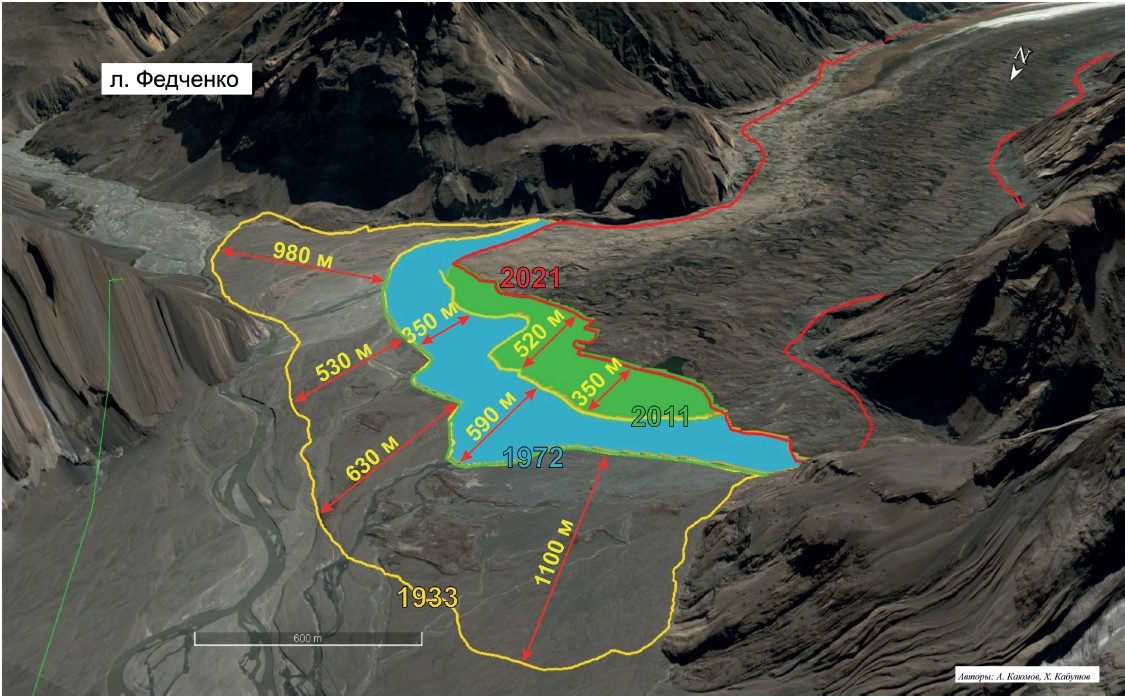
Over the past 100 years, the glacier has been rapidly retreating, and glacial lakes have begun to form on it and its tongue. There are now more than 20 of them, some quite large. For example, lakes measuring 20,000 and 25,000 square meters have formed in the glacier’s front section.
According to Kamoliddin Nazirzoda , deputy head of the Glaciology Center of the Hydrometeorology Agency of Tajikistan, the last research on the Vanjakh glacier was conducted in September 2024.
“We saw that one of the lakes on the glacier tongue, which appeared there in 2013, had completely disappeared. When the glacier retreated, the lake flowed safely down the slopes without causing any damage. But this may not always be the case. Over the past 10 years, the glacier tongue has retreated more than 500 meters, part of its ice has broken away, and we call it ‘dead ice’—in the coming years, it will melt completely, as it has no nourishment,” explains Nazirzoda.
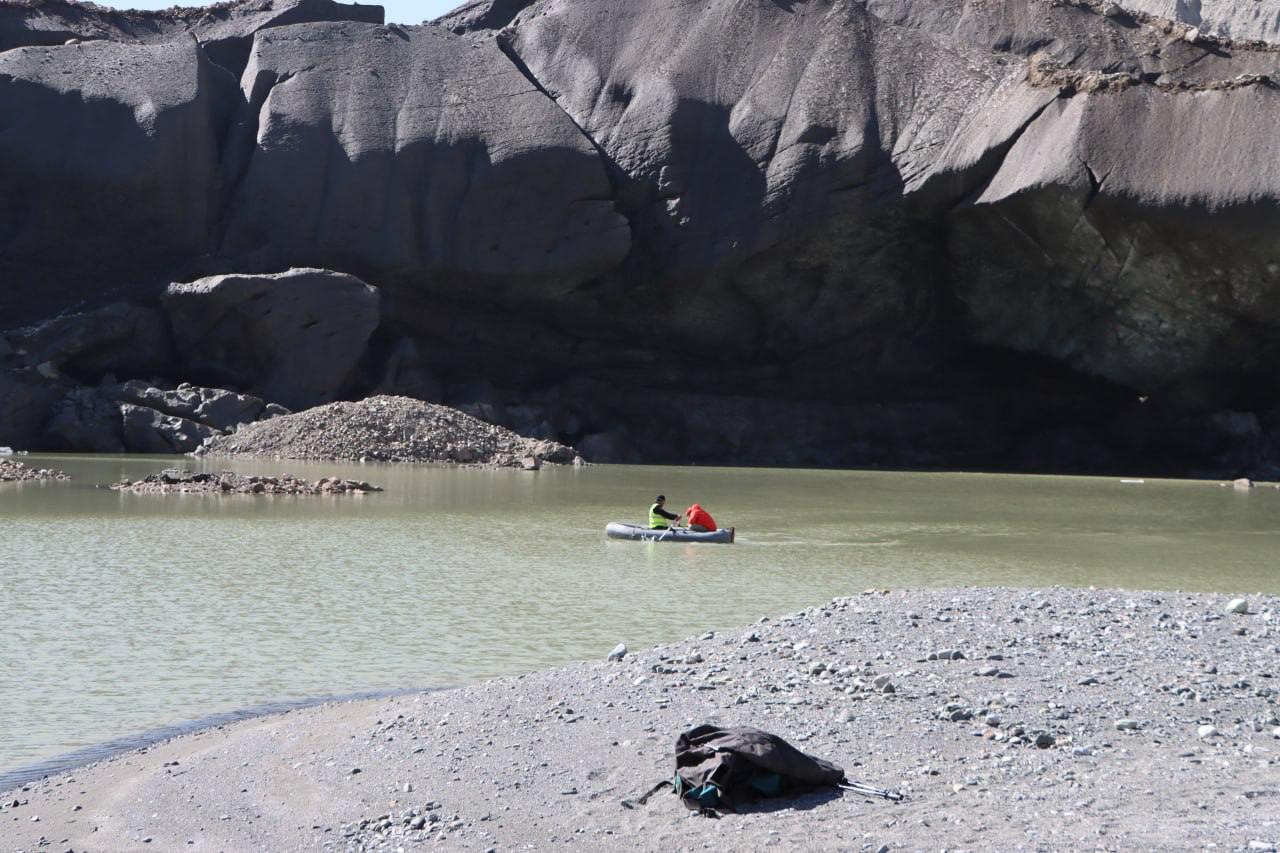
In addition, according to him, during the last expedition, a large lake with an area of approximately 1.5 hectares was discovered in the upper part of the Vanjakh glacier, and glaciologists intend to study it in their future expeditions.
The appearance of lakes is a sign that the air temperature within the glacier is rising, leading to melting of the ice on the surface. Although the Vanjakh Glacier is unique in that it can regulate its own temperature, it is nonetheless affected by global processes.
Scientists around the world are considering how to save glaciers from rapid melting. For example, three years ago, Sweden conducted an experiment where they covered a small section of a glacier with a special heat-resistant polyethylene cover. They returned the following year and found that the covered portion of the glacier had virtually not melted, unlike the uncovered portion.
Nazirzoda explains that this method is impossible for Tajikistan due to the complex mountainous terrain and large volumes of glaciers.
“In Sweden, they can drive to the glaciers and bring equipment there to cover them. In Tajikistan, there are only two glaciers we can drive to, and their terrain is moderately difficult—Kyzylkul and Baralmos—but these glaciers are three to four times larger than the Swedish glaciers,” he says.
The Tajik scientist nevertheless admits that it is still possible to conduct an experiment with glacier covering on these two glaciers, but, for example, such work is impossible on the Vanjakh glacier.
“There’s no such large cover; the weather and wind conditions there are so severe that no cover can withstand it. Equipment won’t be able to get there to carry out this work. Furthermore, the presence of heavy equipment on the glacier’s surface is already damaging it,” Nazirzoda explains.
The danger of glacial lake outbursts
As we discussed earlier, the formation of glacial lakes is inevitable under climate change. The largest glacier lake today is the Bivachny Glacier, located in the left tributary of the Vanjakh Glacier. This glacier is quite large, measuring 30.1 km in length and covering approximately 100 square kilometers. Its surface is literally covered with small, medium, and large lakes, numbering over 50.
Over the past few years, Tajikistan has seen a sharp deterioration in the situation and an increase in the number of natural disasters, as evidenced by data.
Climatologists identify three main causes of mudflows: intense and prolonged rainfall in spring and fall, rapid melting of snow or glaciers (glacial mudflows) in summer, and the breaking of debris fields and moraines (clusters of rock debris). In recent years, mudflows have begun to occur in areas that were previously not prone to mudflows.
According to the Glaciology Center of the Hydrometeorology Agency of Tajikistan, there are more than 1,200 glacial lakes in the country, and their number is growing due to climate change and melting glaciers.
The risk of glacial mudflows is high in the summer, when maximum positive temperatures in glacier areas can persist for five or more days. In such cases, experts understand that a glacial lake outburst will occur somewhere.
“It would be good if there were no settlements in the glacial mudflow’s path, but if there were, the situation would be like July 2015, when seven mudflows with a total volume of over 4 million cubic meters headed at high speed toward the village of Barsem in Gorno-Badakhshan Autonomous Region,” says Nazirzoda.
The speed was high, since the lake itself is located at an altitude of 4,250 meters above sea level, and Barsem is at an altitude of 2,350 meters.
“That is, with each kilometer, the mudflow gained speed and increased in volume, collecting loose debris on the slopes,” Nazirzoda noted.
Video of a mudslide in the village of Barsem
The alluvial fan formed by the mudflow shifted the bed of the Gunt River to the left bank and blocked it at a distance of 1 km, as a result of which the dammed lake Barsemkul, 2.4 km long and 13-15 m deep, was formed upstream.
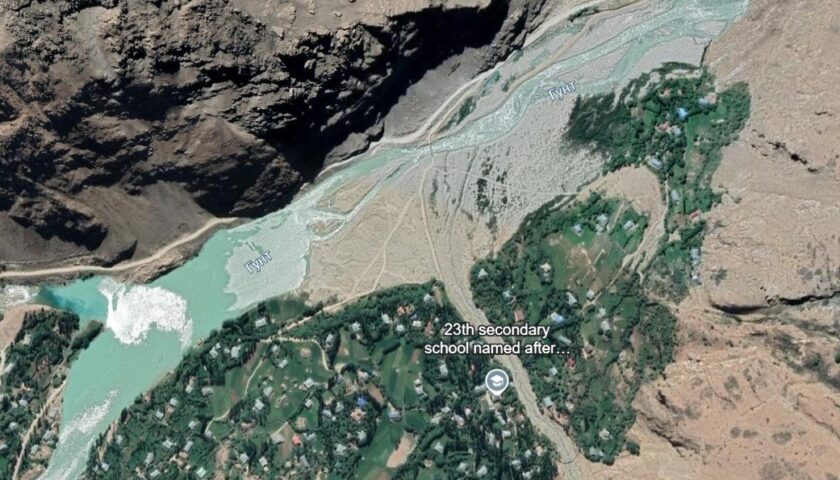
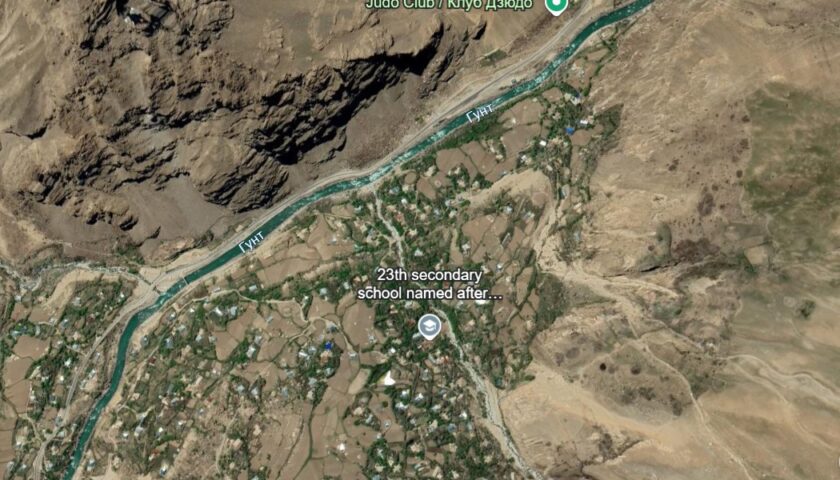
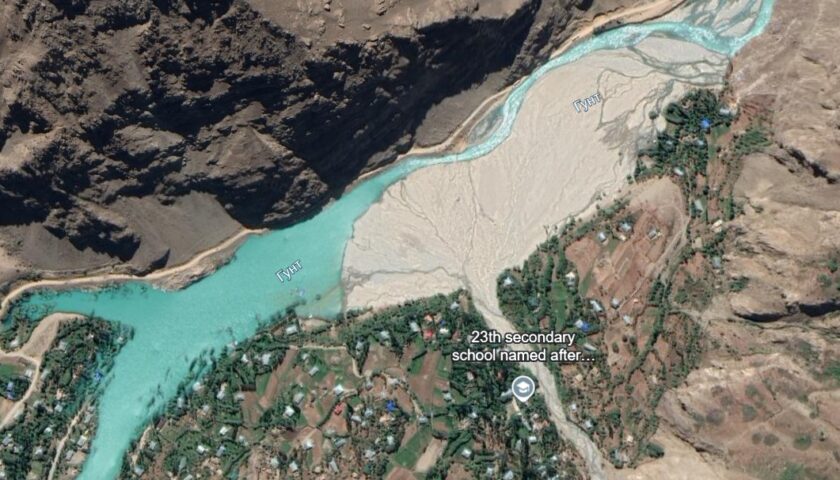
Residents of the village of Barsem noted that mudflows had never come from this area before. There was extensive destruction, including flooding of farms and a medical center, and the destruction of a road and power line. There were no casualties because the earthquake occurred during the day.
A new threat: dust storms
Over the past five years, sand and dust storms—popularly known as “Afghanets”—have become more frequent in Tajikistan. Previously, Tajiks could only experience such storms once or twice a year during the summer, but in recent years they have become more frequent, especially in the southern and central parts of the country, at any time of year.
Meteorological observations have shown that the majority of dust storms come primarily from the south, west, and not only from the deserts of Afghanistan and Saudi Arabia, but also from the Sahara Desert, and drought in many adjacent countries increases the scale of the dust invasion.
Tajikistan is located in the dust belt between ten major deserts of the Sahara, the Iranian deserts (Dashti Lut and Dashti Kabir), the Arabian desert and the Central Asian deserts (Aralkum, Kyzylkum and Karakum), as well as the Taklamakan and Gobi deserts, where dust intrusions occur annually from April to the end of November.
Sanginmurod Samiev , head of the environmental monitoring department at the Hydrometeorology Agency of the Committee for Environmental Protection under the government, told CABAR.asia that dust storms are reaching glaciers.
“Hot weather, low humidity, and wind speeds of 6 meters per second and higher cause dust to rise. Observations have shown that this dust rises to an altitude of 6,000 meters, and, of course, some of this dust reaches the mountain peaks, as Tajikistan is 93% mountainous. Glaciers are no exception,” says Samiev.
In Tajikistan, glaciologists are still unable to determine the extent of the catastrophic impact of dust storms on glaciers. More data is needed. However, research has established that a dust storm in Tajikistan on July 10, 2021, reached the Vanjakh Glacier, which is a cause for concern.
Settling on glaciers, dust reduces the albedo (reflectivity) of ice and snow, which is why snowfields and glaciers, absorbing more heat, can melt faster than usual.
Also, using the example of other countries where studies have been conducted, for example in the Himalayas or the Alps, it has been established that desert dust and air pollution have an impact and can accelerate the melting of glaciers by 10-20%.
Glaciologists and climatologists in Tajikistan see the development of green energy and environmental tree-planting programs as the key to combating glacier melting in Tajikistan. The problem is that all of these programs will need at least 20 years to deliver on their promises. However, given that glacier degradation is primarily driven by global greenhouse gas emissions and climate change, these measures may not bring immediate success.
Google machine translated