

Kazakhstan is already facing the tangible consequences of climate change—rising temperatures, more frequent heat waves, and a shift in natural cycles. Against this backdrop, updating the country’s climate commitments is becoming key to sustainable development, attracting investment, and fulfilling international agreements, according to ecologist Elena Mogilyuk. The new phase of NDC 3.0 development opens the door to a more ambitious and realistic climate policy that aligns with global requirements and the interests of the national economy.
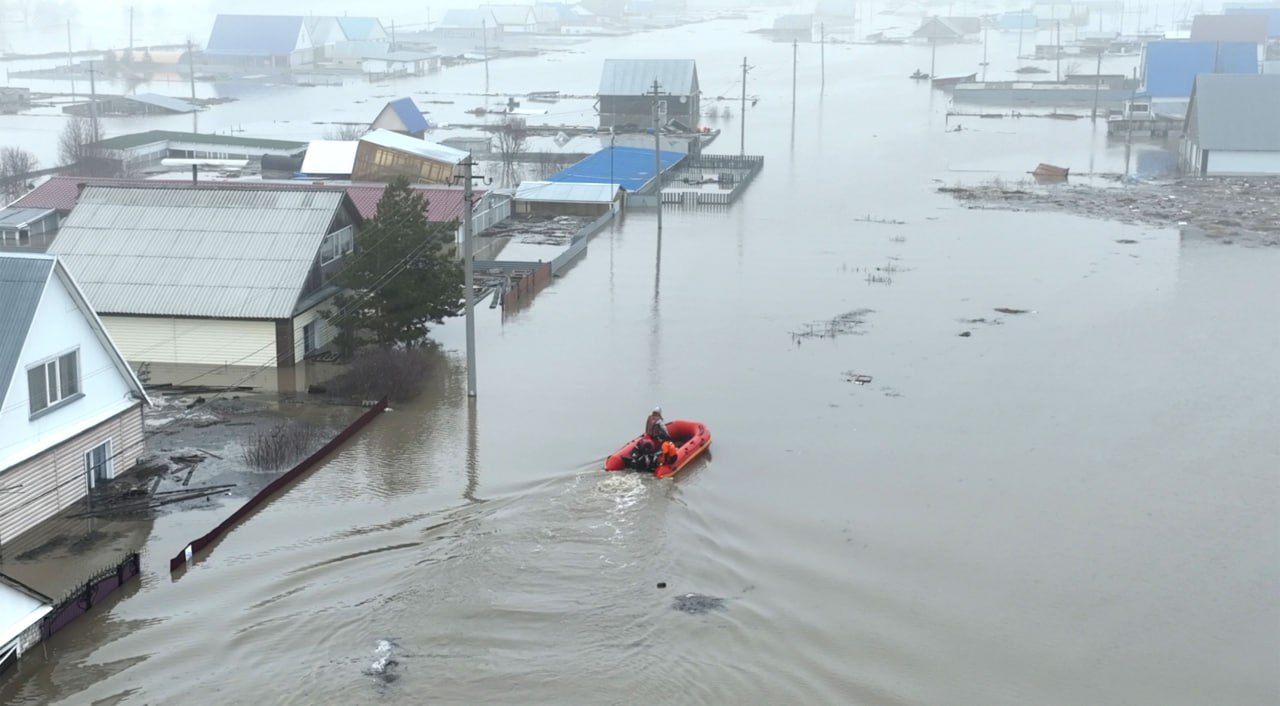
According to the annual climate change bulletin prepared by Kazhydromet, a steady increase in average annual air temperature is observed across all regions of Kazakhstan. On average, the average annual temperature increases by 0.36°C every 10 years. Summers are becoming hotter: heat waves are becoming more frequent and longer-lasting, and the year as a whole is characterized by longer periods of warmth. These changes not only affect human and animal health but also damage roads and worsen living conditions in cities and resorts. The energy sector is also suffering: the need for additional electricity generation to cool buildings is increasing. Rising ground temperatures are shortening the period with below-freezing temperatures. Precipitation is falling more frequently in liquid form, which affects snow accumulation. In mountainous regions, both the area and period of solid precipitation are decreasing, which impacts glacier systems. There are, of course, positive effects – less energy is required to heat buildings during cold periods, but at the same time, there has been a significant increase in the incidence of icy conditions.
The average annual air temperature in Kazakhstan over the last decade, 2015–2024, was +6.98°C, exceeding the climatic norm by 0.70°C. The last five-year period, 2020–2024, was also the warmest, with an average annual air temperature of +7.35°C, exceeding the climatic norm by 1.06°C. The year 2023, on average across Kazakhstan, took first place in the descending order of average annual air temperatures since 1941. The average annual temperature anomaly (deviation from the long-term average for the period 1961–1990) in 2023 was +2.58°C.
The importance of aligning Kazakhstan’s climate policy with the Paris Agreement and the Global Inventory process.
Reducing the anthropogenic impact of climate change is crucial for Kazakhstan, and our country’s participation in the Paris Agreement is crucial. The Agreement’s primary goals are to hold the increase in global average temperature below 2°C above pre-industrial levels (1850-1900) and to strive to limit the increase to 1.5°C.
Each Party prepares, communicates, and maintains successive Nationally Determined Contributions (NDCs) that it intends to achieve. NDCs are documents in which countries reflect and implement domestic mitigation measures to achieve the goals of these contributions. The Paris Agreement stipulates that each subsequent NDC by a Party will represent progress and reflect the highest possible ambition.
The NDC has two impacts. External impact is a demonstration of a commitment to achieving specific goals, a commitment to change, and the reality of mechanisms for achieving these goals at the international level. This impact results in political support and attracts international investment. Foreign private investment will continue to play an important role in Kazakhstan, but international investors are shifting toward sustainable development (ESG) investments. Failure to convincingly signal a commitment to decarbonization goals will reduce international investor interest in Kazakhstan.
Domestic investment signals the need for change to investors within the country, clearly defining the necessary measures and the timeframe for their implementation. The presence of clear targets in the NDC ensures the harmonized development of various elements of the overall system: legislation, infrastructure, and domestic investment. Most domestic private investment in decarbonization will support the replacement of old, high-carbon equipment with new, low-carbon technologies. Until private investors see requirements for coal reduction measures and methane emission prevention, they are reluctant to invest in new technologies with more stringent emission requirements.
Current NDCs and the stated goal of achieving carbon neutrality by 2060.
The NDC, which can be called 2.0, adopted in Kazakhstan in April 2023, outlined the following goals:
The unconditional goal, which was planned to be achieved based solely on the country’s internal resources, without external assistance, looked like this: a reduction in greenhouse gas emissions by 15 percent by the end of 2030 relative to the 1990 baseline emission level.
The conditional target, which was planned to be achieved subject to external support from international funding, was a 25 percent reduction in greenhouse gas emissions by the end of 2030, subject to significant additional international investment and substantial grant assistance; access to an international technology transfer mechanism; co-financing and participation in international research and development projects, experimental design work on promising low-carbon technologies, and initiatives to build local expertise.
Key gaps in current NDCs (based on previous assessments)
However, the 2023 NDC contains a number of very serious gaps:
- The document does not specify how Kazakhstan intends to achieve the 1.5°C scenario, and there are no intermediate targets for 2035 or transparent modeling.
Kazakhstan’s commitment to the goals of the Paris Agreement is demonstrated by the adoption of a number of documents. The Environmental Code of the Republic of Kazakhstan, adopted in January 2021, includes a section on “Climate and the Ozone Layer,” which outlines mechanisms for state regulation of greenhouse gas emissions and removals, as well as public administration in the area of adaptation to climate change. In December 2021, a green taxonomy was adopted, describing the classification of “green” projects eligible for financing through green bonds and green loans. In February 2023, Kazakhstan adopted the Strategy for Achieving Carbon Neutrality of the Republic of Kazakhstan by 2060. Kazakhstan committed to achieving (with international support) carbon neutrality in the economy by 2060. The country also set a goal of increasing the share of renewable energy sources in the energy mix to 50% by 2050. However, both the Strategy and the NDCs present only general declarations, without specific targets for the achievement of which progress can be measured and assessed.
- The lack of a strategy to phase out fossil fuels, despite the country’s high dependence on oil, coal and gas.
Even during the preparation of the previous NDC, international experts indicated that phasing out coal, the main source of greenhouse gas emissions, would allow Kazakhstan to achieve at least a 40% reduction. The coal sector’s share of employment in the country is negligible—just 0.5% of all employed people, as is its share of total value added. A significant portion of the coal produced is exported to other countries, which will allow Kazakhstan to find a market for some time and gradually reduce production.
It’s sometimes argued that Kazakhstan’s share of global greenhouse gas emissions is so small that there’s no need to reduce it. However, decarbonization brings real economic and social benefits.
Decarbonization scenarios calculated in a joint project between the Government of the Republic of Kazakhstan and GIZ during the preparation of the previous NDC showed that the total net benefits to society from coal transition could amount to $137 billion from 2021 to 2060. Even under the most conservative estimates, the avoided costs on healthcare alone would significantly exceed the lost income from employment in the coal sector. Moreover, according to estimates by the International Energy Agency, fossil fuel subsidies in Kazakhstan amounted to $6.6 billion in 2019, including $2.2 billion for coal. Overall, continued coal production and combustion significantly reduces overall welfare in our country. The overall benefits of coal transition far outweigh the costs required to replace it.
At the “NDC 3.0 of the Republic of Kazakhstan: Dialogue on Formulating Climate Commitments” meeting, held on August 11-12, 2025, in Astana, progress on developing NDC 3.0 was presented to the public. Experts’ reports estimated that the energy sector accounts for 77% of all greenhouse gas emissions in the country, and 67% of all CO2 is generated by coal combustion. This further demonstrates the importance of reducing coal use. A study by the respected European research center Agora Energiewende showed that Kazakhstan does not need to build new coal-fired or gas-fired power plants to ensure economic growth and energy security. The optimal and most cost-effective scenario is the large-scale construction of wind farms.
- The lack of a comprehensive just transition framework to support workers and regions dependent on fossil fuel industries. There are no measures to assess the social impacts of climate policy on workers, communities, or regions dependent on fossil fuel industries, nor on communities most vulnerable to the effects of climate change.
Kazakhstan’s long-term decarbonization efforts could disproportionately impact certain sectors and population groups unless a socially inclusive strategy is implemented. Changing the energy mix may require retraining and the creation of alternative employment. These needs gave rise to the concept of a just transition, pioneered by trade unions at the global level, initially addressing the displaced workers.
Kazakhstan has many single-industry towns whose populations rely primarily on extractive industries for their employment and livelihoods. These include not only industries directly related to fuel energy and fossil fuel extraction, but also all cities whose economies are tied to the extraction and beneficiation of natural resources. If Kazakhstan fails to comply with the Paris Agreement, the products of these cities may become unclaimed, and the livelihoods of their residents are at risk. All these risks should be considered in the modeling for the development of NDC 3.0.
However, the concept of a just transition is now becoming increasingly broader and requires taking into account the needs of a wider range of people, which requires greater involvement of various groups in the development of climate policy measures.
- The contribution of land use, agriculture, and forestry to greenhouse gas emissions is not addressed in NDC 2.0. They are merely mentioned among the sectors to be assessed.
Kazakhstan’s forests account for 1.24 percent of the country’s total land area, or 3.48 million hectares. To achieve the NDC by 2030, the planned activities include increasing the forest area to 14.5 million hectares. It is noted that afforestation, in addition to economic benefits and additional climate change mitigation benefits, will enable the government to address land erosion, increase water retention, and improve groundwater quality. Afforestation of at least 1.5 million hectares of degraded lands under the Bonn Challenge will yield significant climate change mitigation benefits. In addition to increasing carbon sequestration, afforestation programs will support land restoration, convert unproductive lands into forests, restore damaged landscapes, and create jobs in sustainable forestry and the wood processing industry.
The 2023 NDC also indicates that climate change mitigation outcomes from reforestation and afforestation under three different scenarios up to 2030 were modeled for Kazakhstan using Canada’s forestry carbon budget model. According to the modeling results, during the first three years (after planting), each hectare of coniferous, softwood, or hardwood trees sequesters an average of 1 tonne of carbon per year, equivalent to 3.67 tonnes of CO2 per hectare per year in the absence of disturbance factors. However, this figure subsequently decreases to 0.7 tonnes of carbon per hectare per year.
The agriculture sector is not considered in detail in terms of its contribution to greenhouse gas emissions in the 2023 NDC; the risks to which agriculture is exposed are only indicated in the section on adaptation.
- Lack of gender-responsive planning and inclusive governance.
Although the 2023 NDC includes a section on mainstreaming gender factors into adaptation, it only outlines vague future intentions: “Women’s role in adapting agricultural practices to climate change, participating in decision-making processes, planning and implementing awareness-raising projects and changing public behavior toward more responsible use of water and energy, understanding climate risks, and other identified issues will be reflected in relevant government programs in priority areas of national and local government for climate change adaptation.” Meanwhile, a gender assessment should be conducted for all activities included in the NDC. The participation of youth in the development of climate mitigation and adaptation measures is not adequately addressed. Yet, it is the younger generation that will be responsible for both implementing planned measures and experiencing the growing negative consequences of climate change.
Overall, NDC 2.0 provides for public engagement only in a passive form. It plans to educate and raise awareness among Kazakhstan’s population by fostering an environmental culture. Green policies and measures will be promoted through publications, awareness-raising through targeted outreach to the business community, and clarification of the rules and principles of the green economy. Meanwhile, inclusive governance implies taking into account the needs of stakeholders, which in the case of the NDC refers to various population groups.
Recommendations for updating the NDC
In mid-February 2025, the Minister of Ecology and Natural Resources of the Republic of Kazakhstan held a meeting with representatives of international organizations and the expert community to discuss key aspects of the development of NDC 3.0. Representatives of the NDCP, UNDP, FAO, UNICEF, UNITAR, GIZ, and CCAC participated in the discussion and pledged expert and technical support in the development of the document. It was stated that international experience would be taken into account in the development of the updated NDC, and that NDC 3.0 would be developed based on the LEAP (Long-range Energy Alternatives Planning System) model, which would allow for a detailed analysis of Kazakhstan’s low-carbon development scenarios and the development of the most effective measures to reduce greenhouse gas emissions.
Civil society believes that the following should be included in the document currently being developed as NDC 3.0:
A transparent, science-based approach to emissions reductions must be reflected, including an interim target for 2035 and a clear link to the 1.5°C trend and the Global Outlook estimates.
Present a strategy for phasing out fossil fuels with clear industry-specific timelines and plans for investment in renewable energy. This roadmap should also consider the socioeconomic impacts of the transition and avoid locking in fossil fuel infrastructure.
Include measures to ensure a just transition, including the interests of various groups: retraining of workers, social protection, a regional support program and the participation of civil society, especially the most vulnerable groups, women and youth.
Provide separate and transparent accounting for the land use, agriculture, and forestry sectors. Establish specific goals for sustainable agricultural development. Align forest and land use policies with national biodiversity and adaptation goals.
Why a strong NDC is important for Kazakhstan
A strong NDC will reduce environmental impacts. Moving away from coal will provide significant societal benefits through reduced urban air pollution, leading to fewer illnesses and lower treatment costs, and will also increase productivity and reduce lost work time.
Clear NDC targets that clearly demonstrate how the country aims to contribute to the global goal of maintaining a 1.5°C temperature trajectory will also bring tangible benefits at the international level, increasing the competitiveness of domestically produced products and attracting international financial support and investment in cleaner production.
This review was prepared jointly with the Friedrich-Ebert-Stiftung (FES) and CABAR.asia. The opinions expressed may not reflect the position of the FES.
Google machine translated