

In recent years, water shortages, which have become increasingly acute in the region, will inevitably hinder economic growth in Central Asian countries. Growing populations and industrial development are primarily increasing the burden on water management. In this regard, Kazinform spoke with leading experts to assess the current situation in the region and identify possible solutions.

The region’s glaciers are melting without time to recover.
According to a UN study, water volumes in Central Asia’s main river basins—the Syr Darya and Amu Darya—could decrease by 15% in the coming years. This could negatively impact the economic development of countries in the region. Specifically, due to water shortages, the region’s total gross domestic product could decline by 11%, with annual economic losses reaching $2 billion.

“All parties are well aware that the problem of water shortages in Central Asia will only worsen in the future. According to experts, by 2040, water demand in some countries in the region could triple. Over time, economic losses could reach 11% of the region’s gross domestic product,” says Javlon Vakhabov, Director of the International Institute of Central Asia.
Experts believe that global warming is the primary contributor to water shortages. As Ilkhom Begmatov, head of the department at the Tashkent Institute of Irrigation and Agricultural Mechanization Engineers, noted, large-scale climate change is leading to the rapid melting of the region’s glaciers.

“First and foremost, rising temperatures have a negative impact. Over the past 100 years, the climate has changed by 1.5°C. This is not a critical threshold for humanity. However, it leads to melting glaciers, depleting water resources, and reducing precipitation. Consequently, to ensure stable harvests throughout Central Asia, it has become necessary to introduce artificial irrigation methods. For example, Uzbekistan currently has 4.3 million hectares of irrigated land. Meanwhile, our country (Uzbekistan) uses 51-53 billion cubic meters of water annually. About 91% of this volume is used for agriculture,” said Ilkhom Begmatov.
Over the past few years, approximately 30% of the region’s glaciers have melted. Of these, 45% are located in Kyrgyzstan. Due to global warming, these glaciers are rapidly melting, increasing the risk of mudflows in the country’s regions.
As Tahir Madjitov, head of the public association “Suvchi” in Uzbekistan, noted, Central Asia’s glaciers are currently melting without having time to regenerate. Previously, they replenished naturally, but over the past 10 years, this natural balance has been disrupted.

According to research by Uzbek specialists who graduated from German universities in water resources and land management, approximately 40% of Central Asia’s largest glacier, the Fedchenko Glacier, has already melted. Between 1990 and 2005, the Fedchenko Glacier sank by 50 meters. It is 77 km long, 2.4 km wide, and reaches a depth of 1 km. Furthermore, more than 30% of the glaciers in Kyrgyzstan have also melted. Previously, after the ice turned to water, its volume would replenish. Currently, the glaciers are melting without having time to regenerate, says Takhir Madzhitov.

As a result, countries in the region may face a serious shortage of drinking water by 2030. According to Andrey Petrov, a senior researcher at the Research Institute of Irrigation and Water Problems under the Ministry of Water Resources of Uzbekistan, the situation could quickly worsen.
“As everyone knows, water resources in our region are declining annually due to rapid glacier melt. By 2030, countries in the region could face a serious shortage of drinking water. Therefore, it is necessary to re-evaluate common approaches and coordinate efforts to minimize the negative consequences of this problem,” says Andrei Petrov.
According to Vadim Sokolov, head of the Agency for the Implementation of Projects of the International Fund for Saving the Aral Sea in Uzbekistan, climate change could lead to even more widespread consequences.

“The last time we encountered a similar situation was in 2000-2001. Back then, countries suffered significant damage. Agriculture was particularly hard hit. Today, Uzbekistan devotes 80-85% of its water resources to this purpose. Furthermore, we face a problem providing the population with drinking water. In many regions of Uzbekistan, groundwater reserves are limited. Therefore, water from surface sources is used. For example, in Karakalpakstan and the Khorezm region, more than 80% of drinking water comes from surface sources,” the expert says.
In this regard, Central Asian countries are currently making appropriate changes to their water management development concepts and water codes.

“In 2025, four out of five Central Asian countries adopted new Water Codes. Last year, on October 24, the Water Code of Uzbekistan came into force, in which we identified priority areas in line with national interests. For example, Article 52 was clarified, stating that water should be used primarily to ensure public health. While environmental issues previously held the highest priority, they have now become a secondary priority,” added Vadim Sokolov.
Takhir Madzhitov’s opinion is also close to this forecast. According to him, in 1991, there were approximately 6 million hectares of irrigated land in Central Asia, while in 2024, this area will exceed 10 million hectares. While the region’s population in 1991 was over 45 million, today it exceeds 85 million.
Cooperation between Kazakhstan and Uzbekistan in the field of water management
Kazakhstan and Uzbekistan are currently actively and mutually beneficially cooperating in water management. Specifically, the two countries have systematically built collaboration within existing regional platforms and bilateral contacts. Astana and Tashkent continue to collaborate within the framework of the International Fund for Saving the Aral Sea, the Consultative Meetings of Ministers of Water and Energy Sectors of Central Asia, and the Interstate Commission for Water Coordination.
Experts note that the current relationship between the two countries is a shining example of cooperation. The water resources ministers of Kazakhstan and Uzbekistan share this opinion.
“I am pleased with the current relations between Kazakhstan and Uzbekistan. In recent years, cooperation in water management between the two countries has strengthened, with many results. This should serve as an example for other countries. We have reached a point where we understand each other perfectly. We have specific calculations and shared forecasts. In particular, we have fully agreed on the channels through which we receive water, the volumes we receive it, and the volumes we transmit it,” said Uzbekistan’s Minister of Water Resources, Shavkat Khamrayev.

According to the minister, water diplomacy should not conflict with the national interests of any country. He believes that future decisions should serve the development and prosperity of all parties.
“We must take into account that hydraulic structures to be built on transboundary rivers must benefit all parties. In this regard, Kazakhstan and Uzbekistan act in coordination and mutual consultation,” Shavkat Khamrayev responded to a Kazinform correspondent’s question.
The head of the department noted that Tashkent intends to further develop cooperation with Astana in the area of water resource management and their efficient use.
Kazakhstan, in turn, is also consistently improving its national water management policy. In a recent interview with Kazinform’s Tashkent correspondent, Nurzhan Nurzhigitov, Minister of Water Resources and Irrigation of the Republic of Kazakhstan, discussed the ongoing work.
“The country has adopted a new Water Code. The document reflects modern approaches to water resource management. It also places particular emphasis on water conservation. We view fostering a culture of efficient water use in agriculture, industry, and the domestic sector as a priority,” the minister said.
The head of the department noted that modern water-saving technologies are being actively implemented on agricultural lands. As part of the approved comprehensive plan, 14,500 km of irrigation systems are being repaired. This is expected to result in water savings of up to 20%.
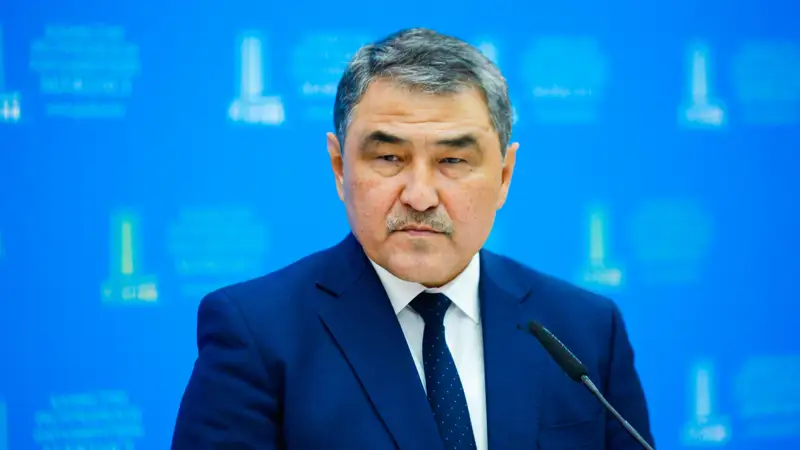
“By 2030, it is planned to cover up to 1.3 million hectares of irrigated land with such technologies. Kazakhstan’s Water Code sets a target of increasing the share of reused treated water from 13% to 28% by 2030,” said Nurzhan Nurzhigitov.
Similar large-scale measures are being implemented in Uzbekistan. Tashkent plans to implement water-saving technologies on 80% of agricultural land within the next three years. According to Vadim Sokolov, head of the International Fund for Saving the Aral Sea Projects Agency in Uzbekistan, water supply in the region is no longer increasing and is declining annually, making rational use of resources crucial.
“Water-saving technologies are being implemented at a rapid pace in Uzbekistan. As a result, we’ve reduced our water withdrawal by 10 billion cubic meters over the past five years, which is 25% of the total. The country has 4.3 million hectares of irrigated land, of which 2.6 million hectares are already covered by such technologies. The President recently approved a water sector strategy through 2028. According to it, this figure must be increased to 3.5 million hectares within the next three years. Thus, within three years, 80% of Uzbekistan’s irrigated land will be covered by water-saving technologies,” Vadim Sokolov said in response to a Kazinform correspondent’s question.
According to him, water resources in Central Asia are dwindling annually, and the flow of major rivers is declining. Therefore, it is necessary to work together with all interested states and systematically coordinate efforts.
“The region’s water supply isn’t increasing; it’s declining every year. Therefore, countries in the region need to adopt a common plan and coordinate their actions. It’s crucial to provide each other with technical support and implement mutually agreed-upon projects. We have no other option today,” the expert emphasized.
Kazakhstan and Uzbekistan are currently implementing a number of joint projects in the Syr Darya basin. One of these is the implementation of water metering systems along the riverbed.
“Today, we are working with our Uzbek colleagues to automate the water metering system in the Syr Darya River. Ten key sites have been selected for this purpose. Five of them are located in Kazakhstan, the rest in Uzbekistan. We plan to implement modern automated metering and monitoring systems in these sites,” said Nurzhan Nurzhigitov, Minister of Water Resources and Irrigation of the Republic of Kazakhstan.
These projects are institutionally supported. Last year, the governments of Kazakhstan and Uzbekistan signed a corresponding agreement.
“The document provides for the creation of an online data exchange system, the modernization of interstate water management facilities, and the joint management of transboundary water bodies. Implementation of these measures will ensure transparency in water resource management. After the first stage of projects is completed, we will begin automating other sections of the Syr Darya River. We also plan to gradually involve other Central Asian countries, taking into account their shared basins,” said Nurzhan Nurzhigitov.
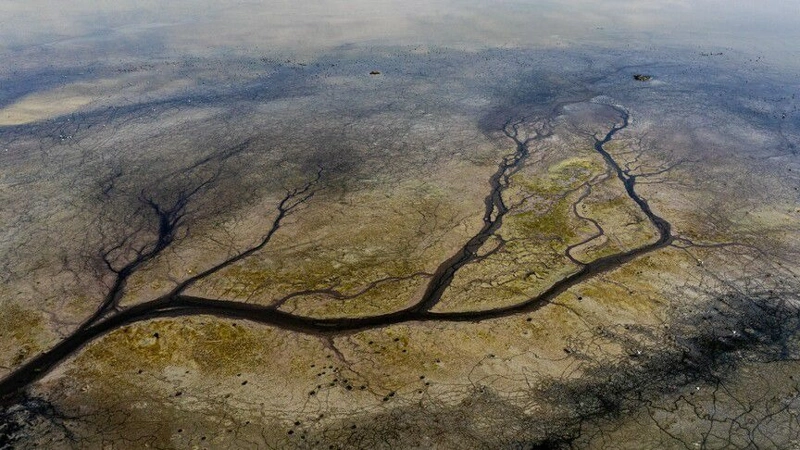
According to experts, Kazakhstan and Uzbekistan clearly understand that water must be viewed as a resource for cooperation. This area requires joint solutions. In this regard, Kazakhstan’s initiative to create an International Water and Energy Consortium is an important step in developing cooperation.
“Water and energy are closely linked and cannot be considered separately. Water conservation issues must also be effectively addressed. This means that reduced water supplies should not negatively impact economic sectors or become an obstacle to development,” noted Uzbek expert Takhir Madzhitov.
Experts also emphasized the need to adapt innovative solutions already used in European countries to the conditions of Central Asia, including Kazakhstan and Uzbekistan. Currently, the German company GIZ is offering an information system for groundwater research, monitoring, and analysis, which has already proven its effectiveness.
Steps to solve the problem
According to Takhir Madzhitov, with efficient use of water resources, Central Asian countries can already increase irrigated land by 2-3 million hectares and provide vital resources to a population of up to 100 million people. To achieve this, it is necessary to strengthen regional cooperation and develop water diplomacy.
“An international organization or association is needed that will regulate the equitable distribution of water and its efficient use. In this regard, we propose creating an Aral Committee. Its activities will improve the water management system. This, in turn, will ensure food security in Central Asia. The creation of this committee will take several years. It is important that all Central Asian countries are interested in implementing this project,” says Takhir Madzhitov, head of the public association “Suvchi” in Uzbekistan.

According to Javlon Vakhabov, Director of the International Institute of Central Asia, addressing contemporary challenges and risks should become an important tool for uniting countries in the region. Accordingly, it is important to consolidate efforts within the International Fund for Saving the Aral Sea.
“Central Asian countries continue to face a number of obstacles that weaken the role of the International Fund for Saving the Aral Sea as a unified regional platform and limit its potential as a coordinating body. One of the main risks is the growing interdependence between the water and energy sectors, as well as rapid climate change and its impact on water resources. The energy and agriculture sectors are particularly dependent on water resources,” noted Javlon Vakhabov.
In this regard, it is important to focus on training specialists in water management. Furthermore, it is necessary to develop mechanisms for the mutual exchange of experience to enhance human resource capacity.
In summary, the experts concluded that joint efforts are needed to prevent the negative consequences of water scarcity and prevent it from escalating into major economic losses. To achieve this, Central Asian countries must shift from narrow national interests to a shared regional interest.
Google machine translated