

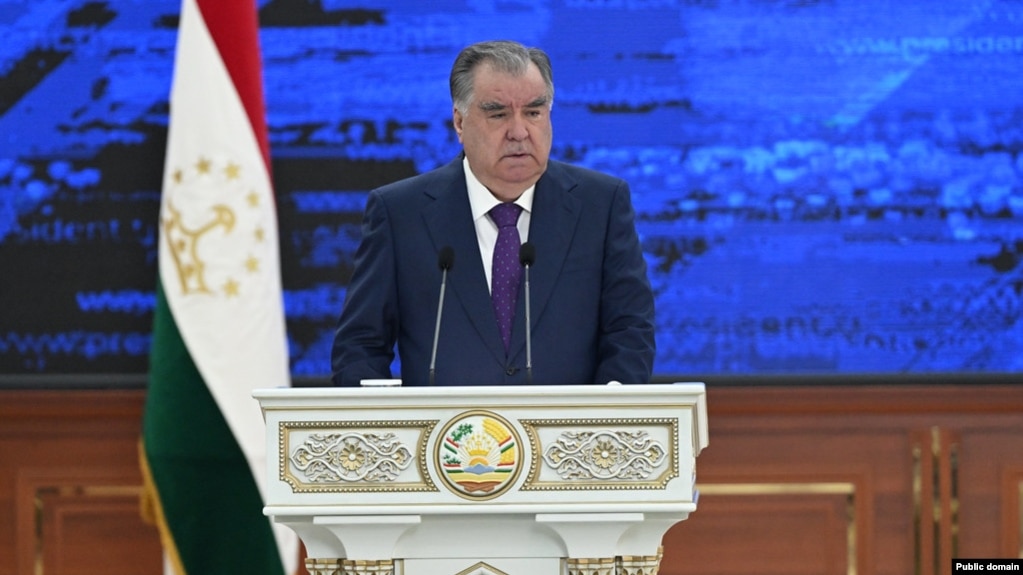
At the high-level international conference on glacier conservation, which is taking place in Dushanbe from May 29 to 31, Tajik President Emomali Rahmon expressed concern about the looming climate crisis in Central Asia. He stressed that Tajikistan is already feeling the devastating effects of rapid glacier melting. According to him, out of 14,000 glaciers located in Tajikistan, 1,300 have already completely melted and disappeared.
“Tajikistan’s glaciers are the source of 60 percent of water resources in Central Asia, and the loss of glaciers threatens the lives of millions of people in the region,” Rahmon said, speaking to high-ranking UN representatives and delegations from dozens of countries.
The President stressed that natural disasters related to climate change are becoming more frequent and destructive, but statistics on such incidents were not provided in his speech. At the same time, Emomali Rahmon clearly stated that this is a global threat that requires international mobilization. “Protection of glaciers is not only a problem for countries with glaciers, but also a global crisis that deserves the urgent attention of the international community,” he said.
The President acknowledged that Tajikistan’s technical and financial resources are limited and expressed hope for support from partners. He called on the international community to organize a comprehensive international expedition to study the republic’s glaciers and proposed developing a Global Strategy for their protection. “Tajikistan calls for urgent and decisive measures to protect glaciers,” he noted.
Meanwhile, despite the fact that more than half of Central Asia’s water resources are formed in Tajikistan, according to official data, only 66% of the population has access to clean drinking water. The problem is also aggravated by annual floods, which affect dozens of people.
UN Deputy Secretary-General Amina Muhammad also expressed deep concern about what is happening. She stressed that without increased investment in climate resilience, the world could face a humanitarian catastrophe. “Now is the time to act, we have no time to waste,” she said. According to Amina Muhammad, from 1975 to 2024, humanity has lost more than 9 trillion tons of ice, and a third of all glaciers on the planet have already been lost. “If we do not take action, this trend will continue,” she warned.
The UN Deputy Head of State recalled that the accelerated melting of glaciers is not only a threat to the environment, but also to food security, the stability of societies and the future of future generations. This is why efforts within the framework of the Paris Agreement aimed at reducing greenhouse gas emissions and keeping global warming below 1.5–2°C are of vital importance.
The international conference in Dushanbe brought together more than 2,200 participants from 65 countries and 70 international organizations. Among them were heads of government, vice presidents, ministers, scientists, representatives of the UN and civil society. The summit will end with the adoption of the Dushanbe Declaration on Glacier Protection, which will be an important step towards a global climate partnership.
Google translate
https://rus.azattyq.org/a/prezident-tadzhikistana-byot-trevogu-ledniki-tayut-milliony-zhizney-v-tsentralnoy-azii-pod-ugrozoy/33429602.html