

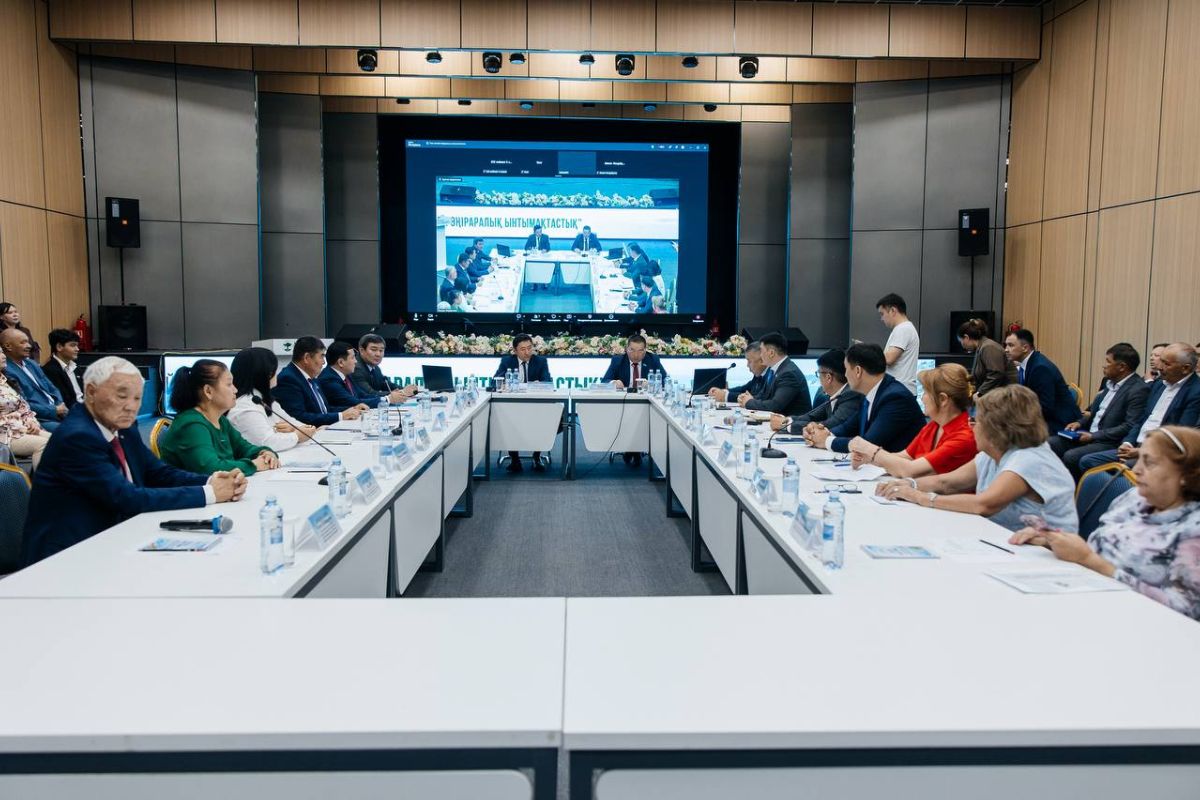
An international roundtable discussion, “Clean Caspian: Interregional Cooperation,” was held in Atyrau. At the Kh. Dosmukhamedov Atyrau University, scientists, environmentalists, and activists from Kazakhstan and Russia discussed key threats to the region’s ecosystem: sharp sea level decline, climate change, water shortages, and biodiversity conservation.
Welcoming the participants of the plenary session, the leadership of the Atyrau region emphasized that the environmental security of the Caspian Sea requires immediate and coordinated action by all coastal states.
“Reducing sea levels, climate change, and declining water resources require joint solutions. We pay special attention to the environmental safety of the Caspian Sea. The region is systematically working to protect the environment and ensure the rational use of resources. Preserving the sea is our shared goal,” the regional administration noted.
The meeting also raised a pressing issue for the region: the regular burning of reed beds along the coast and the need for their safe and effective disposal.
Fish, sturgeon, and large-scale clean-up days
The forum noted the region’s key role in preserving the country’s aquatic bioresources. Of the 50,000 tons of fish caught annually in Kazakhstan, more than 19,000 tons are caught in the Atyrau region.
Particular emphasis is placed on the reproduction of sturgeon species:
- Currently, the Atyrau sturgeon farm annually releases about 5 million fry into the natural environment ;
- The enterprise is undergoing a large-scale modernization, after which its capacity will increase to 7.4 million fry per year .
Furthermore, as part of the national “Taza Kazakstan” campaign, 266 environmental events and 210 cleanup days have already been held in Atyrau Oblast, with over 75,500 people participating. 6,500 tons of waste have been removed from the region, and over 17,700 trees have been planted.
During the expert sessions, participants also assessed the impact of shallow waters on the Akzhayyk Nature Reserve, discussed water extraction from the Caspian Sea and its tributaries, and environmental risks along the North-South International Transport Corridor. At the end of the meeting, distinguished environmentalists, volunteers, and water management specialists were awarded letters of gratitude.
Google machine translated