


As a child, Maryam, an Iranian environmental journalist, spent a lot of time by the Caspian Sea . From her home in the city of Rudsar, she observed fluctuating water levels—so severe that in the 1990s, floods in northern Iran left some of her relatives homeless. All these changes seemed perfectly normal to her, but on a recent trip home after many years away, the Caspian suddenly seemed completely unfamiliar to the journalist.
Scientists say the Caspian Sea’s water level will continue to fall.
“I moved further and further from the shore, but the water was only knee-deep,” said Maryam, whose real name DW is withholding for security reasons. “For someone who grew up here, it was terrifying.” What the journalist saw during her trip was no anomaly. The Caspian Sea, the world’s largest landlocked body of water, washing the shores of five countries – Iran, Russia, Azerbaijan, Turkmenistan, and Kazakhstan – is rapidly shrinking.
Although water levels in the brackish Caspian have fluctuated before, scientists warn that the current decline, which began in the 1990s, is unlikely to stop. Forecasts point to an even greater decline this century—potentially as much as 21 meters, according to some environmental models.
“For comparison, 18 meters is more than the height of a six-story building,” explains Simon Goodman, a biologist at the University of Leeds in the UK who studies the mechanisms of evolution. “Such a sharp drop in water levels will have a significant impact on ecosystems , as well as on human health, well-being, and economic activity.”
Why is the Caspian Sea shrinking in area?
The decreasing water level in the Caspian Sea is due to several factors. Several rivers flow into it, with approximately 80% of its freshwater coming from the north – the Russian Volga. For decades, the inflowing water was regulated by dams, irrigation structures, and other water management tools – particularly in the Volga basin. However, Goodman explains, the situation will become more complex in the future.

“Projections for the remainder of this century indicate that the continued decline in sea levels will have a much stronger link to climate change,” the British scientist continues. Rising global temperatures , driven by greenhouse gas emissions from the burning of oil , gas, and coal, are increasing evaporation from the sea surface. Combined with lower precipitation and runoff into the Volga basin, the Caspian Sea is ultimately losing more water than it’s receiving, Goodman adds.
The Caspian Sea: Declining fish stocks, problems at ports
And this, he says, is a problem whose consequences “will affect the entire Caspian Sea.” Some of these consequences are already visible—especially in the northern part of the sea, adjacent to Russia and Kazakhstan . “Many Caspian ports require significant dredging to support shipping,” notes Simon Goodman. In his opinion, such problems “will likely even worsen over the next five to ten years.”
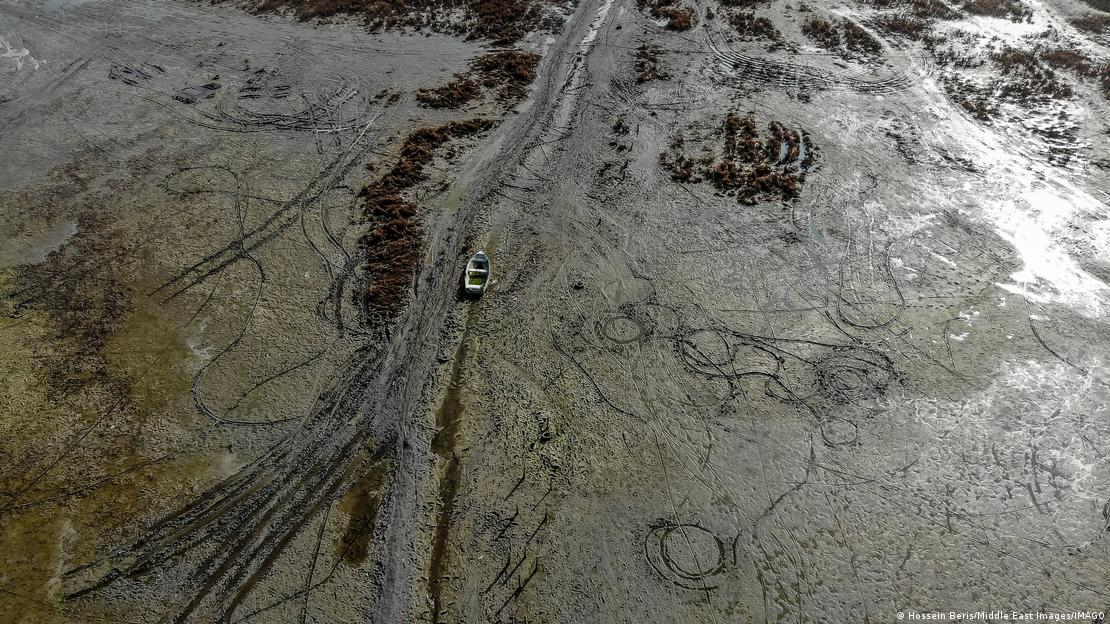
Local fishermen are also facing significant challenges. If the water level in the shallow northern part of the sea continues to recede, fishing could become increasingly unprofitable, says the scientist. And if the water level drops by 10 meters, large areas could dry up completely, leading to the disappearance of almost a third of the Caspian Sea’s surface area. In some places, this process is already well underway—an area in the northeastern Caspian once used by tens of thousands of seals for their spring molting has now become dry land. “Because of falling sea levels, we’re already losing ecologically important habitats,” Goodman states.
The consequences are also visible in the south, along the Iranian coast. Due to unfavorable conditions for wetlands, fish stocks in the region have dwindled, and the markets that were thriving and vibrant during Maryam’s childhood are now a mere shadow of their former glory. The journalist also noticed other undeniable changes: “The coastline is completely different than I remember.” A café that once stood right by the water’s edge is now just a few meters away.
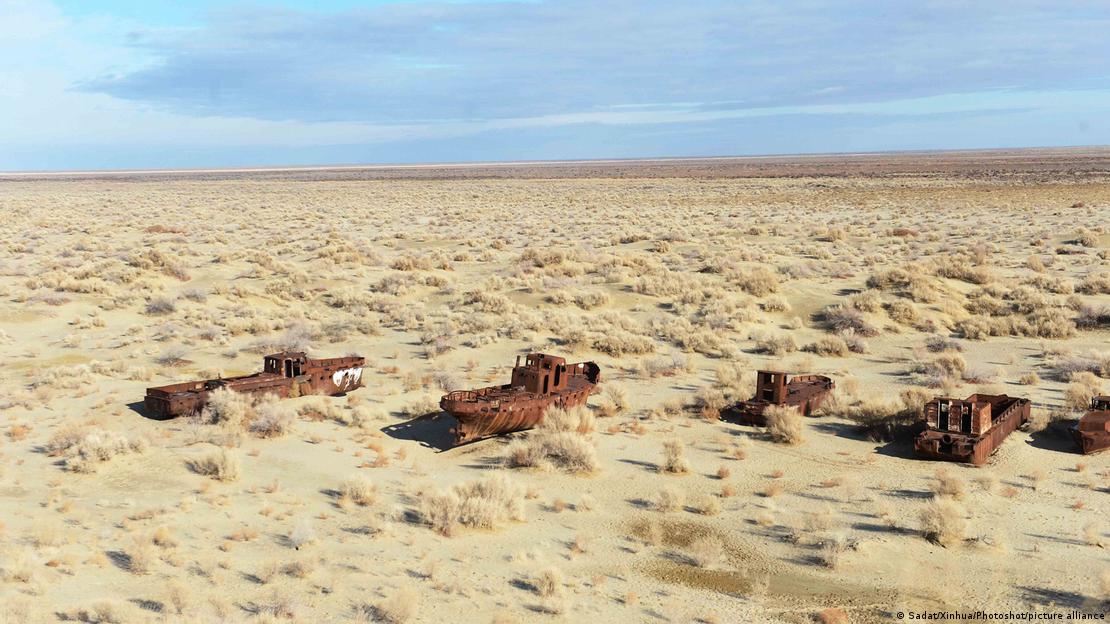
Is the Caspian Sea facing the same crisis as the Aral Sea , approximately 1,000 kilometers to the east? Situated between Kazakhstan and Uzbekistan, the Aral Sea, once one of the world’s largest enclosed bodies of water, has largely dried up due to water diversion. In addition to destroying ecosystems and disrupting the livelihoods of people living in the region, these changes have had a serious impact on public health, including through toxic dust storms.
Politicians are failing to keep up with environmental changes
The first signs of such development are already evident in the Caspian Sea, Goodman acknowledges. “We’re certainly already at the very beginning of this process,” the British biologist warns. If the northern Caspian Sea dries up, the consequences will go far beyond simply reducing its surface area. Large areas of exposed seabed could alter the local climate, releasing significant amounts of dust into the air, some of which could contain atmospheric pollutants.

Since the Caspian Sea washes the shores of five countries, effective resolution of the emerging problems will require coordinated action . Although the governments of these countries “appear to be at the beginning of developing cooperation mechanisms,” this is still only the initial stage, says Simon Goodman.
Long-term adaptation, he estimates, will require continued investment in scientific research and strategies that consider both ecological and economic aspects. And this must happen quickly, Goodman concludes: “The pace of policy action must match the speed of environmental change.”
Google machine translated