

On 23-24 July 2026, the 4th Meeting of the EU-UNEP Regional Network was held in Osh, Kyrgyz Republic, where the progress of the project and its achievements were discussed.

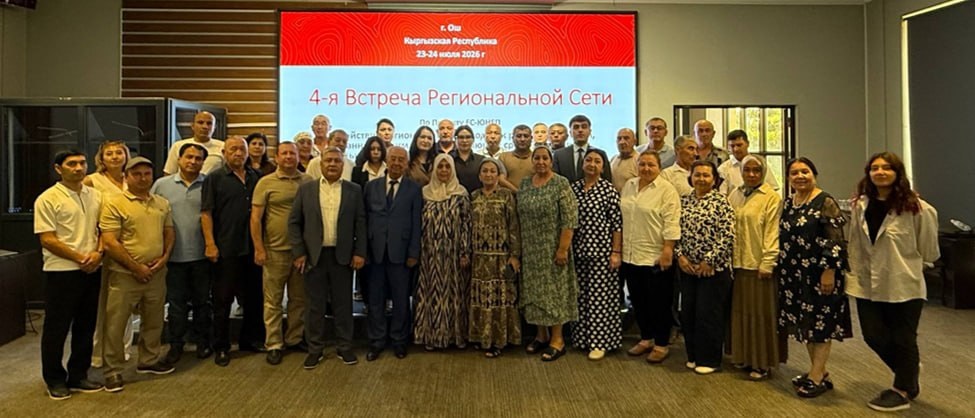
The meeting was attended by representatives of Osh regional authorities, NGOs, the expert community, as well as grantees of the EU-UNEP project from Kyrgyzstan, Tajikistan and Uzbekistan, a total of 41 people, of which 17 (41%) were women.
At the opening of the event, G. Mamatova, a representative of the Karasuu District Administration of the Osh Region, spoke, emphasizing the importance of the project’s activities in broadly engaging the local population, especially women, youth, and vulnerable groups, and in taking their needs into account.
Sherzod Muminov, Deputy Director of the Scientific and Research Center for Water Coordination and the project manager, noted the interest and support of local authorities in all target countries. Boris Gozhenko, representing the Scientific and Research Center for Water Coordination, also moderated the meeting.
Next, the project grantees from Kyrgyzstan and Uzbekistan presented and discussed plans and preliminary results for the subprojects.
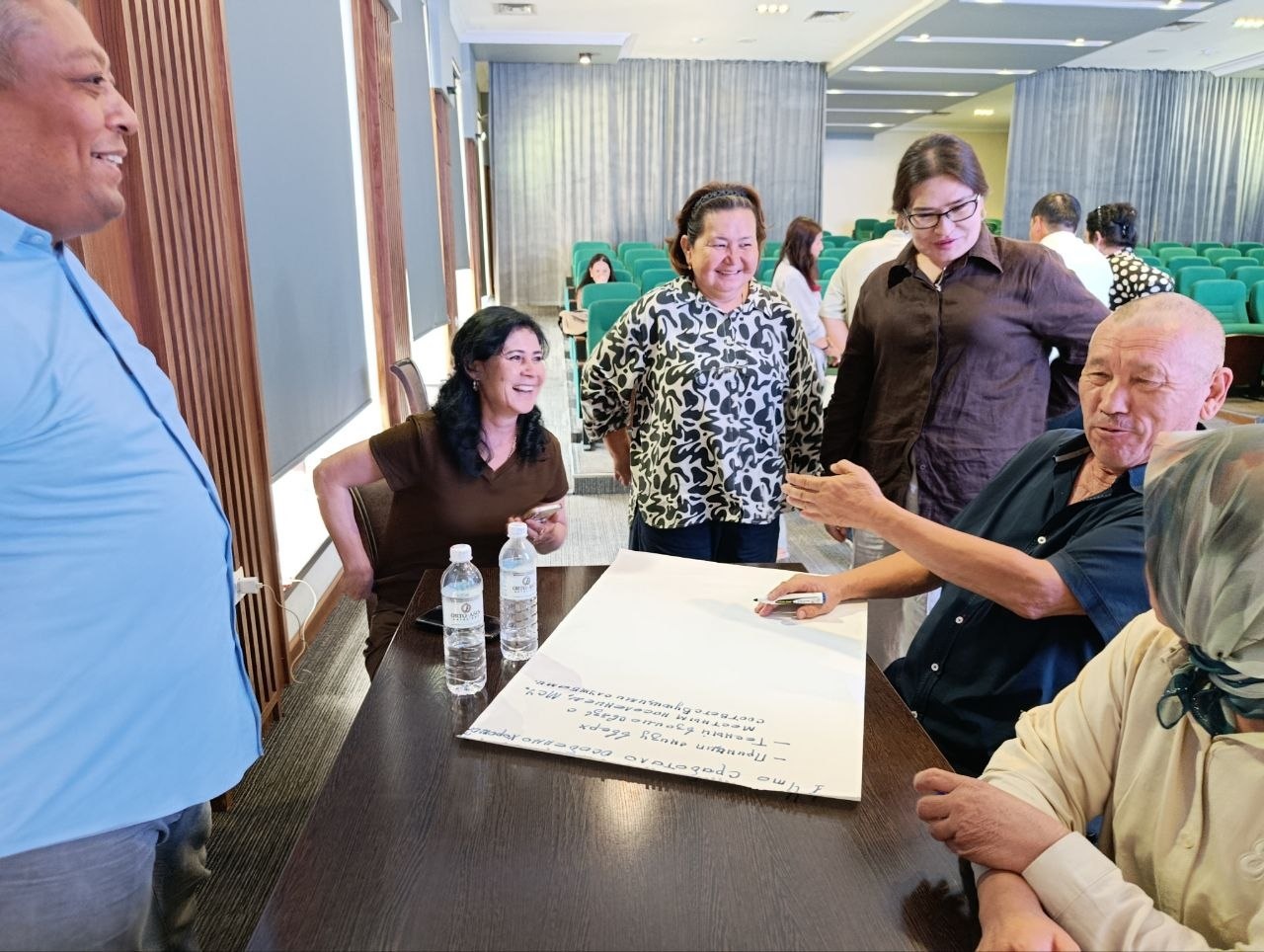
In addition to discussing key areas of activity, grant recipients were trained on reporting requirements, specifically on monitoring and evaluating indicators and the use of photos and videos. The training included both theoretical and practical components.

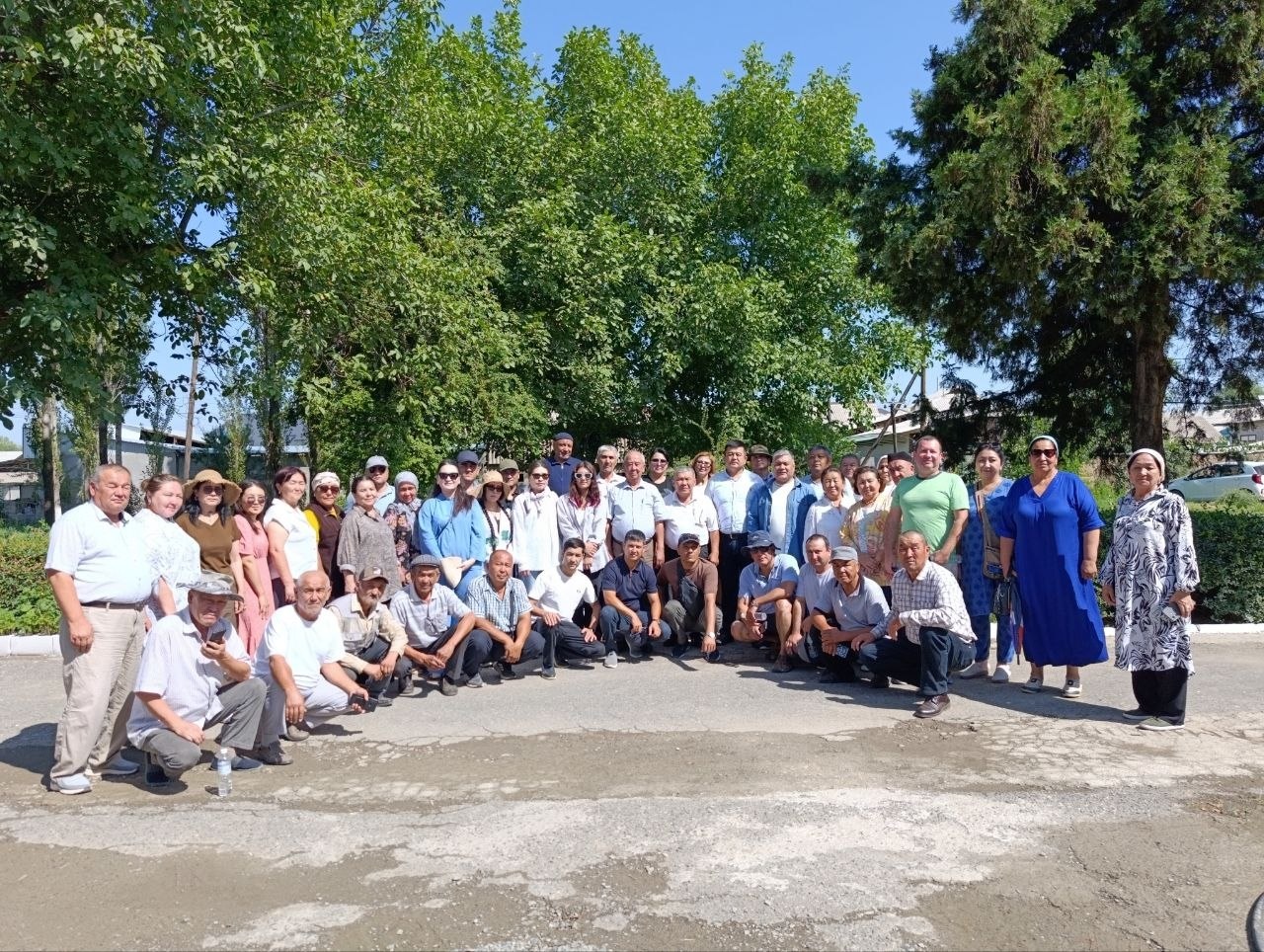
The second day of the meeting was held on the grounds of the subprojects of one of the project’s grant recipients, the New Rhythm NGO, in the Karasuu district of the Osh region of the Kyrgyz Republic.
The meeting participants visited the Mady village council, where key nature-based solutions for adapting to climate change at the local community level were presented. These solutions will be implemented within the framework of the project until March 2027.
At these sites, the participants were accompanied by the executive secretary of the aiyl aimak “Mada” – Boronov S. and the speaker of the aiyl kenesh of “Mada” – Temirbaev K.

The first subproject involves the creation of interconnected agroforestry belts around the school in the village of Asanchek and adjacent areas. These belts will act as windbreaks, dust filters, and microclimate regulators along the road on one side of the school and as natural mudflow bank stabilization on the other. These green spaces will restore key ecosystem services, including wind attenuation, dust and air pollution filtration, soil stabilization, and temperature regulation. They will also strengthen the mudflow bank and protect the school grounds from mudflows. The area is equipped with water-saving technologies: drip irrigation systems for planted trees, electricity generated by installed solar panels, and irrigation ditches reinforced with bioengineering solutions to reduce water loss.


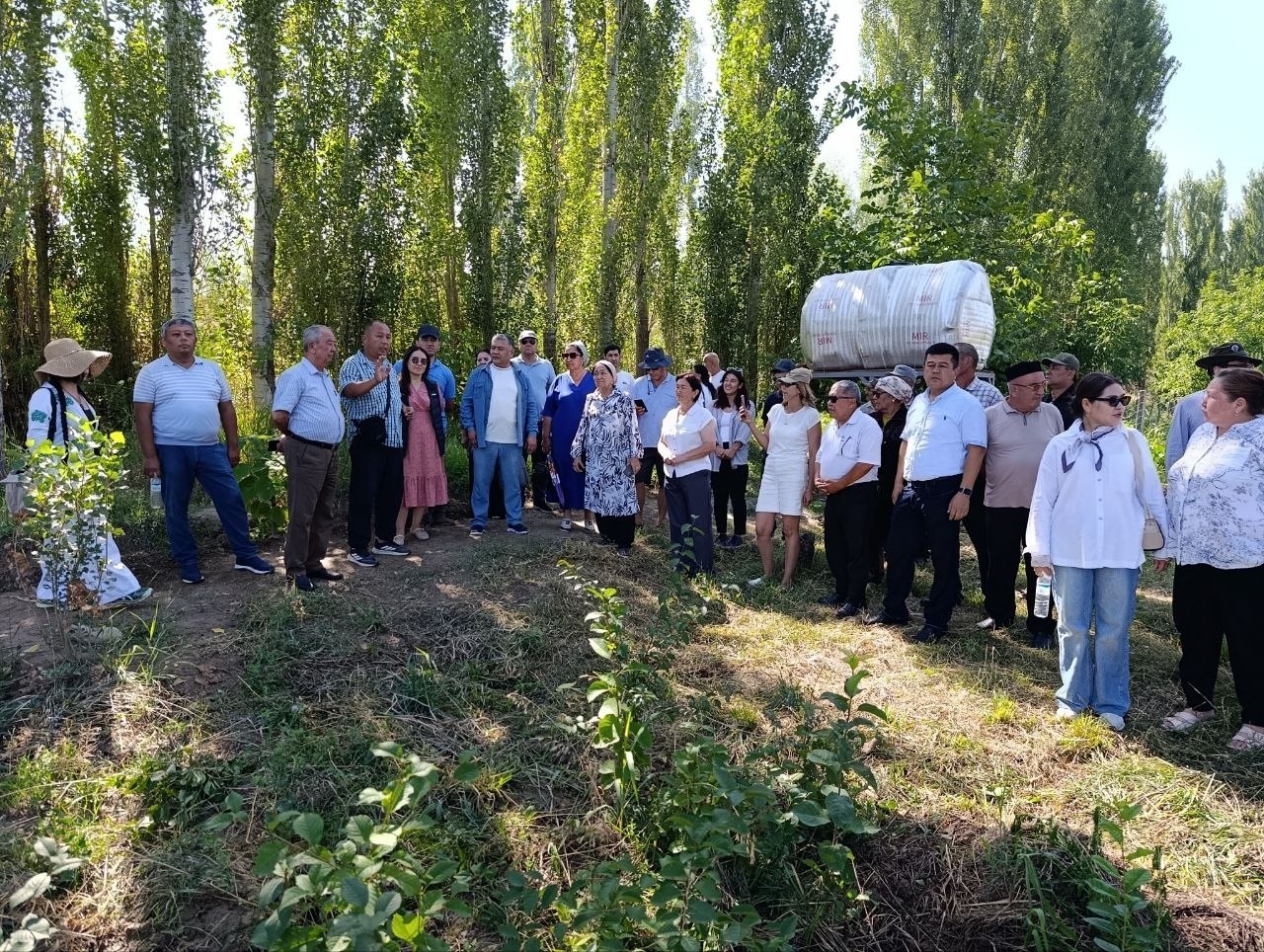
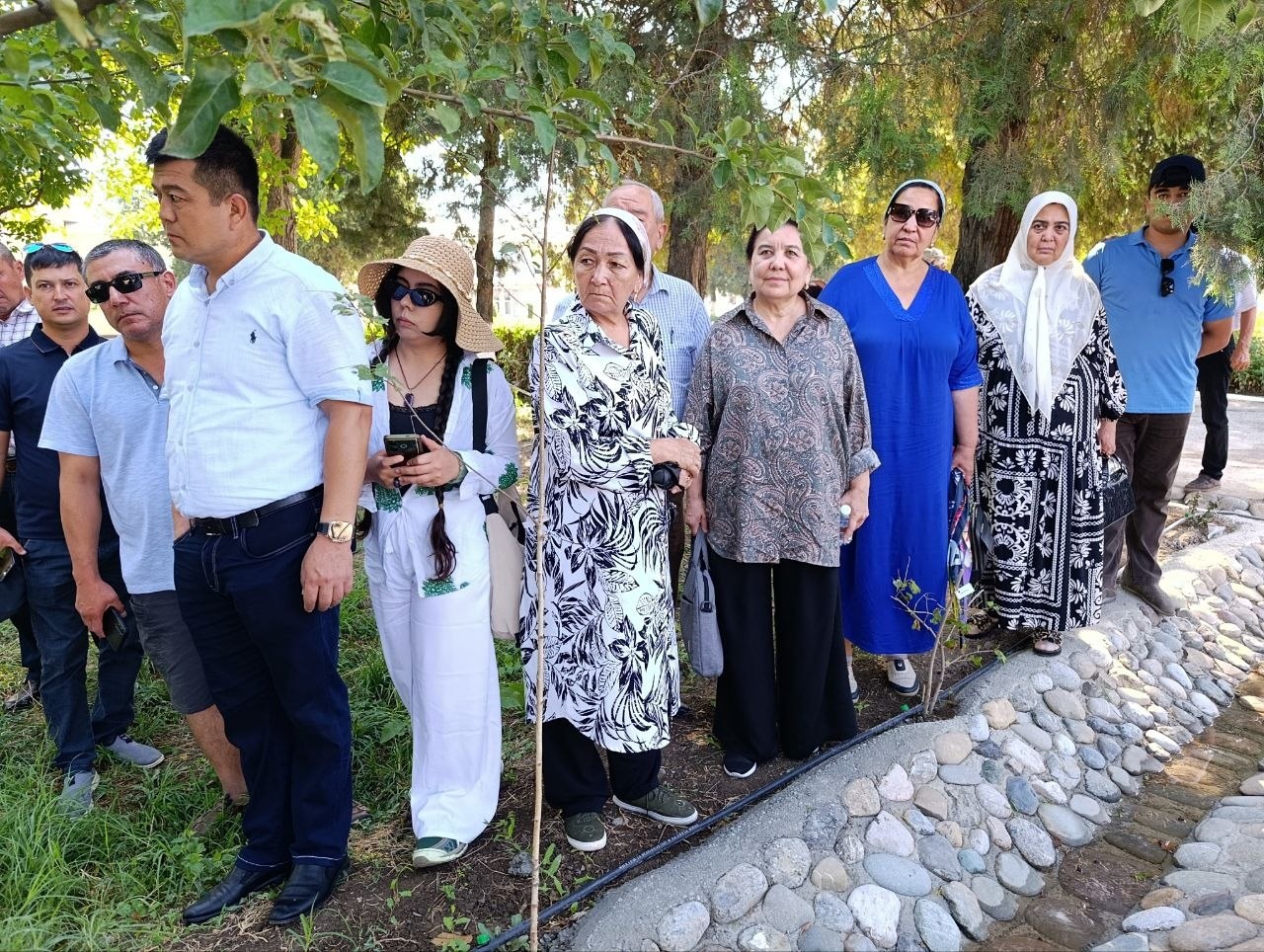
The second subproject, being implemented in the village of Kyzyl-Tal, aims to promote environmental restoration through greening. The creation of an eco-park and a nursery for drought-resistant plant species on degraded, empty land in the village, using drip irrigation and solar energy, aims to combat wind erosion and dust storms, improve the microclimate, and restore and conserve soil moisture. This is not only an environmental measure but also a direct response to the lack of safe public spaces for recreation, socialization, and shared activities for all members of the local community.

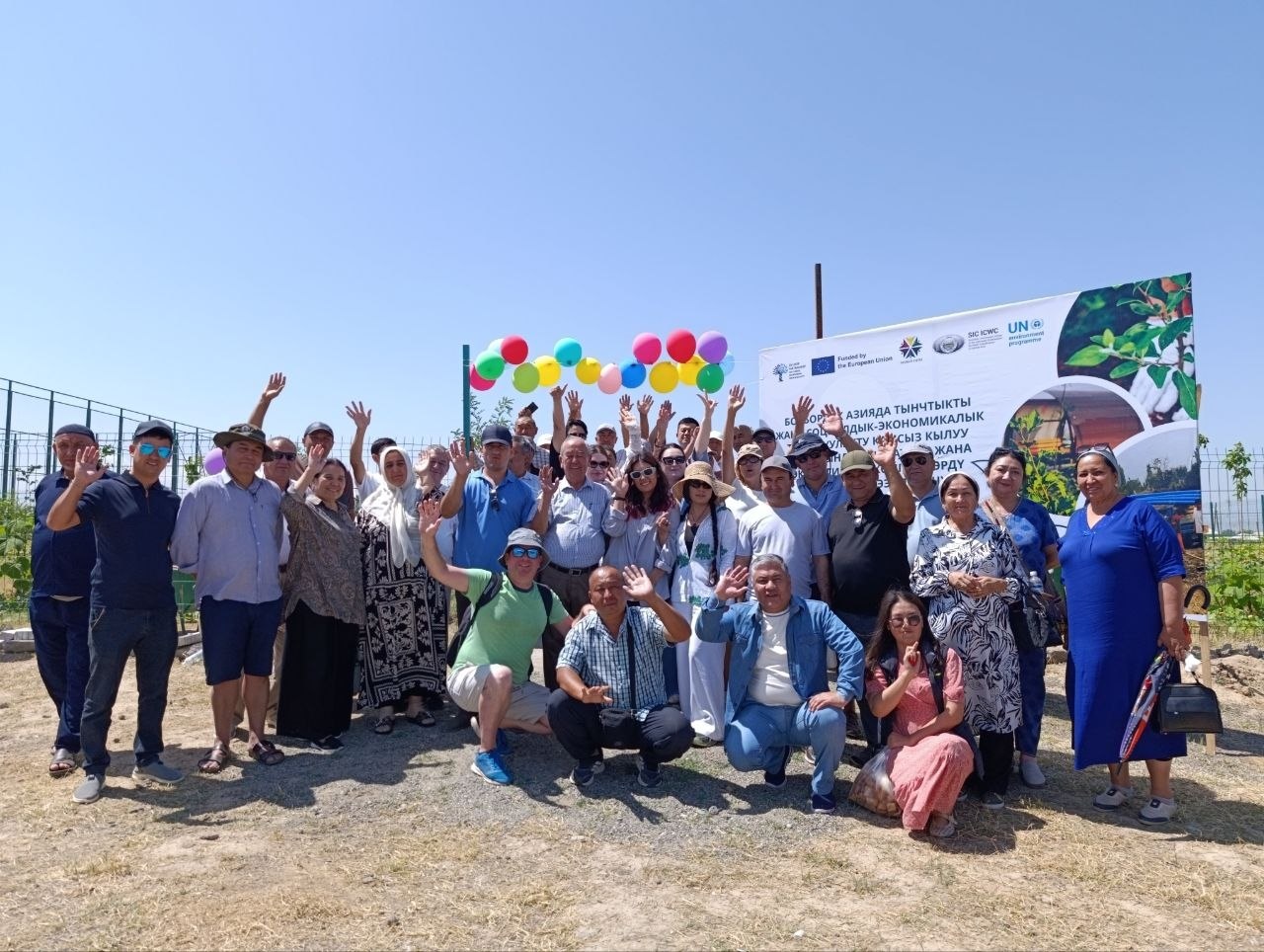
The newly created eco-park has already become a place of safe recreation and social interaction for children, women, and the elderly.
Following the meeting, participants emphasized the high relevance of the nature-oriented measures presented and their contribution to increasing climate resilience, reducing conflict potential, and strengthening socioeconomic stability in the region.
Google machine translated