

Kazakhstan is entering a new stage in the development of its agro-industrial complex. In accordance with the instructions of the Head of State, voiced in his Address of September 8, 2025, the Government, represented by the Ministry of Agriculture, is implementing a progressive agro-economic model, Kazinform reports, citing the Government of the Republic of Kazakhstan.
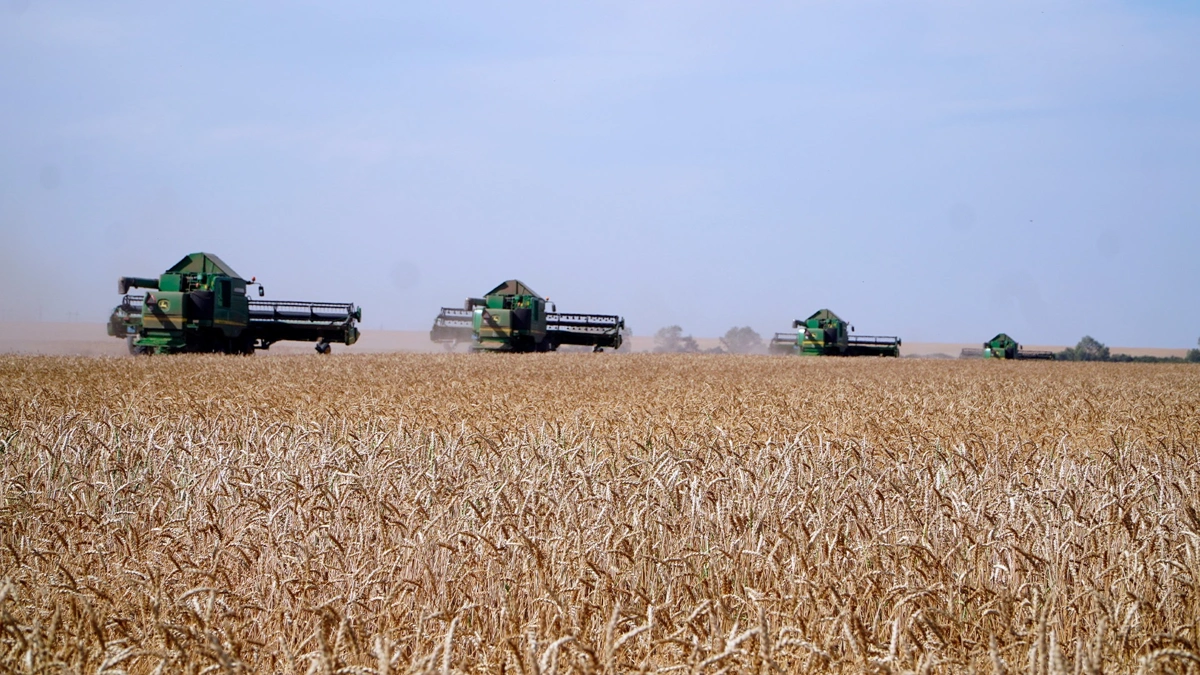
The main focuses are digitalization, artificial intelligence, and advanced product processing.
Achieving these goals requires clear planning, which is why a Comprehensive Plan for the Development of the Agricultural Economy for 2026–2028 is currently being developed. The document aims to create comprehensive value chains—from agricultural production to advanced processing, storage, logistics, and exports. Key priorities include developing the processing industry, establishing agro-industrial clusters and agro-hubs, and strengthening ties between production and sales markets.
This profound modernization entails a systemic renewal of the entire agricultural sector to make it more sustainable, productive, and competitive. In close connection with this initiative, the government has approved the Comprehensive Livestock Development Plan for 2026–2030. It aims not only to increase livestock numbers but also to enhance productivity and improve the quality of processing, which will significantly expand the sector’s export potential.
An important modernization tool will be the implementation of the President’s directive to upgrade the agricultural machinery fleet by 8-10% annually, which will allow for the technological re-equipment of farms and reduce costs through the use of modern machinery.
To implement these plans, a long-term, preferential loan program at 6% per annum will be launched for the purchase of breeding stock of all animal species. Additionally, a preferential loan program at 5% per annum will be launched to replenish working capital for farms, with no restrictions on the type of activity. Particular attention will be paid to land: to effectively utilize the potential of free pastures, a unified loan product at 6% will be launched for the development of transhumance. This instrument will help finance the creation of infrastructure—from land irrigation to the purchase of mobile trailers and other necessary expenses.
To make financial resources more accessible to rural residents, it is planned to actively engage regional social entrepreneurship corporations. All lending programs will be reliably supported by a guarantee system through the Damu Institute, similar to the one already successfully implemented in crop production. Farmers will be able to receive a state guarantee covering up to 85% of the loan amount if they lack their own collateral. This decision opens access to resources for farms whose rural assets were previously unacceptable as liquid collateral by banks.
In parallel with financial support, scientific and practical tasks are also being addressed. For example, the possibility of opening a specialized laboratory for the embryonic reproduction of cattle is currently being considered.
The comprehensive approach also encompasses related industries: conditions are being created for service and procurement centers where farmers can deliver wool and hides. Working capital funds are being allocated for these purposes at a 5% annual interest rate. At the same time, warehouse and transport logistics are being addressed, ensuring an uninterrupted supply of raw materials to factories.
Along with technical equipment, measures are envisaged to attract new personnel to the industry and create decent social conditions for those working in animal husbandry.
This work is expected to result in an increase in the cattle population to 12 million, small ruminants to 28 million, and a doubling of meat exports. Halal certification will be a key vector for expanding export potential. This is essential for strengthening Kazakhstan’s position in the premium markets of the Persian Gulf and other Muslim countries.
It’s important to note that all new initiatives build on existing achievements—the agricultural sector has demonstrated steady growth in recent years. Gross agricultural output has increased for the second consecutive year: in 2025, it grew by 5.9% to reach 9.8 trillion tenge, compared to 13.6% the year before, reaching 8.3 trillion tenge. This increase was driven by a 7.8% increase in crop production and a 3.3% increase in livestock production.
Such dynamic growth was made possible largely by the unprecedented volume of concessional financing. In 2025, up to 1 trillion tenge was allocated to support the agricultural sector, 10 times the 2021 level. This allowed state support to cover approximately 8.5 million hectares of cultivated land. This year, in accordance with the Head of State’s instruction given at the extended government meeting on January 28, 2025, concessional financing is planned to reach 1.5 trillion tenge. To ensure maximum impact, a system of end-to-end monitoring and digitalization of subsidies is being implemented, eliminating overpayments and ensuring that funds reach actual farmers.
Systematic efforts to increase funding began in 2024, when the Ministry revised its approach to state support. Equipment leasing, seasonal work financing, and assistance to processing and livestock enterprises became available at a 5% annual interest rate. This approach will continue, and it is already bearing fruit: over the past two years, the country has harvested a record grain harvest—over 50 million tons.
Strong results were also recorded in other areas: over 1 million tons of legumes were harvested, and the oilseed harvest increased to 4.8 million tons, up from 3.3 million tons the previous year. This achievement was facilitated by timely government assistance, including the launch of an early sowing financing program in October 2024, as well as the widespread adoption of modern agricultural technologies. Today, the harvest not only fully meets the country’s domestic needs but also creates the conditions for actively increasing exports.
Kazakhstan has a strong raw material base and a significant surplus in grain production, creating the perfect environment for shifting from raw material exports to processing. The country boasts vast land resources, including 183 million hectares of pasture and 27.2 million hectares of arable land. Currently, we supply agricultural products to more than 70 countries, holding leading positions: second in the world for flour exports, eighth for sunflower oil, and tenth for grain crops.
Success in foreign markets deserves special attention: in the 2024–2025 marketing year, grain exports reached 13.4 million tonnes, the best result in the last 20 years. The geography of exports is constantly expanding: shipments to Iran, Azerbaijan, and Kyrgyzstan have resumed, and markets in Egypt, Morocco, and Vietnam have opened. Work is currently underway to enter the markets of Belgium, Poland, Norway, the UK, and Portugal, and cooperation with the Persian Gulf countries is also strengthening.
A logical extension of the export strategy is the deepening of raw material processing within the country. Currently, of the 5 million tons of grain processed, approximately 510,000 tons are subject to deep processing. Large-scale investment projects in this sector have been underway since 2025. Three plants are already operating, producing high-tech products ranging from starch to bioethanol. Five more large plants are planned to open by 2028, with a total investment of $2.6 billion. This will create thousands of jobs and expand the product line by producing amino acids and vitamins.
Thus, the transition to a progressive agricultural economy is creating a fundamentally new model for agricultural development in Kazakhstan, one where technology and advanced processing are paramount. Implementing these comprehensive measures will ensure sustainable production growth and increase the added value of products. This will strengthen the country’s position in the global market and create a reliable foundation for the long-term competitiveness of our agriculture, directly improving the living standards of the rural population.
Previously, the Ministry of Agriculture of Kazakhstan amended a number of regulatory documents governing the procedure for subsidizing agricultural production.
Google machine translated