

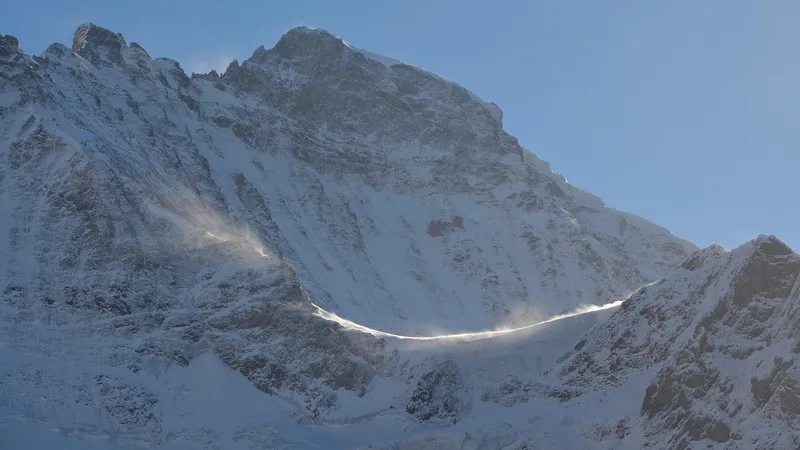
Analyzed meteorological data revealed that the mountain range experienced unprecedentedly high temperatures for that time of year during those days. The average temperature on the glacier at an altitude of 5,200 meters from August 21 to 26 was estimated at approximately 5 degrees Celsius . This is exceptionally high, according to Phys.org .
During this same period, over more than 55 years of data collection, temperatures have not exceeded 4 degrees Celsius. At the site of the glacier collapse, the average temperature recorded over the past few days has increased by approximately 1.8 degrees Celsius compared to the mid-20th century.
According to an analysis of data from the European Copernicus Observatory, the collapse occurred during the fourth hottest summer on record in the Langtang region.
“These hot conditions could also explain the melting of permafrost and the simultaneous collapse of slopes and glaciers,” said French climatologist Valérie Masson-Delmotte.
Permafrost acts like ice cement, holding rocks together. Its destruction makes them more unstable.
Satellite images also showed significant snowmelt in the days before the disaster, providing “a significant source of liquid water that could penetrate cracks in the mountain and contribute to landslides.”
However, experts are still cautious about assessing the real role played by this heat wave.
“If temperature was the trigger, it seems like it would have taken a while for the rock to be on the verge of collapse,” said Kristen Cook, a geomorphologist at the University of Grenoble Alpes in France.
Researchers are now studying small movements observed in the mountain in the years leading up to the collapse and how they interact with temperature changes.
On August 26, 2026, a sudden, devastating flood struck Nepal , causing widespread destruction and killing hundreds. As of September 8, the flood death toll has reached 1,355. Nearly 5,000 people remain missing. The disaster was caused by a massive glacier collapse, which was captured on video by eyewitnesses.
After the floods, it became known that three Kazakh women had gone missing there .
This event particularly alarmed Almaty residents, as the city is located at the foot of the mountains. Experts have discussed whether the city faces a “Nepal-like scenario.”
Google machine translated