

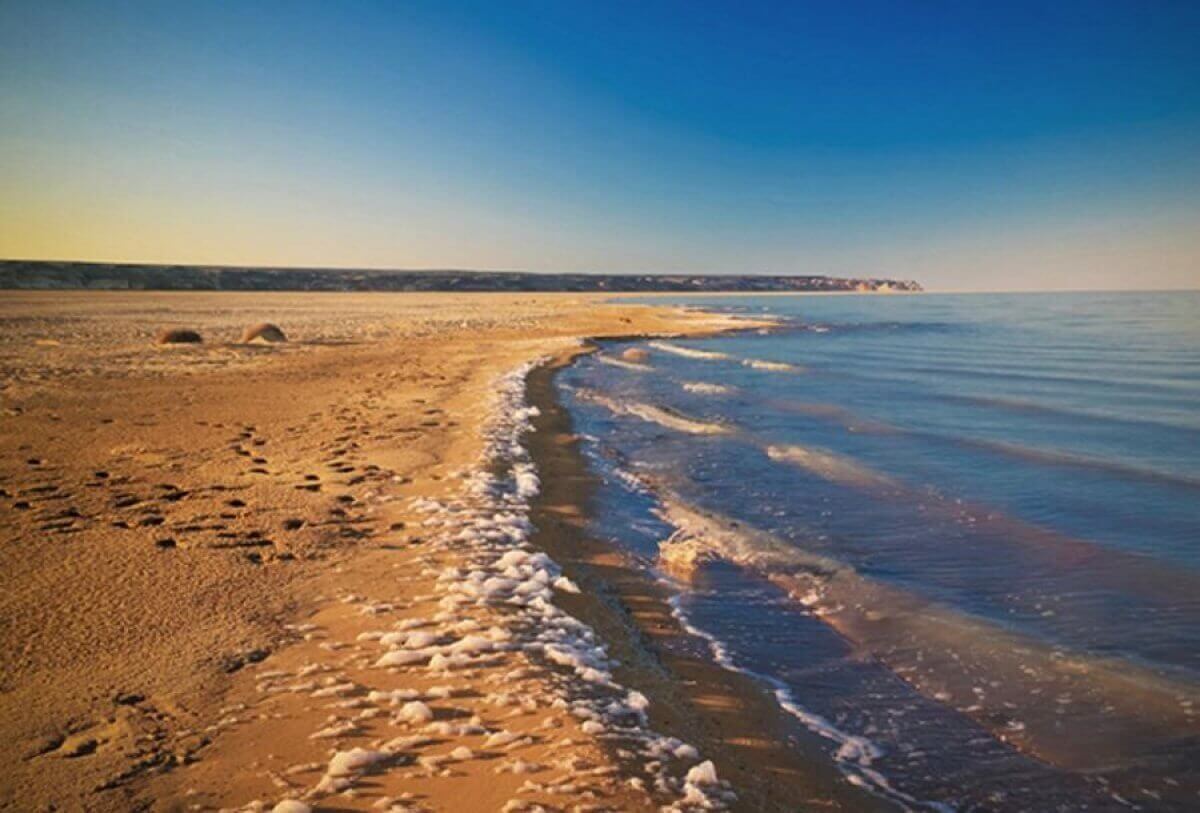
Aralkum is the youngest desert on Earth.
The Copernicus Sentinel-2 mission has shown what remains of the Aral Sea, once the fourth largest lake in the world, Liter.kz reports with reference to the European Space Agency ( ESA ).
The image from March 18, 2025, shows how the western part has shrunk significantly, while the eastern part has virtually dried up. When the Aral Sea evaporated, it left behind a zone of dry, salty terrain. In the image, this appears as a whitish area above the former lake bed, now the Aralkum Desert, the youngest desert on Earth.
The ice-covered waters of the Small Aral Sea can be seen at the top of the image. While the entire southern part of the lake is expected to dry up completely soon, the Small Aral Sea is at the center of international conservation efforts.
The two brown straight lines at the southeastern end of the Small Aral represent the Kok-Aral Dam, which was built to prevent water from entering the southern part of the lake and to stabilize the water level and salinity in the northern part. Since its completion in 2005, water levels have risen by an average of 4 m in the northern part.
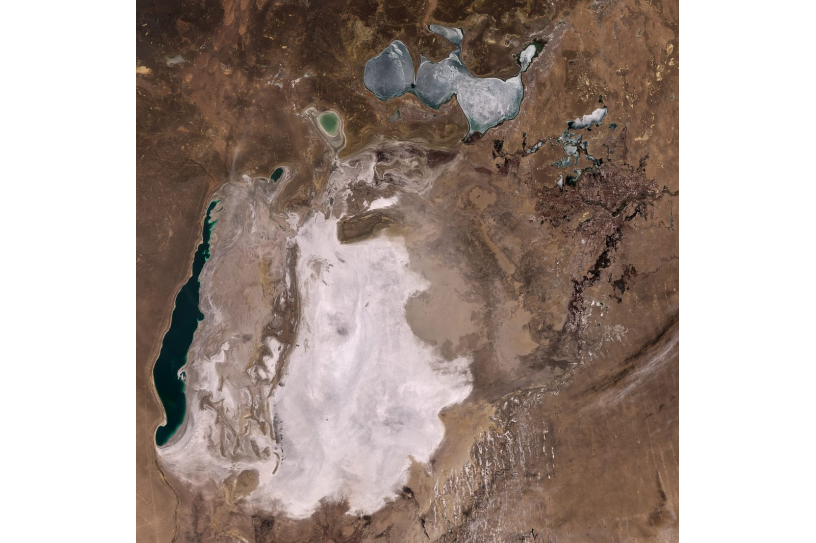
Photo: ESA
https://liter.kz/samaia-molodaia-pustynia-zemli-rastet-na-territorii-kazakhstana-i-uzbekistana-1744076525/