Emergency, risks, disaster risk reduction

The President of Tajikistan warned of a possible drought

Tajikistan President Emomali Rahmon, in his speech at a meeting of the National Development Council on June 10 in Dushanbe, warned farmers about a possible drought. The head of state noted that in the spring of 2024, ongoing rainfall caused significant damage to houses and agriculture. “Last autumn and winter,

Read More »

The first of three trainings for trainers from Central Asia on climate risk assessment (CRA) and capacity development took place in Tashkent

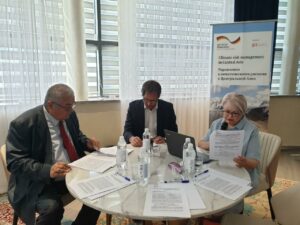
ToT SESSION 1.0 “Climate Risk Assessment – Approach, Methods and Facilitation” was held in Tashkent on June 4-6, 2024. Within the framework of Work Package 6 “Capacity Development and Strengthening”, training for trainers (ToT) in selected five (5) CRA (watershed) areas is being developed and delivered, including the development of

Read More »

Network of Academic Societies Tackles Flood Issues in the Region

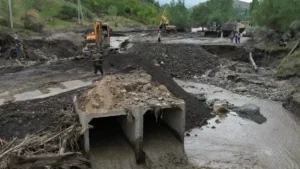
The heavy floods and disasters in northwest Kazakhstan (and flooding in other Central Asian countries) prompted the Network of Academic Societies (NAS) to address this issue to discuss what the academic community might contribute in terms of solutions. The meeting convened on May 17 with NAS members and representatives from

Read More »

Climate risk assessment has begun in the Chu River basin

On May 3, 2024, a seminar on assessing climate risks for the transboundary river basin of the Chu River was held in Taraz. It was attended by representatives of government departments for managing water resources and emergency situations, public associations, water inspections, regional and city akimats. The purpose of the

Read More »

Persons with disabilities are more vulnerable to the consequences of climate change in Uzbekistan, says a World Bank study

During natural disasters, persons with disabilities are most at risk because emergency alerts and evacuation routes may not be accessible to them. The World Bank conducted a study in Uzbekistan on this topic and shared recommendations on the needs of people with disabilities. Across the globe, persons with disabilities experience mortality rates up to four times higher in natural disasters than persons

Read More »

Climate change and security in Central Asia. Regional assessment.

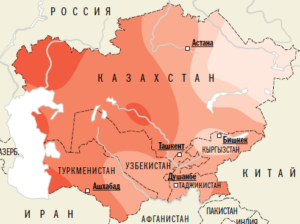
The European Union (EU) has supported the Environment and Security Initiative through its Stability Instrument. (ENVSEC) to promote regional stability through cross-border cooperation on adaptation to the impacts climate change. National participants also provided input and comments on the regional assessment report. consultations held in Central Asian countries in 2014-2015.

Read More »

Skillful seasonal prediction of summer wildfires over Central Asia

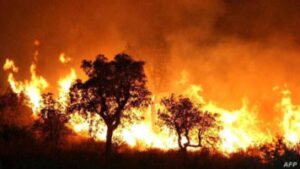
With the increased damage caused by wildfires under global warming, accurately predicting wildfires remains challenging yet crucial for regional disaster mitigation. The boreal summer (June–September: JJAS) wildfire burned area (BA) of Central Asia reaches the greatest seasonal extent and has the largest interannual variance over the Eurasian continent. Considering both

Read More »
Scroll to Top