

Central Asian countries urgently need to adapt to droughts, melting glaciers and unstable rainfall or risks to water, agriculture and energy will increase, new reports from the World Meteorological Organization (WMO) warn.
Threat of rising temperatures
The World Meteorological Organization has published a long-term forecast , titled “Climate Outlook 2025–2029,” which predicts persistent warming and unstable precipitation in Central Asia, including Tajikistan, over the next five years.
All years in the period 2025–2029 may be warmer than the 1991–2020 climate norm. In some years, a temporary jump in global temperature above +1.5 °C compared to pre-industrial levels is possible.
Among the factors influencing the region’s climate is the South Asian monsoon season (May–September), which has an 82% chance of exceeding the norm. This creates unstable conditions for agriculture: a wet summer can be followed by drought.
Of particular concern is the accelerated melting of mountain glaciers, including those in the Pamirs, on which the water supply of the Amu Darya and Vakhsh depends. The loss of glaciers means the risk of water shortages and requires a revision of water policy.
WMO predicts that the 2025–2029 five-year period could be the warmest on record, with global temperatures rising by 1.2–1.9°C. The chance that one of those years will exceed 2°C is still small (1%), but the risk is growing.

In spring there are floods, in summer there is drought. This is a new climate
The WMO report , State of the Climate in the Southwest Pacific 2024, focuses on the Pacific region, but its findings have global implications. 2024 has officially been the hottest year on record, with the average temperature exceeding pre-industrial levels by 1.55°C.
Such changes are already affecting atmospheric flows, monsoon cycles and glacier melting around the world, including in Central Asia.
For Tajikistan, a high-mountain country, this means early snowmelt and reduced spring runoff. Water that used to flow throughout the summer can now be gone in a matter of weeks in the spring, triggering both droughts and flash floods.
This poses a threat to food security, especially in conditions of limited water storage.
The risk of glaciers disappearing is also emphasized. According to WMO, Indonesian glaciers may melt completely by 2026. A similar fate threatens Central Asian glaciers, which will hit Tajikistan’s energy sector, which depends on hydroelectric power plants, as well as ecosystems and the agricultural sector.
Climate disasters are becoming more frequent in the region: dust storms, heavy rains, heat waves and mudflows.
The document stresses the need for coordinated efforts: modernising infrastructure, strengthening climate monitoring and joint management of water resources are becoming urgent tasks.
Drought Knows No Borders: Central Asia Needs a Unified Strategy
The Drought Impact Monitoring Baseline Assessment report identifies Central Asia as a region with a high risk of drought. The document emphasizes that effective management of this threat is possible only through transboundary cooperation, especially in the Amu Darya and Syr Darya river basins.
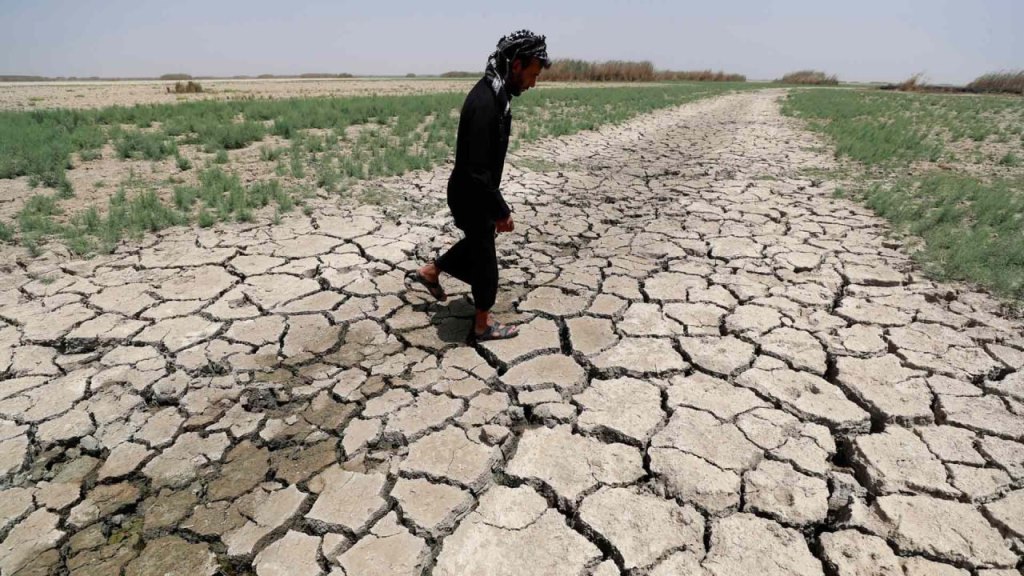
Droughts, as a natural phenomenon, do not recognize borders, so it is necessary to create common mechanisms for monitoring, data exchange and coordination of actions.
Central Asia is represented in the report as a participant in the Seventh Meeting of the Global Network of Basins Adapted to Climate Change (2023).
Other regions with which Central Asia was compared included South Africa, Europe, the Lower Mekong, Cubango-Okavango, and others. However, such measures are still at an early stage.
The report stresses that without a systems approach, droughts will lead to increased socio-economic problems, population displacement and conflicts over water.
Although there is no specific data for Tajikistan, it is clear that the country is vulnerable. A common regional strategy is needed that takes into account climate risks and the needs of water users.
All three WMO reports send a consistent and alarming message: Tajikistan and its neighbors must adapt to a new climate landscape.
Machine Translated by Google