

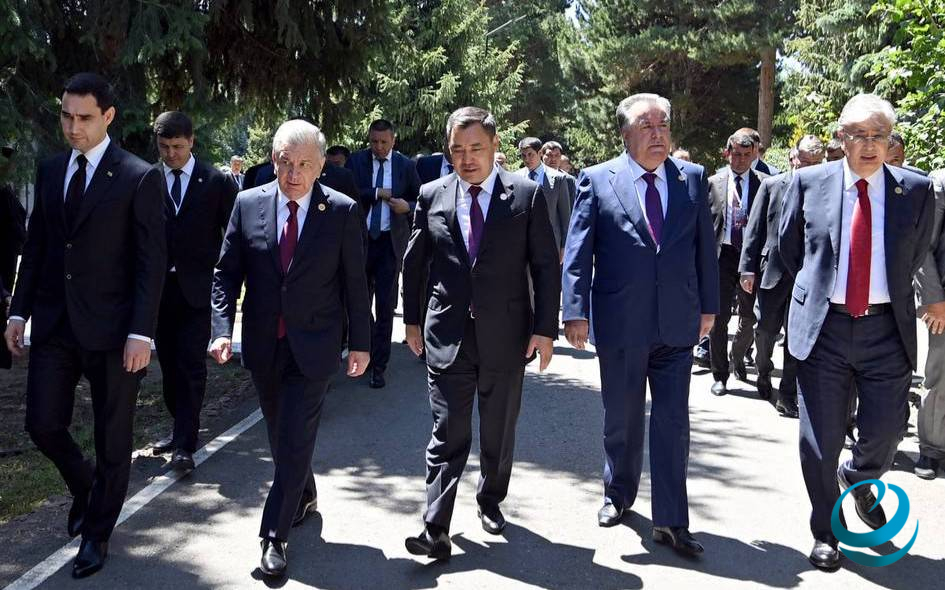
For the first time, South Korea will bring together in Seoul the leaders of all five Central Asian states – Kazakhstan, Kyrgyzstan, Tajikistan, Turkmenistan, and Uzbekistan.
For Seoul, this is an attempt to elevate relations with the region from the level of industry contacts to an ongoing political dialogue between heads of state. President Lee Jae-myung hopes to give new impetus to the Eurasian direction of the country’s foreign policy, Yonhap News Agency reports .
Critical minerals come to the fore
The economic agenda will focus on trade, investment, energy, critical minerals and supply chain resilience.
For South Korea, which has strong automotive, battery, electronics, and semiconductor industries, Central Asia is of interest primarily as a source of raw materials and an opportunity to reduce dependence on a limited number of suppliers. Seoul has already officially identified supply chain diversification as one of the goals of cooperation with the region.
For Central Asian states, the interest is the opposite: Korean companies can offer technology, industrial processing, investment, and access to global production chains.
Therefore, potential partnerships could gradually shift from simple trade in raw materials to the creation of joint production and processing of resources directly in the region.
Seoul enters competition for Central Asia

The first summit also demonstrates the region’s growing geopolitical significance. Similar “Central Asia Plus” formats are already actively used by China, the US, the EU, Japan, and other partners.
South Korea is effectively elevating its own mechanism to the level of heads of state, seeking to gain a foothold in a region where transport routes, energy interests, and competition for critical resources intersect.
Preparations are being carried out at the national level: dozens of Korean ministries and agencies are involved.
At the same time, Seoul’s relations with Central Asia are not being built from scratch: South Korea has been developing economic, educational, and humanitarian cooperation with the region, which is home to a large Korean diaspora, for years.
Official Seoul hopes to complement these ties with cooperation in the areas of security, high technology, and strategic raw materials.
As a result, the September summit could become an attempt for South Korea to transform Central Asia from a peripheral diplomatic area into an independent strategic region.
If political declarations are followed by concrete projects in minerals, energy, manufacturing, and logistics, the Central Asian countries will gain another major technology partner, and Seoul will have a new channel for resource and market diversification.
What remains in the shadow of the first South Korea-Central Asia summit?

Behind the general formula of “critical minerals, investment, and supply chains” lies an important detail: Seoul does not have a single model for working with all of Central Asia .
Each of the five countries is developing its own specialization—from uranium and rare earth metals to digitalization, water, gas chemistry, and high-speed rail.
It is precisely this mosaic of bilateral interests that may prove more important than the final declaration of the summit.
The South Korean Foreign Ministry explicitly calls Central Asia a strategic region due to its combination of energy resources, critical minerals, and location between Europe and Asia.
Kazakhstan: Energy Security and the Full Cycle of Critical Minerals
For Seoul, Kazakhstan is primarily a resource and energy partner . In a joint statement, the parties agreed to maintain Kazakh uranium supplies to South Korea and consider increasing them.
In parallel, a cooperation mechanism was launched on critical minerals, ranging from geological exploration and production to processing and supply for South Korean industry.
This is more important than simply purchasing raw materials. South Korea has extensive semiconductor, battery, and electronics production, and Kazakhstan offers a resource base.
In 2024, the parties separately discussed lithium and other minerals, with Astana offering Korean companies participation in virtually the entire production chain. Another indicator of the depth of these ties is the approximately 700 Korean companies operating in Kazakhstan, and Korean automobiles account for a significant share of the local market.
Uzbekistan is not a raw materials partner, but a future production site
Uzbekistan stands out because Seoul views it not only as a source of resources but also as a potential regional technology hub .
Back in 2024, the parties agreed to develop the deep processing of critical minerals, semiconductors, chemicals, green hydrogen, mechanical engineering, and smart agriculture. Tashkent explicitly proposed creating the first fully-fledged semiconductor research and production cluster in Central Asia.
There are also very specific projects.
Hyundai Rotem received an agreement to supply high-speed electric trains, and the Korean side is participating in the Pharma Park project and in the modernization of education and urban infrastructure. The volume of accumulated Korean investments in Uzbekistan by 2024 was estimated at approximately $7.5 billion, and the current project portfolio is worth approximately $5 billion.
Kyrgyzstan is not yet a large-scale industry, but an institutional assembly
In relations with Kyrgyzstan, large-scale industry is less visible, but the infrastructure for economic cooperation itself is rapidly being created .
In June 2026, the joint committee on trade and investment began operating in Bishkek for the first time . Specific issues included opening a KOTRA representative office, cooperation on critical minerals, attracting investment, ODA, and removing barriers to business.
Seoul is now interested in Kyrgyzstan for more than just its market potential. KOICA has ongoing projects on digital transformation of public administration, electric vehicles for government agencies, agricultural value chains, and healthcare.
Separate agreements were signed on renewable energy and critical minerals.
This suggests that the Korean strategy in Kyrgyzstan is being built from the bottom up: first digitalization, medicine, institutions, and project preparation—then larger investments.
Tajikistan – water, hydropower and digitalization
Tajikistan occupies a special niche due to its enormous hydropower potential. In July 2026, the South Korean Ambassador and Energy Minister Daler Juma specifically discussed water and energy projects as potential practical outcomes of the upcoming summit.
But there is another area that hardly figures in the overall media picture: the digital economy.
In June, the parties discussed cooperation in ICT and artificial intelligence, with Seoul proposing to combine its own digital transformation experience with Tajikistan’s growing technological demand. This means Dushanbe could receive from Korea not so much traditional factories as infrastructure for managing water, energy, and digital systems.
Turkmenistan: Gas chemistry remains the core, but a new agenda is emerging
The most industrially oriented model is taking shape in Turkmenistan.
Korean companies have long been involved with the Turkmen oil and gas industry, and the parties continue to explore the Galkynysh gas field, gas treatment, and the restoration of the Kiyanly Polymer Complex . It is here that South Korea most clearly emerges as a supplier of engineering solutions for large energy facilities.
However, in 2026, the agenda expanded. The parties are considering the construction of a fertilizer plant, electric power, new cities, and even water infrastructure.
In July, a separate program for the Turkmen delegation on water management was held in Seoul—an indication that relations are gradually expanding beyond oil and gas.
In essence, South Korea is building not just one strategy in Central Asia, but five complementary directions:
- Kazakhstan – uranium and critical minerals;
- Uzbekistan – industry and high technology;
- Kyrgyzstan – Digitalization, ODA and Institutional Readiness;
- Tajikistan – Water, Energy and ICT;
- Turkmenistan – gas chemistry and large engineering projects
This is precisely what makes the Korean approach distinct from many other “Central Asia Plus” formats. Seoul isn’t trying to offer a uniform cooperation model to everyone, but is instead choosing a distinct economic function for each country.
If this system works, the first summit could become less of a political event and more of a beginning of a division of roles among Central Asian countries within a new Korean chain of resources, technology, and production.
Google machine translated