

California has launched its first industrial-scale carbon dioxide capture and long-term underground storage facility, Carbon TerraVault I, or CTV I. The state has set a goal of achieving carbon neutrality as quickly as possible, but some harmful industries still need to be eliminated. A compromise was found in capturing industrial CO2 and injecting it deep underground.
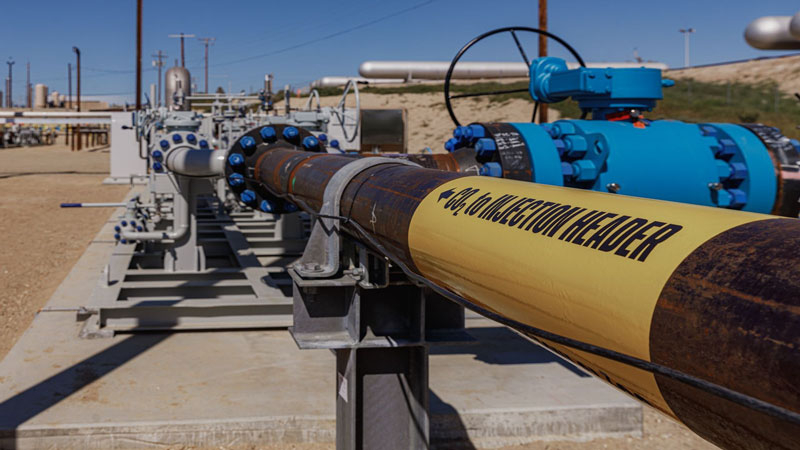
Image source: CRC
The project was implemented and is being developed by the Carbon TerraVault division of California Resources Corporation (CRC). The first facility is located at the Elk Hills field in Kern County, approximately 30 kilometers west of Bakersfield. In May 2026, the first CO2 injection began there , moving the project from the permitting and construction stage to operational operations.
The technical basis of the project is the geological storage of CO2 in the depleted 26R oil and gas reservoir. The U.S. Environmental Protection Agency (EPA) previously issued the company a Class VI permit for the use of this natural underground reservoir for the stated purposes. Class VI permits are specifically designed for the operation of wells for underground carbon dioxide storage. The permit includes drilling four wells over 1.5 kilometers deep. Planned injection is estimated at approximately 1.46–1.5 million tons of CO2 per year.
The estimated injection period is 26 years, with a total storage capacity of nearly 38 million tons of CO2 . Initially, carbon dioxide associated with oil and gas production will be injected underground. CRC continues to operate the oil field, and the carbon dioxide remains a byproduct of this activity. It will now be returned underground. Additional sources of industrial CO2 emissions may be connected to the site in the future , but this will require separate approvals.
The company has also applied to build eight similar storage facilities across the state, with a combined capacity of approximately 352 million tons of CO2 . Since the air on our planet is shared, California will be making it cleaner not just for itself, but for all its residents.
Source:
Google machine translated