

Kazakhstan strengthens its BRICS agenda.
A week before the summit in New Delhi, Astana outlined several areas where it hopes to expand cooperation: energy, critical minerals, transport corridors, and global water security, DKNews.kz reports .
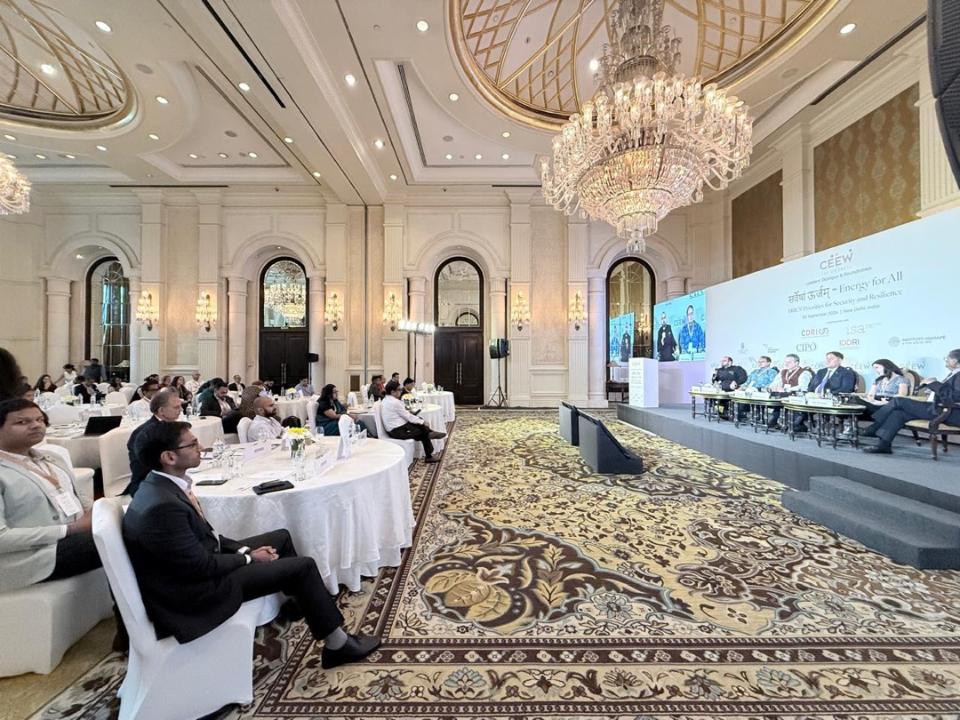
Kazakhstan’s Ambassador to India, Azamat Yeskarayev, presented the country’s position at the BRICS Energy Partnerships for Progress and Prosperity diplomatic dialogue in New Delhi. Representatives of BRICS member and partner countries, as well as the Indian expert and academic community, participated in the discussion, according to the Kazakh Ministry of Foreign Affairs .
Kazakhstan is betting on energy and critical minerals.
Energy security was a central theme of the meeting. Participants discussed traditional and renewable energy, modern technologies, infrastructure, investment, and critical minerals.
Particular attention was paid to the sustainability of supply chains and the development of new energy and transport corridors. For Kazakhstan, this bloc is directly linked to its declared role in Eurasian transport and energy connectivity.
Yeskarayev presented the country’s capabilities in several areas: traditional energy, renewable energy, and critical minerals. He wasn’t discussing a single project or a signed deal, but rather the areas of cooperation that Kazakhstan intends to advance within the BRICS format.
Kazakhstan received BRICS partner country status on January 1, 2025. In May 2026, Astana already identified trade, investment, energy, digitalization, and sustainable development among its priorities.

Kazakhstan has added water to the energy debate.
At the meeting in New Delhi, President Kassym-Jomart Tokayev also announced his initiative to establish an International Water Organization under the auspices of the UN.
Kazakhstan links this initiative to three areas: water, food, and energy security. The rationale is that increasing pressure on water resources requires more coordinated international action, and it proposes consolidating existing mechanisms into a more coherent system.
Tokayev himself previously spoke about creating the International Water Organization as a UN agency. At the Regional Environmental Summit, he noted that the initiative is being considered in the context of reforming the international governance system and revising UN mandates.
For Kazakhstan, the water issue also has a regional dimension. The president has previously directly linked water diplomacy to the state of the Aral Sea, the Caspian Sea, Lake Balkhash, and transboundary rivers.

The main venue will open on September 12.
Kazakhstan’s activity in New Delhi comes just ahead of the 18th BRICS summit , scheduled for September 12–13, 2026, in the Indian capital.
The participation of the Kazakh delegation in the summit was also confirmed during the August talks between First Deputy Minister of Foreign Affairs of Kazakhstan Yerzhan Ashikbayev and the Indian Ambassador. At that time, the parties discussed not only organizational preparations but also the substantive agenda of the upcoming meeting.
Therefore, the current energy discussion effectively outlines the themes with which Kazakhstan approaches the summit: critical minerals, energy and transport links, technology, and water security.
The summit on September 12–13 will determine which of these areas will receive further development at the level of the BRICS political agenda.
Kazakhstan previously confirmed its readiness to expand cooperation with BRICS in trade, investment, energy, and sustainable development .
Google machine translated