


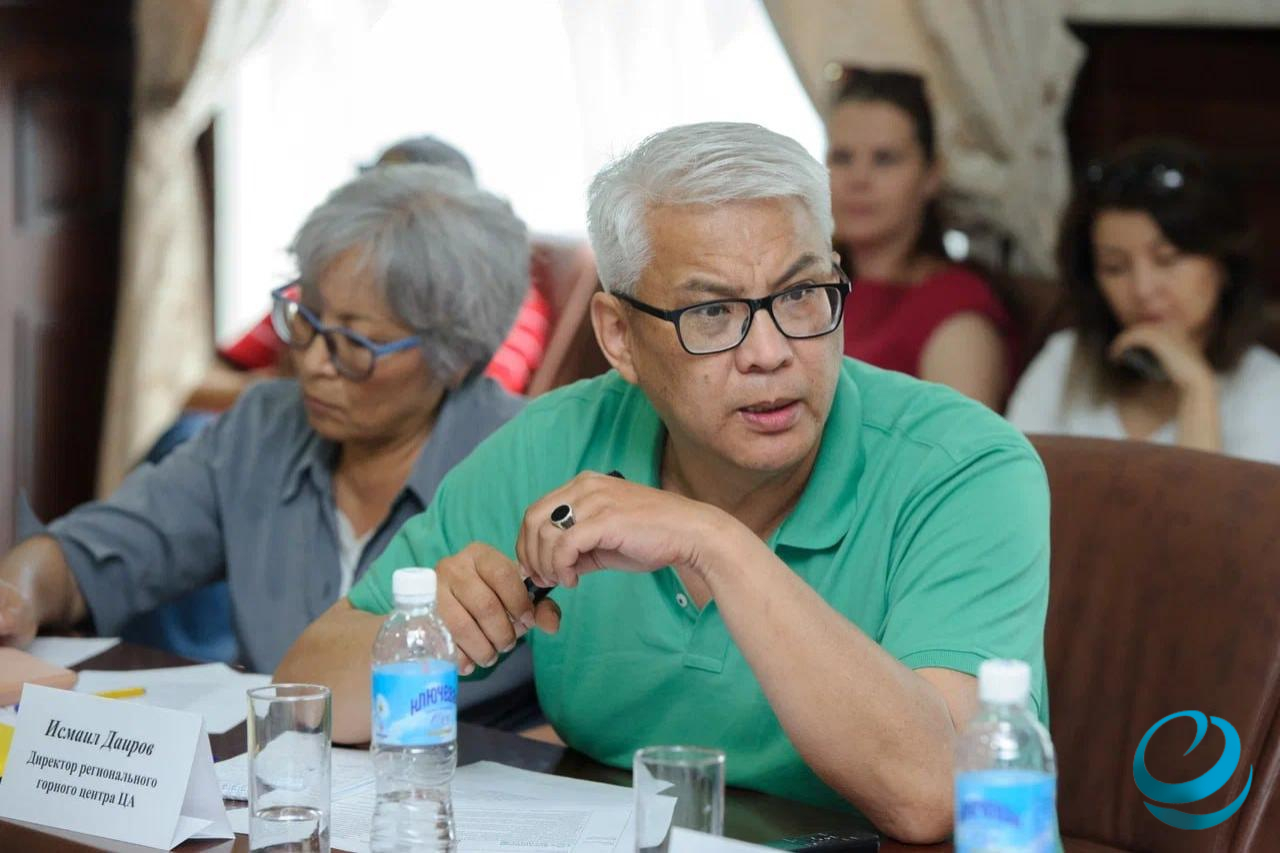
 This opinion was expressed by Ismail Dairov , a political scientist, former advisor to the Minister of Economy of the Kyrgyz Republic, director of the Regional Mountain Center of Central Asia, and international observer for the online publication “Kyrgyz Tuusu.”
According to him, the combination of the two international platforms will allow Bishkek to advance its own initiatives in the areas of water, climate, and regional security.
The expert notes that the modern international security system is experiencing a profound crisis.
The confrontation between leading powers and the use of the veto power by permanent members of the Security Council often make it difficult to make collective decisions.
At the same time, climate change, depletion of water resources and degradation of ecosystems are becoming factors that can intensify interstate contradictions.
According to Dairov, Kyrgyzstan’s election as a non-permanent member of the UN Security Council for 2027–2028 opens up opportunities for more active participation in shaping the international agenda.
The Republic will be able to vote on resolutions, put forward initiatives, participate in negotiations with leading powers, and use its presidency to advance national interests.
The political scientist places particular importance on water security. Shrinking glaciers and changing transboundary river regimes pose serious risks for Central Asia. Therefore, he believes, Kyrgyzstan must seek international recognition of the interconnectedness of climate threats, water scarcity, and regional stability.
The expert proposes considering mountain ecosystems not only as an object of environmental policy, but also as an important element in conflict prevention.
Bishkek could initiate an international dialogue with the participation of states from Central Asia, the Caucasus, the Himalayas, and the Andes interested in preserving mountain ecosystems and rationally using water resources.
Dairov considers the creation of a permanent international mechanism for cooperation on mountain safety issues to be one of the practical steps.
Its activities could include regular consultations between states, scientific monitoring of glacier conditions, forecasting environmental risks, preventive diplomacy, and raising international funding.
At the same time, he emphasizes that the most important condition for success will be the professional work of Kyrgyz diplomacy.
Representatives of the Republic must not limit themselves to declarations, but propose concrete initiatives that take into account the interests of other states and the specifics of the international political situation.
Dairov separately proposes using the potential of the Shanghai Cooperation Organization.
In his opinion, the election of a representative from Kyrgyzstan as the next SCO Secretary General could ensure the continuity of mountain initiatives and facilitate their further advancement in the Eurasian space.
Overall, the political scientist believes that membership in the UN Security Council and the Bishkek+25 summit offer an opportunity to strengthen the international authority of the Kyrgyz Republic and establish long-term cooperation mechanisms in the areas of climate and water security.
The expert’s main conclusion is that even a small state can influence international processes through diplomacy, scientific initiatives, and the promotion of solutions that meet the common interests of the global community.
Google machine translated