

Scientists analyzed data on 1,700 species and found that most of them expand or shift their habitats following changes in temperature and weather conditions.
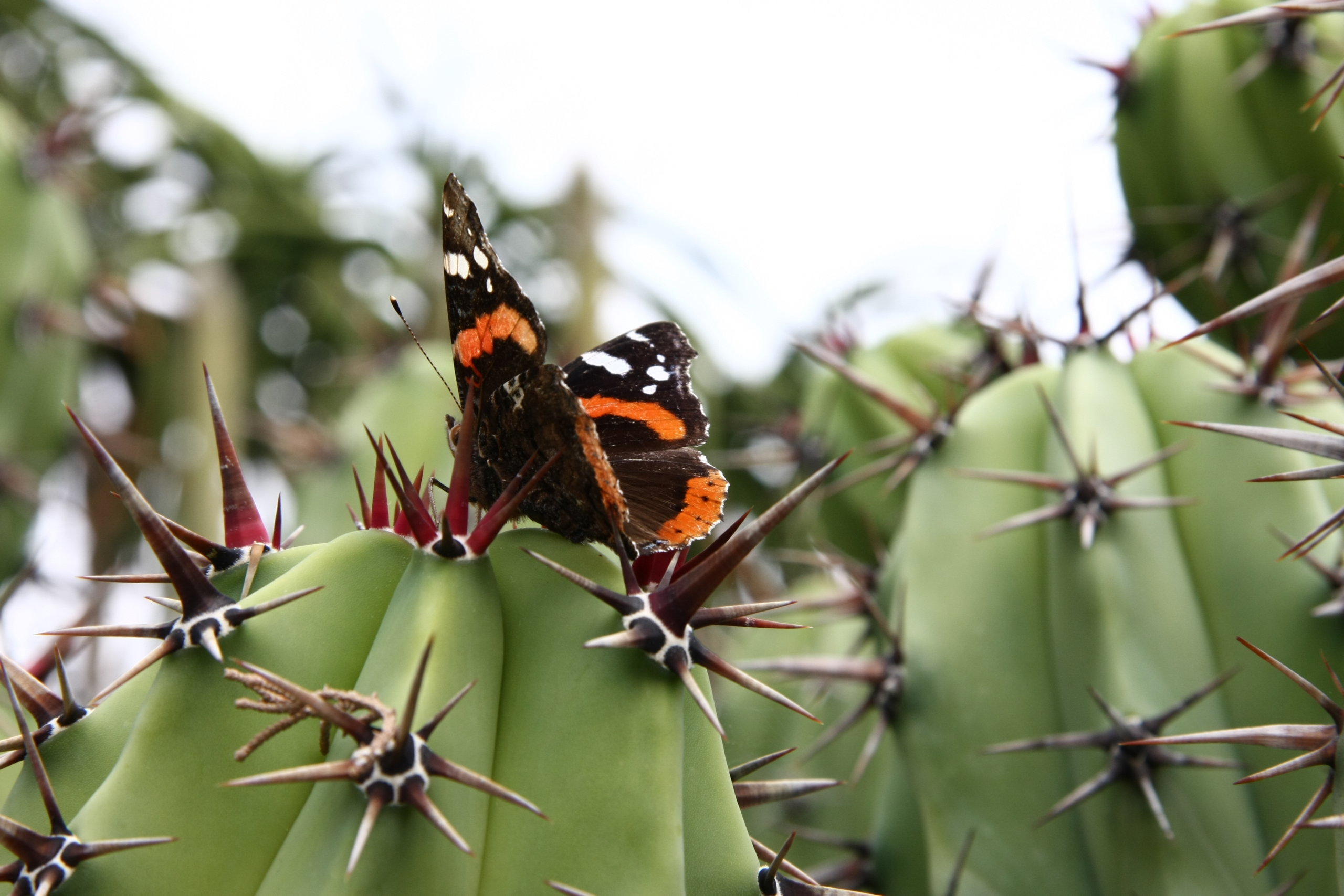
Climate change and extreme weather events have become the main drivers of butterfly redistribution across the planet. This is the conclusion reached by an international team of scientists who studied data on the range shifts of 1,758 species from 105 countries and territories.
The study was published in the journal Nature Ecology & Evolution . The authors collected 6,182 reports of range shifts from 567 scientific papers and supplemented them with estimates from 68 butterfly experts. As a result, the analysis covered approximately 10% of all known butterfly species.
Range expansion was observed in 80% of the studied species. Of these, 27% contracted their range in certain areas, while 22% shifted altitude—for example, moving higher into the mountains. These patterns can overlap: the same species can expand its range in one region and lose it in another.
Butterflies are not only moving north
The common idea that species simply move to the poles or higher up into the mountains in response to warming has proven to be overly simplistic.
Researchers have identified both expansion and contraction of ranges in various directions. Particularly high horizontal expansions were recorded in tropical countries. Meanwhile, in Europe, a combination of several processes—expansion, contraction, and altitudinal shifts—was more common.
The authors emphasize that differences between regions are partly explained by the quality of observations. Europe and North America have long-term monitoring programs, while in the tropics, butterfly data remains fragmentary. The high change rate in European countries therefore reflects not only ecological processes but also a higher probability of detecting them.
Climate turned out to be the main, but not the only factor
Climate change and extreme weather events were associated with range shifts in 79% of species for which a possible cause could be identified.
Warming has often been accompanied by habitat expansion and altitudinal shifts in species. Cold-loving butterflies are colonizing more northern regions or moving up into the mountains following suitable temperatures.
However, habitat loss was often linked less to climate than to landscape transformation. Significant factors included agriculture, development, habitat destruction and fragmentation, roads, chemical pollution, invasive species, and human intervention.
According to the authors, climate change and extreme weather were associated with range expansion for 163 species, range contraction for 131 species, and altitudinal movements for 61 species. Agricultural activity and direct habitat disturbance were particularly frequently cited as contributors to range contraction.
Range expansion does not always mean an improvement in the status of a species.
The mere appearance of a butterfly in a new area does not mean that its population is in a favorable state.
A species can colonize new territory at the northern edge of its range while simultaneously disappearing from the southern border. Furthermore, a suitable climate does not guarantee successful dispersal. Butterflies require food plants for their caterpillars, nectar sources, suitable microclimatic conditions, and connectivity between habitats.
If suitable areas are separated by cities, roads, intensively used farmland, or other barriers, insects may not be able to move quickly with climate change.
Scientists call this lag “climate debt”: the conditions suitable for a species have already shifted, but its actual range has not yet had time to change.
Tropical species may be undervalued
One of the study’s key features was the inclusion of studies in 15 languages, regional publications, and expert assessments. The authors found that relying solely on English-language publications biased the overall picture toward range expansion and underestimated territorial decline.
Data are particularly scarce for Central Africa, Southeast Asia, New Guinea, island territories, and the Amazon basin. These regions contain a large number of species, but systematic observations are rare.
Tropical butterflies may be particularly vulnerable because many already live in conditions close to the upper temperature limit, have small ranges and limited ability to move to cooler areas.
For 65% of the species included in the database, range shifts were confirmed by only one study. More than ten independent reports were collected for only 94 species, or approximately 5% of the sample. Therefore, the study reveals general trends but does not allow for a confident assessment of the status of each individual species.
Protected areas may no longer coincide with habitats
Species displacement poses a new challenge for conservation. The boundaries of nature reserves and other protected areas typically remain constant, while animal habitats shift.
According to the authors, the current protected area system insufficiently covers 76% of insect species. Among migratory butterflies, the proportion of insufficiently protected species reaches 85%.
Scientists propose taking habitat dynamics into account when creating and developing protected areas. This requires ecological corridors, restoration of disrupted habitats, preservation of cool and shaded areas, and connectivity between lowland and mountainous areas.
The authors also recommend expanding monitoring programs in tropical countries, using citizen science data, digitizing museum collections, and incorporating habitat change data into conservation planning.
The study shows that butterflies are already responding to global change, but the direction of this response varies by species and region. Some insects are expanding their range, others are losing it, and some are experiencing both simultaneously in different parts of their range.
Google machine translated