

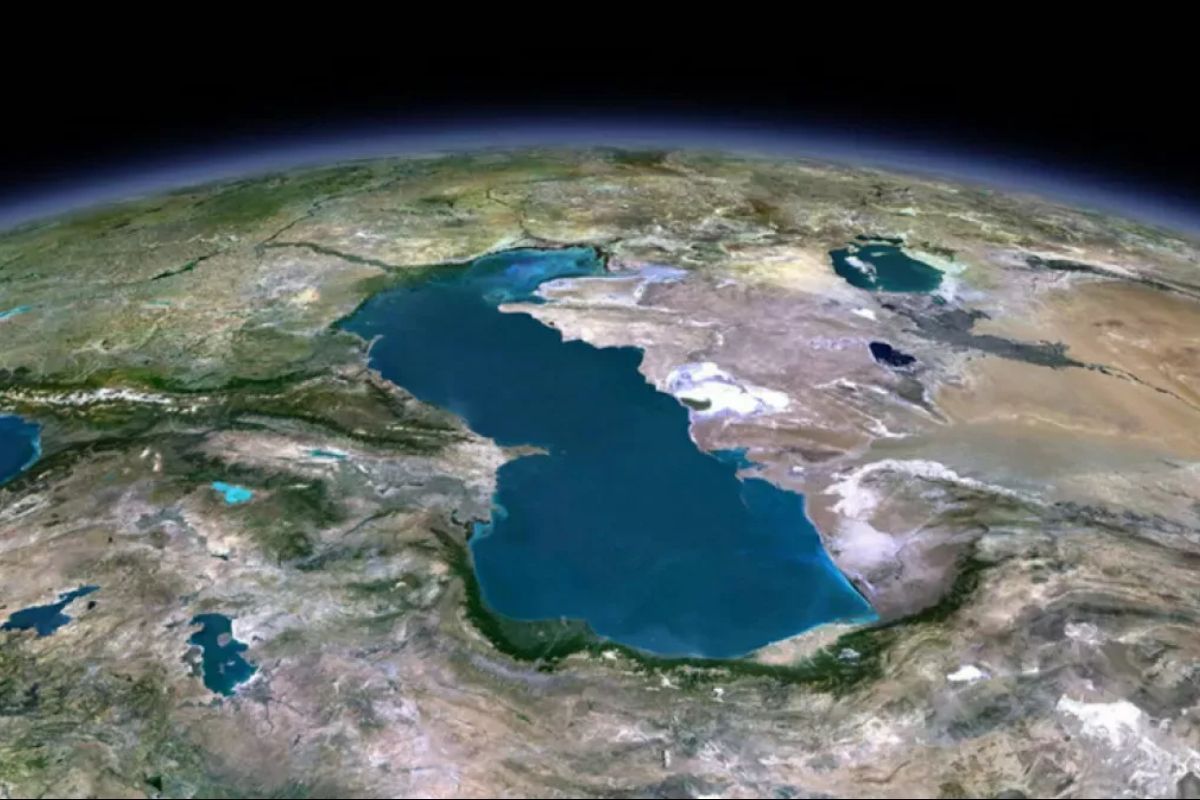
Majilis deputy and AMANAT party faction member Dyusenbay Turganov sent a parliamentary inquiry to Prime Minister Olzhas Bektenov regarding the decline in the Caspian Sea level.
According to the deputy, the shallowing of the Caspian Sea is gradually transforming from an environmental issue into a matter of state management of territories, natural resources, and economic development in the Caspian region.
The request notes that changes to the coastline are already impacting the legal status of lands, the conditions for subsoil use, the implementation of investment projects, and the state of the Caspian’s unique ecosystem.
Turganov believes it is necessary to update the legal border of the Kazakh part of the Caspian Sea and bring the coastal management system into line with the actual state of the coastline.
According to the Ministry of Ecology and Natural Resources, between 2006 and 2025, the coastline of the Caspian Sea off the Kazakh coast retreated by 30–35 kilometers in some areas.
The average water level in the north-eastern part of the sea is about minus 29 meters .
According to the long-term forecast by Kazhydromet, the trend toward sea level decline will continue under all climate scenarios under consideration. By 2050, the predicted level could reach minus 34 meters.
The deputy notes that the sea’s legal boundaries are currently determined simultaneously in several accounting systems—hydrological, land cadastral, and licensing. These systems are maintained by different government agencies and updated independently.
As a result, the actual and legal coastlines are gradually diverging.
According to Turganov, some geological exploration and other projects, which are considered offshore or shelf according to current contours, are in fact already located on land or in the coastal transition zone, but continue to be regulated as offshore facilities.
The deputy believes this situation requires legislative regulation. He also expressed his willingness to support proposals to amend the Water Code.
The request states that lower sea levels simultaneously open up new opportunities for land-based geological exploration in areas previously underwater. However, this requires promptly determining and updating their legal status.
Separately, Turganov raised the issue of monitoring and environmental safety of the Caspian Sea.
According to him, the issue of creating a modern automated sea level monitoring system that would allow for the acquisition of continuous and reliable data for management decision-making has still not been resolved.
In addition, the deputy drew attention to the state of the Caspian ecosystem and the mass death of Caspian seals.
Since April of this year, mass strandings of seal carcasses have been recorded in the Mangystau region. Similar incidents were previously observed in the fall of 2024 , when approximately two thousand dead seals were found on the Kazakh coast.
Turganov believes that the recurrence of such incidents requires not only establishing the immediate causes of the animals’ deaths, but also assessing the long-term risks to the Caspian seal population and the Caspian Sea ecosystem as a whole.
The deputy also proposes developing a clear algorithm for government agencies to respond to mass deaths of seals, fish, and birds. This algorithm should include procedures for receiving reports from citizens, conducting investigations, and informing the public of the investigation results.
In this regard, the deputy asks the government to create a single digital contour of the Caspian Sea coastline based on satellite, hydrological, and geodetic data.
It is also proposed to integrate this contour into the state land cadastre and subsoil use system as the primary source of current boundaries.
In addition, Turganov requests the development of a unified interdepartmental procedure that will ensure that the legal regime of coastal territories corresponds to their actual state.
Other proposals include accelerating the creation of an automated Caspian Sea level monitoring system, developing a unified action plan for the event of mass deaths of seals, fish, and birds, and providing information on the results of the investigation into the causes of Caspian seal deaths and measures to minimize risks to their population.
Google machine translated