

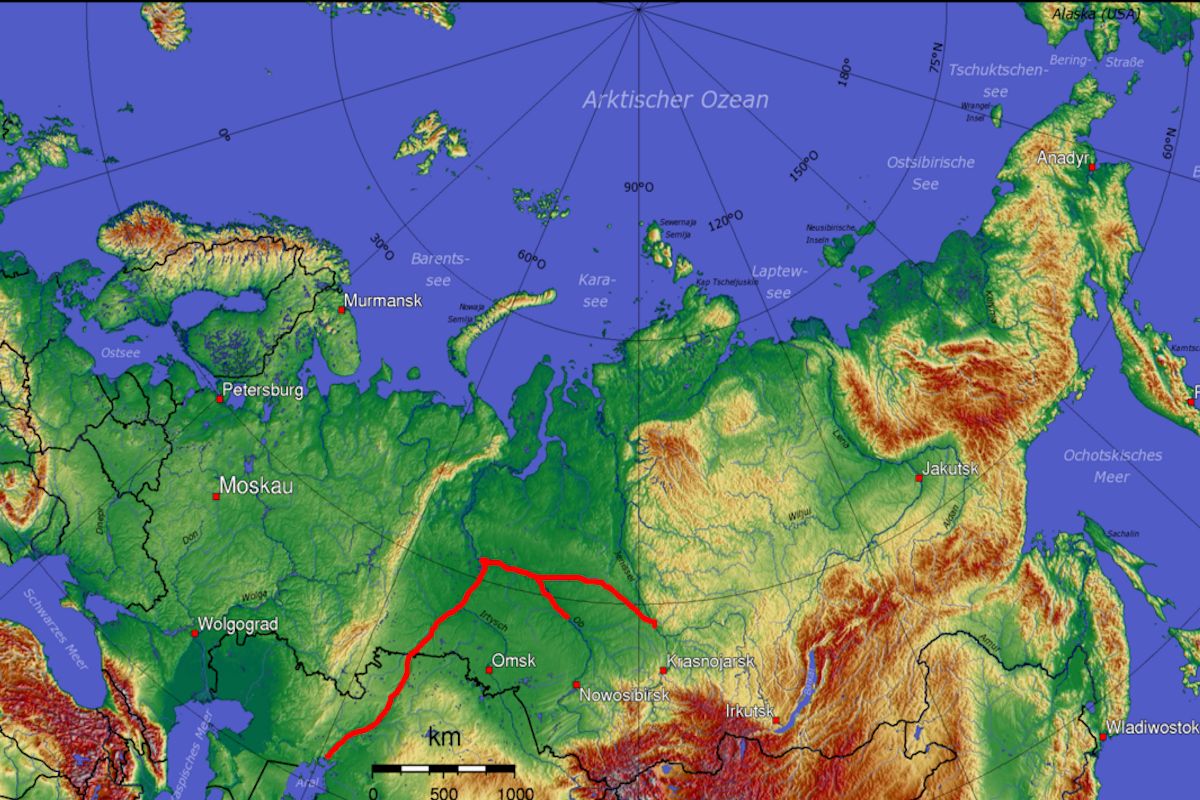
The International University of Science and Business of Kyrgyzstan is launching an international study on water security in Central Asia, 24.kg reports .
Water resources are becoming a key issue for the region amid climate change, rising water consumption, and the dependence of Central Asian countries on transboundary rivers.
In this context, the idea of diverting some of the flow from Siberian rivers to water-stressed areas is once again being discussed. This project has been around since Soviet times, but has always remained purely hypothetical due to the complexity of implementation, the enormous costs, and the potential environmental impacts.
Experts note that such initiatives require a multi-factor analysis, including environmental sustainability, economic feasibility, and international water cooperation. Scientific publications also emphasize that even with moderate transfer volumes, potential local ecosystem impacts require detailed modeling and assessment.
Water security is also a priority in Kazakhstan. The Kazakh Ministry of Foreign Affairs previously reported on President Kassym-Jomart Tokayev’s initiative to establish an International Water Organization under the auspices of the UN. According to the ministry, this initiative is particularly relevant given the growing risks associated with access to water resources.
In addition, with the support of international partners, Kazakhstan is implementing projects to modernize the water sector, digitalize water resource management, develop irrigation, and improve climate resilience.
Against this backdrop, a new international study could provide another platform for assessing long-term water security scenarios for Central Asia and identifying solutions that will reduce the risks of water shortages without harming the environment.
Google machine translated