

Nearly 2,400 glaciers in our country are under severe pressure from climate change. Who monitors them and how? What is the current state of domestic glaciology and specialist training? Kazinform news agency explored these issues.
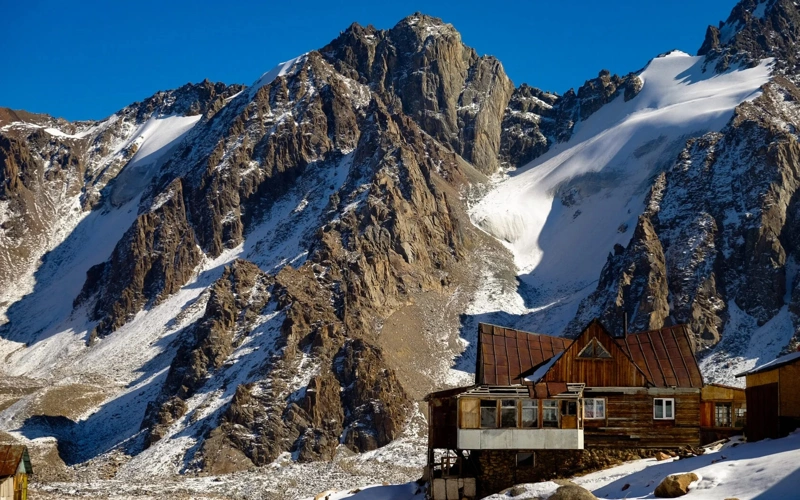
Glacier monitoring
Assessing glacier conditions requires continuous scientific monitoring. In Kazakhstan, this work is coordinated by the Central Asian Regional Glaciological Centre. The institution, established under an agreement between the Government of Kazakhstan and UNESCO, remains the only UNESCO Category II scientific centre in the world specializing specifically in glacier research. Late last year, its status was extended for another eight years, and research funding increased to 115 million tenge.
According to the center’s director, Takir Balykbayev, Kazakhstan has approximately 2,400 glaciers, covering a total area of over 2,000 square kilometers. Most of them are concentrated in the Zailiysky Alatau, Zhetysu Alatau, Kungei Alatau, and Altai ranges.

“Glacier conditions are monitored at three high-altitude stations: the Tuyuk-Su Glacier, the Big Almaty Lake station, and the Zhosaly-Kezen station. Here, hydrometeorological parameters, glacier mass balance, snow cover, glacial lake conditions, permafrost, and hazardous natural processes are monitored year-round,” explains Takir Balykbayev.
Ground-based observations are complemented by satellite monitoring data. This allows scientists to study glacier dynamics in the Syr Darya and Amu Darya river basins over the past 60 years. The collected data is sent not only to relevant agencies in Kazakhstan but also to the World Glacier Monitoring Service (WGMS), and is used in reports by the Intergovernmental Panel on Climate Change (IPCC).
The center is also actively developing international scientific collaboration: it currently collaborates with 21 scientific organizations from nine countries. Furthermore, in collaboration with the Kazselezashchita institution, it is conducting surveys of over 50 moraine lakes in the Tien Shan and assessing mudflow hazard.
In addition, the center coordinates the “Water Tower Partnership” project, initiated by Kazakhstan. The project aims to promote joint glacier research among Central Asian states, exchange scientific data, and strengthen regional cooperation.
Which glaciers may disappear by 2050?
Long-term scientific observations show that the country’s glaciers are steadily shrinking. Over the past 50-60 years, their total area has decreased by an average of 0.73-0.75% annually, while their ice volume has decreased by approximately 1%. Experts estimate this to be one of the highest rates in the world.
Experts attribute this trend primarily to global warming. In the republic’s high-mountain regions, the average annual temperature rises by 0.3-0.4 degrees Celsius every decade. As a result, between 1961 and 2025, this figure increased by approximately 1 degree Celsius.
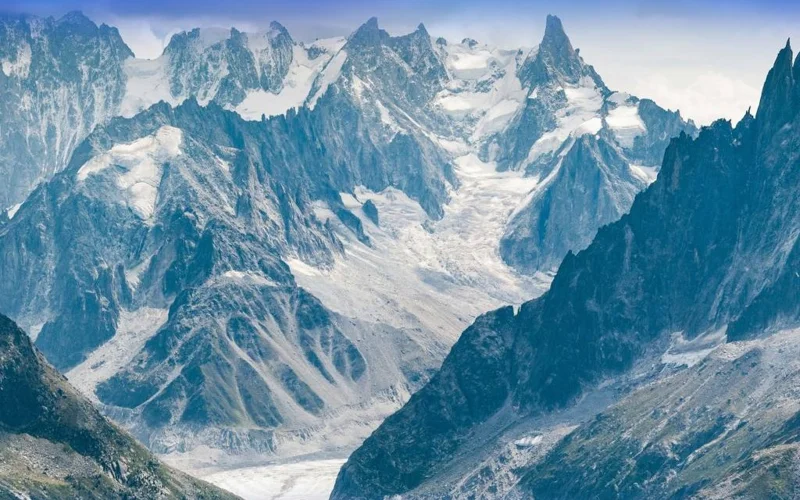
Rising temperatures not only extend the melting season but also narrow the glacier’s feeding area. A significant portion of the precipitation that previously fell as snow now turns into rain, which weakens the natural replenishment of ice masses.
However, climate change affects glaciers unevenly. The fate of small glaciers measuring less than 0.1 square kilometers depends largely on local environmental conditions, while the transformation of large glaciers is determined primarily by regional climate processes.
Scientists predict that if current trends continue, most glaciers smaller than 0.5 square kilometers could disappear completely by 2050–2070. Larger glaciers, while not completely disappearing, will lose a significant portion of their volume and disintegrate into several pieces.
The threat of the “Peak Water” phenomenon
Glacier degradation primarily impacts water resources, as many of the country’s rivers originate in the mountains. The shrinking ice reserves directly alter their water regime.
As Sayat Alimkulov, Deputy Chairman of the Institute of Geography and Water Security, notes, changes in the hydrological regime of rivers are caused not only by melting glaciers but also by overall global warming.

“Increasing winter and spring temperatures lead to earlier snowmelt. As a result, spring flooding on many rivers begins, on average, 7-10 days earlier than usual,” he explains.
Currently, intense melting is causing a temporary influx of water into rivers. In the scientific world, this phenomenon is called “peak water.” However, this phase is short-lived.
As ice reserves are depleted, the natural source of water for rivers is also diminishing. Scientists estimate that if global warming continues, most river basins in southern and southeastern Kazakhstan will reach their “peak water” point by the mid-21st century. After this point, river water levels will steadily decline, especially in summer.
This trend is confirmed by isotope studies conducted by the Central Asian Regional Glaciological Center. Over three years, scientists analyzed over 7,000 water samples from six rivers in the region. It was found that the peak of spring floods is shifting from the usual July-August to April-May.
Can technology save glaciers?
Many countries are currently testing various technologies designed to slow ice melt. For example, in China, small glaciers are being covered with special geotextiles and reflective materials, while in Europe, artificial snowmaking and cloud manipulation technologies are being explored.

In Kazakhstan, cloud seeding technology is also being used in pilot projects to prevent water shortages. However, experts acknowledge that the effectiveness of such methods is limited. They produce localized results in small areas, and scaling them up is too costly. Furthermore, in the context of global warming, such measures are not capable of providing a fundamental solution to the problem.
Therefore, scientists are convinced that the most effective way to preserve glaciers remains increasing international efforts to reduce greenhouse gas emissions and curb climate change.
Why are glaciologists needed?
Glaciologists are key specialists in glacier research. However, Kazakhstan lacks dedicated training for such specialists. According to Zhaiyk Toktarov, Acting Chairman of the Science Committee of the Ministry of Science and Higher Education of the Republic of Kazakhstan, universities lack a dedicated educational program in this field. However, students gain the knowledge necessary for glacier study through programs such as hydrology, hydrogeology, climatology, water resources management, geoinformatics, and engineering geology.

“The Kazakh National University of Water Management and Irrigation offers a course called “Fundamentals of Glaciology” as part of the Hydrology and Fundamentals of Geology and Hydrogeology courses. The Kazakh National Agrarian Research University and the K. Satpayev Kazakh National Research Technical University train students in areas such as water resource management, climate risk, geoinformation systems, engineering geology, and monitoring of hazardous natural processes,” noted Zhaiyk Toktarov.
Thus, the country is training not just specialized glaciologists, but specialists with an interdisciplinary approach to glacier studies. They work in water resource management, groundwater formation research, river runoff modeling, and mountainous engineering safety assessments.
Nevertheless, Kazakhstan has developed its own school of glaciology. One of its founders was Professor Igor Seversky. He devoted over 60 years to the study of glaciers and avalanches, mentoring several doctors and candidates of science, making an important contribution to the development of national science.
It’s worth noting that today, glacier research has long since outgrown the confines of an environmental topic. It’s a strategic area that directly impacts the country’s water security, disaster prevention, and adaptation to climate change. Therefore, alongside strengthening international scientific cooperation, the development of a national school of glaciology and the targeted training of specialized specialists are becoming imperative.
In recent years, water shortages, which have become increasingly acute in the region, will inevitably hinder economic growth in Central Asian countries. Growing populations and industrial development are primarily increasing the burden on water management. Read about the current situation in the region and possible solutions here.
Google machine translated
https://www.inform.kz/ru/kto-sledit-za-lednikami-kazahstana-i-pochemu-eto-vazhno-5c5f679d