

On February 12, 2026, the 2nd meeting of the National Coordination Council for the National Policy Dialogue on Integrated Water Resources Management (IWRM) in the Republic of Uzbekistan was held in Tashkent.

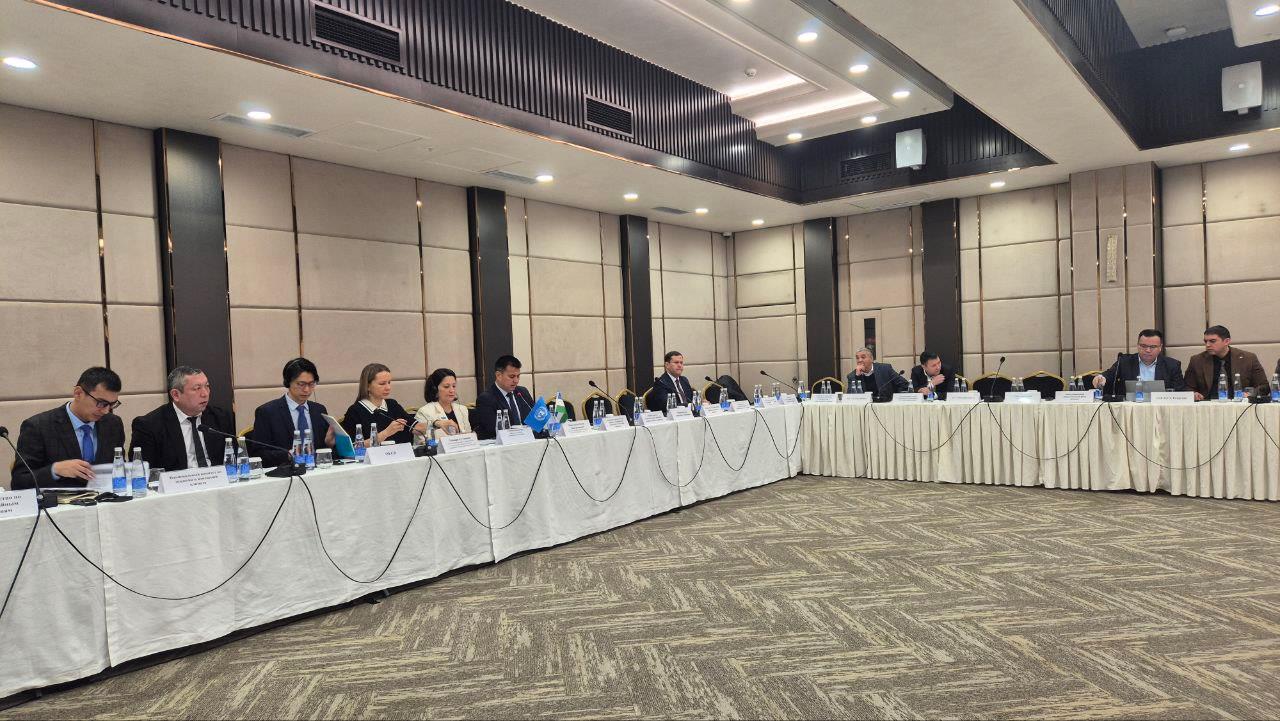
The event was organized as part of the National Policy Dialogue on Water with the support of the UNECE Water Convention Secretariat and the OECD within the framework of the project “Regional Mechanisms for a Low-Carbon and Climate-Resilient Transition of the Energy-Water-Land Nexus in Central Asia” (IKI project). Representatives of relevant ministries and agencies of the Republic of Uzbekistan, international organizations, financial institutions, and the expert community participated in the meeting.
D.R. Ziganshina, Z.R. Yarullina and A.I. Dolidudko took part from SIC ICWC.
The meeting program included three thematic sessions:
- Groundwater management and a coordinated intersectoral approach;
- Environmental runoff;
- Improving the management of hydraulic structures in the Republic of Uzbekistan.
During the first session, participants discussed groundwater regulation in the context of the new Water Code of the Republic of Uzbekistan, the current progress of the reform, and key challenges. Particular attention was paid to the need for coordinated management of surface and groundwater, as well as intersectoral coordination between water, agriculture, municipal services, and geological surveys. Development partners, including GIZ, SDC, and the Finnish Geological Survey, presented areas of current and planned support.
The second session focused on environmental flow. International and regional approaches to defining and monitoring it, the experiences of Kazakhstan and the European Union, and methodological proposals for Uzbekistan were discussed. Zulfiya Yarullina, Chief Specialist at the Scientific and Information Center for Water Coordination (SIC ICWC), delivered a presentation on “Approaches and Challenges in Developing an Environmental Flow Methodology in Uzbekistan.” The presentation highlighted key historical multilateral agreements, such as the Almaty Agreement of February 18, 1992, and the Schemes for the Integrated Use and Protection of Water Resources in the Amu Darya and Syr Darya River Basins. Information was also provided on the current state of water allocation, as well as the key uncertainties that must be considered when developing a methodology for establishing parameters and regimes for sanitary and environmental releases and water quotas.

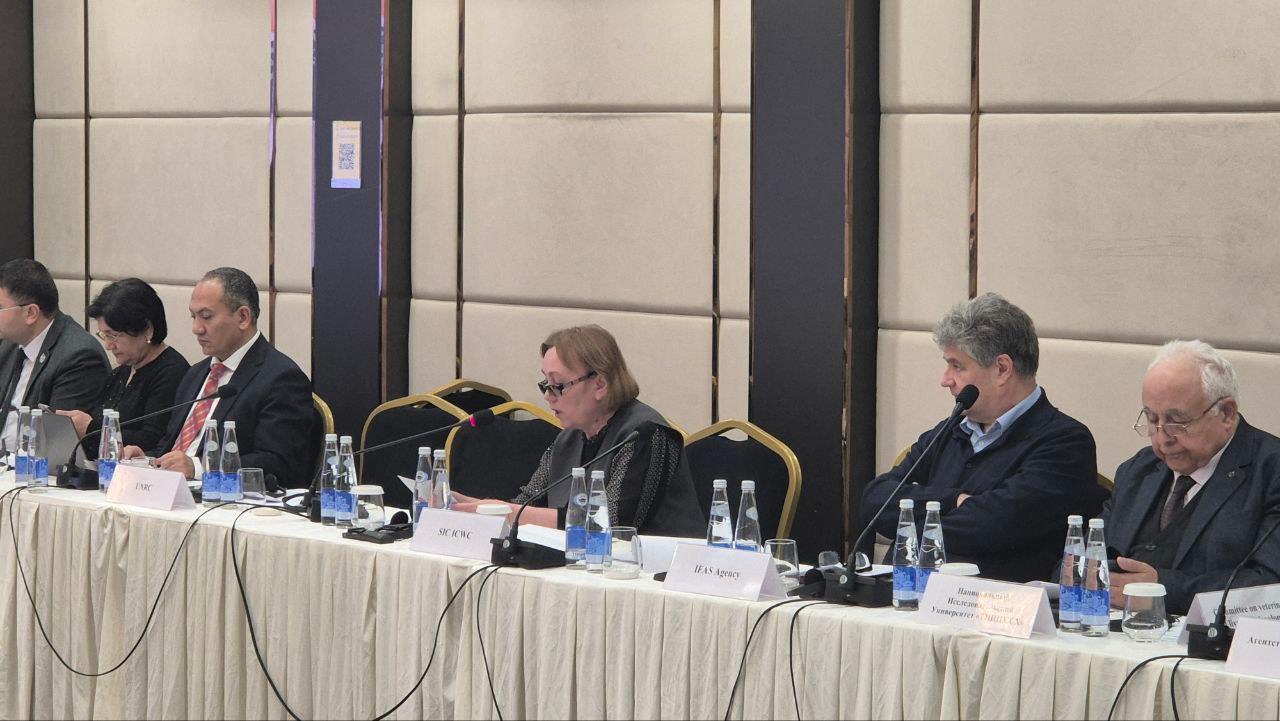
All experts emphasized the importance of implementing environmental flows for preserving aquatic ecosystems, ensuring the sustainability of river basins, and implementing the provisions of the new water legislation.
The third session discussed strengthening the legal and institutional framework for hydraulic structure safety, improving the quality of operation and supervision, developing specialist capacity, and emergency preparedness. During this session, Alexander Dolidudko, a leading specialist at the Scientific and Information Center for Water Coordination (NICWC), presented the preliminary results of a study assessing the condition and climate resilience of water management infrastructure in the Syr Darya basin. This study is being conducted to inform the basin dialogue on the Syr Darya River with the support of the German Society for International Cooperation (GIZ) as part of the Green Central Asia initiative.

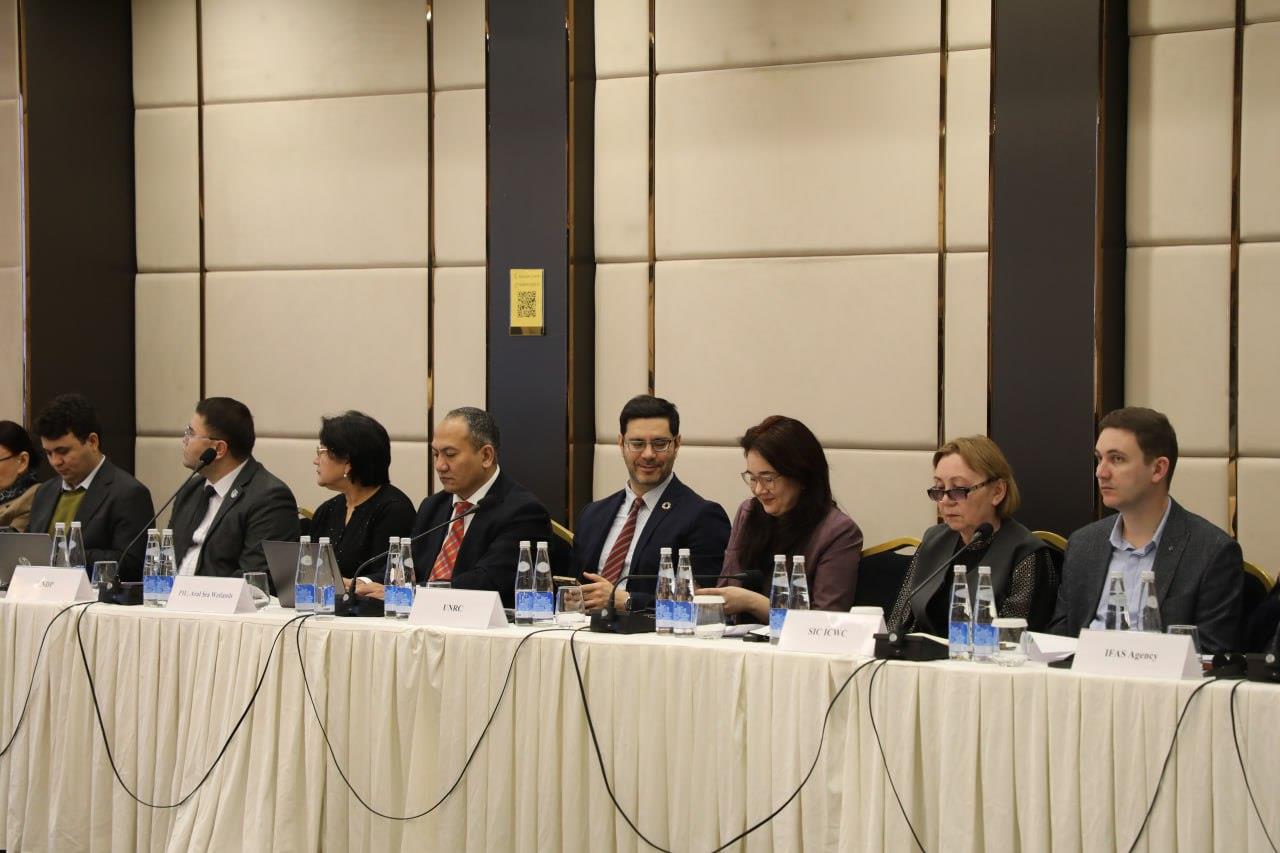
Representatives of national authorities, international organizations and financial institutions, including the World Bank and the Finnish Water Forum, presented possible areas of technical and investment support.
Following the meeting, participants reaffirmed the importance of continuing the National Policy Dialogue as a platform for coordinating reforms, sharing experiences, and developing coordinated solutions for implementing the provisions of the new Water Code of the Republic of Uzbekistan. Further steps were outlined for developing a methodological framework for groundwater management, environmental flow, and the safety of hydraulic structures.
Google machine translated