

Nearly 40 billion cubic meters of water entered Lake Balkhash between 2024 and 2026. This steady inflow has stabilized the water level of one of Kazakhstan’s largest lakes. As reported by the Ministry of Water Resources and Irrigation , maintaining Lake Balkhash’s water balance remains a priority for transboundary water resource management, DKNews.kz reports .
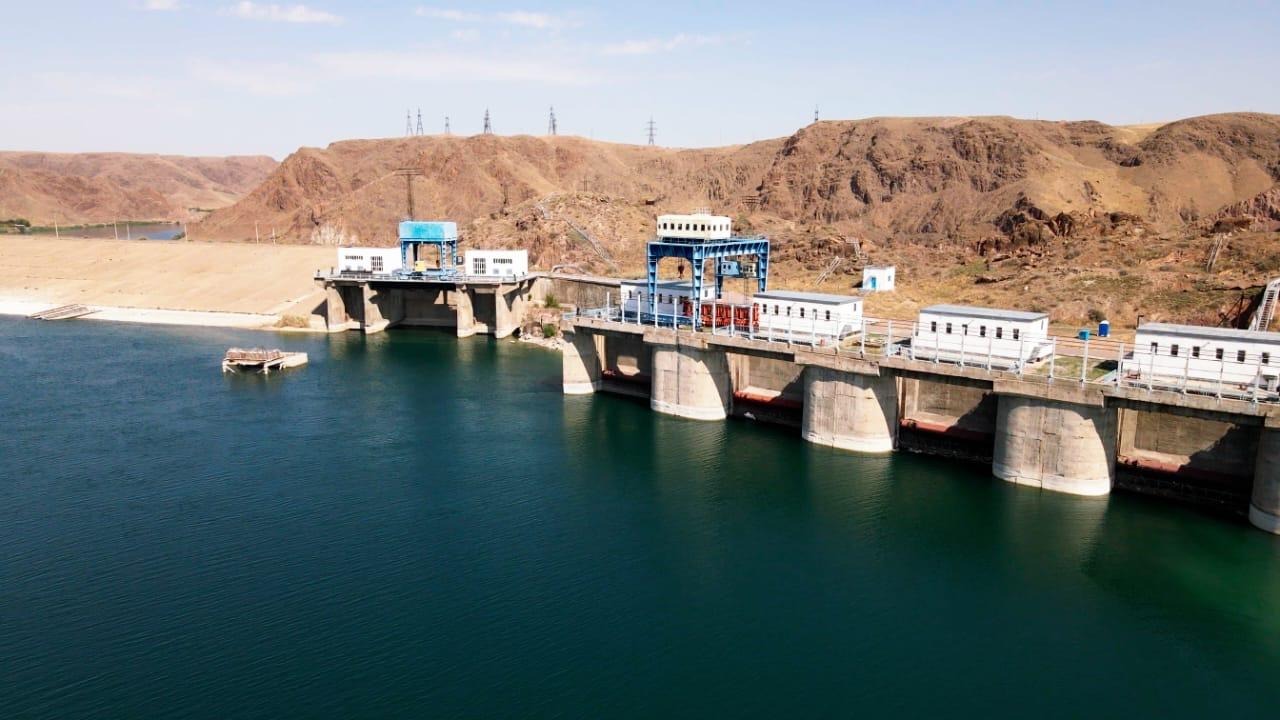
According to the agency’s latest data, more than 9.7 billion cubic meters of water have entered the lake since the beginning of 2026 alone. Moreover, the Kapchagay Reservoir, which regulates the flow of the Ili River, was 98% full this year.

How much water has flowed into Lake Balkhash in three years?
The Ministry of Water Resources and Irrigation presented data on water inflow into the lake over the past three years.
- 2024 – about 15.9 billion cubic meters of water.
- 2025 – about 13.9 billion cubic meters.
- Since the beginning of 2026 – more than 9.7 billion cubic meters.
In total, this amounts to over 39.5 billion cubic meters. This volume of water inflow helped maintain a stable lake level.
However, the volume of inflow over several years should not be confused with the increase in water reserves in Lake Balkhash itself. Some of the incoming water is used for natural evaporation and maintaining the water balance.
Why is the Ili River so important for Balkhash?
The main source of water for Lake Balkhash remains the transboundary Ili River, which originates in China. It accounts for a significant portion of the lake’s total inflow.
Water flow is regulated by the Kapchagay Reservoir in the Almaty region. Its operating conditions influence not only the filling of Lake Balkhash but also the water supply to agricultural lands.
In 2024 and 2025, the Kapchagay Reservoir was filled to 100%. In 2026, the figure reached 98%.
Maintaining sufficient water reserves allows for regulation of its supply, taking into account the needs of agriculture and the ecological state of the lake.
The level of Lake Balkhash remains at 341 meters.
According to the Ministry of Water Resources and Irrigation, the Ili River inflow remains at its long-term average. This allows the water level of Lake Balkhash to be maintained near the optimal level of 341 meters according to the Baltic Height System.
Minister of Water Resources and Irrigation Nurzhan Nurzhigitov reported:
“The water inflow along the Ili River remains at its long-term average level. This ensures that the water level of Lake Balkhash remains at its optimal level of 341 meters according to the Baltic Heights System. Furthermore, a Master Plan for the Conservation of Lake Balkhash through 2040 is being developed in collaboration with French experts. Field studies have been conducted, and the results are being analyzed.”
A stable water level is important for the health of coastal ecosystems, the Ili River delta and natural areas associated with the lake.
Kazakhstan and France are developing a plan to preserve Lake Balkhash.
In addition to regulating water flow, Kazakhstan is working on a long-term strategy for preserving the lake.
A master plan, designed to last until 2040, is being developed in collaboration with French experts. Its preparation involves studying the condition of the lake and its catchment area.
Field research has already been conducted. Currently, specialists are analyzing the collected data, which should form the basis for further decisions on the conservation of Lake Balkhash.
The work is being carried out within the framework of cooperation between Kazakhstan and French organizations, including the French Development Agency and the French Bureau of Geological and Mining Research.
What does the stabilization of Lake Balkhash mean?
The influx of nearly 40 billion cubic meters of water over three years has become a significant factor in maintaining the lake’s water balance. However, preserving Balkhash requires not only sufficient inflow in individual years but also sustainable water resource management over the long term.
Of particular importance are cooperation with China on the transboundary Ili River, rational use of water in agriculture, and continuous monitoring of the lake’s condition.
The master plan being developed for the period up to 2040 should help formulate long-term approaches to preserving the reservoir, taking into account natural and economic factors.
We previously reported on how the water volume in Lake Balkhash increased by 2 billion cubic meters . At that time, the lake’s level rose by 12 centimeters in one year—from 341.52 to 341.64 meters according to the Baltic Height System.
Google machine translated