

The country still faces the issue of pasture land degradation. Measures to combat this problem were discussed at a meeting of the Republican Land Commission, Kazinform reports with reference to the Government of the Republic of Kazakhstan.
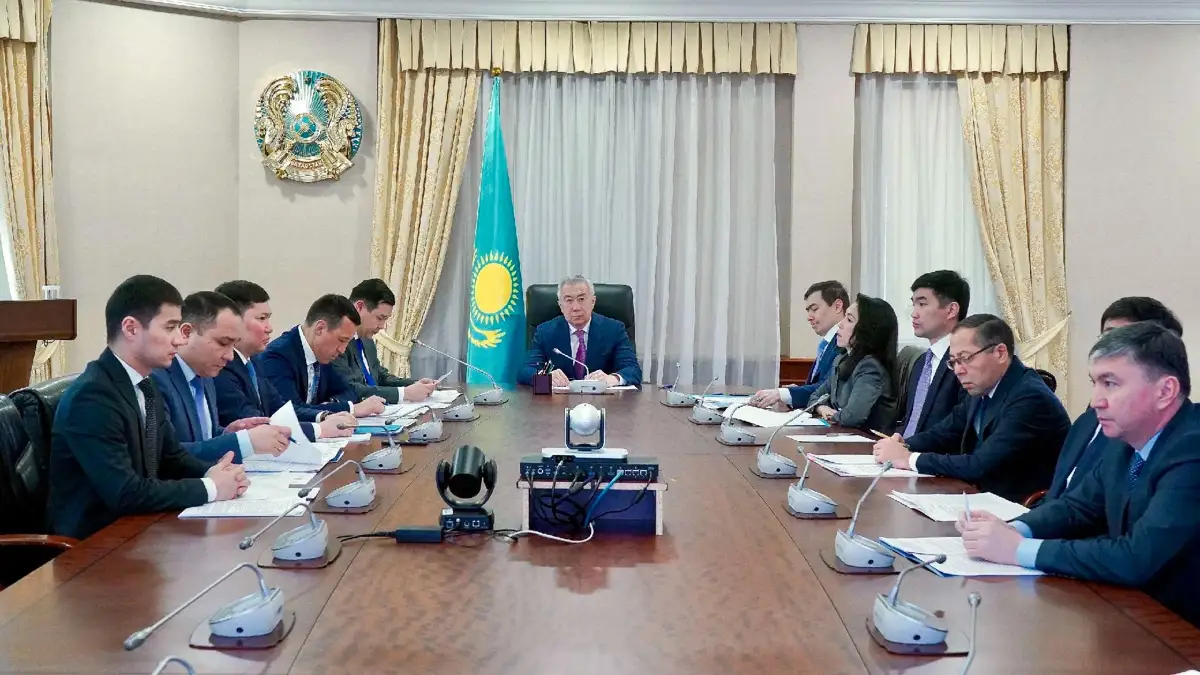
The meeting, chaired by Deputy Prime Minister and Minister of National Economy Serik Zhumangarin, also touched on the issues of monitoring the return and development of land and protecting the rights of current land users.
Today, according to the data of the Committee for Land Resources Management of the Ministry of Agriculture of the Republic of Kazakhstan, out of 12.2 million hectares of land returned to state ownership over the past three years, 5.3 million hectares have already been redistributed. Of these, 2 million hectares have been transferred on a priority basis to public pastures for grazing by local residents.
In accordance with previously issued orders, development of agricultural lands on an area of 64.4 thousand hectares has begun this year, and legal proceedings are underway on the forced seizure of lands on an area of 64.8 thousand hectares. In total, 460.6 thousand hectares of agricultural lands planned for return have been returned since the beginning of the year.
At the same time, the issue of degradation of pasture lands remains acute. Vice Minister of Agriculture Azat Sultanov noted that about 14% of agricultural lands – 29.9 million hectares, are actually subject to erosion. Other serious factors of degradation of agricultural lands are depletion of pastures and soil salinity.

— All these processes are interconnected and require a systemic solution. The main vector is increasing soil fertility and introducing sustainable agricultural technologies, — noted the Vice Minister of Agriculture.
Last year, the Ministry of Agriculture developed measures to restore and improve soil fertility in the form of a roadmap for 2024–2030. Similar documents, taking into account the specifics of each region, were developed in almost all regions. To resolve the issue of financing, the new Budget Code sets forth provisions on district budget expenditures for the restoration and preservation of pastures, which will create a legal basis for the systematic allocation of funds for the restoration of soil fertility.
In addition, the Ministry of Agriculture of the Republic of Kazakhstan has begun studying advanced sustainable technologies in the field of agricultural production. In particular, carbon (carbon) farming, for subsequent implementation in Kazakhstan. This will become an effective tool in the fight against the degradation of agricultural lands. Currently, work is underway to amend the legislation in terms of granting the ministry the authority to regulate emissions and absorption of greenhouse gases on agricultural lands.

— At the same time, the Ministry of Agriculture of the Republic of Kazakhstan, together with the National Agrarian and Scientific Center, is developing a plan for reseeding pasture lands with forage grasses. The scope of the work includes unused lands, which, after scientific analysis, will be involved in agricultural turnover or given to the local population for general use, — the Government reported.
Also at the meeting of the land commission, participants discussed the process of developing recommendations for determining criteria for assessing bona fide land users.
Following the meeting, the Deputy Prime Minister instructed the Ministry of Agriculture of the Republic of Kazakhstan to submit a plan for reseeding pasture lands for consideration as soon as possible, and the regions to strictly fulfill the assigned tasks for the return of unused territories.
It was previously reported that labor productivity in agriculture has increased in Kazakhstan.
Let us recall that Kazakhstan will develop a digital map reflecting the carbon content in soils.
https://www.inform.kz/ru/karbonovoe-zemledelie-dlya-vosstanovleniya-pochv-vnedrit-minselhozrk-59b202